
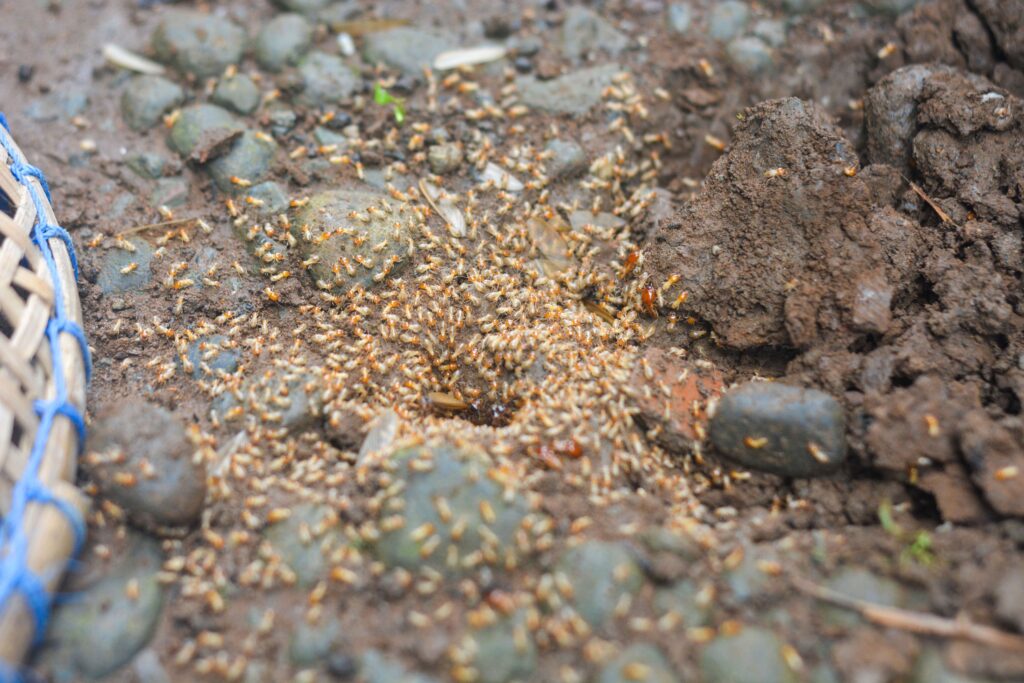
Termites swarm in Georgia from February through June, with peak activity in spring. Knowing the timing helps protect your home before damage starts.
Key Takeaways
- Eastern subterranean termites swarm in Georgia from February through May, triggered by warm temperatures and rain.
- Formosan subterranean termites swarm later, from May through June, typically at dusk near lights.
- Swarms last 30 to 40 minutes. The swarmers themselves do not damage wood, but they signal an established colony nearby.
- Discarded wings, mud tubes, and termite droppings are the most reliable signs of a potential termite infestation.
- Professional termite inspections and bait stations are the most effective long-term control option for Georgia homeowners.
Termite Swarming Season in Georgia Runs February to June
The Proforce Pest Almanac
Termite swarming in Georgia, by the month.
Bar height shows when swarming activity peaks in a typical year. Swarm-peak months get a green edge.
In Georgia, termite swarming season runs from February through June, depending on the species. Eastern subterranean termites are the first to swarm each year, often appearing on warm days following winter rain. Formosan subterranean termites follow later in the season, peaking from May through June. Both species produce swarmers, the winged reproductive members of a mature termite colony, when conditions are right.
Swarming is a reproductive event, not a feeding one. Swarmers leave the colony to find a mate and start new colonies. A swarm near your home does not mean termites are eating your walls right now, but it does mean an established colony is close enough to warrant a professional inspection. Georgia homeowners who spot swarmers should act within days, not weeks.
What Triggers Termite Swarms in Georgia Each Spring
Temperature and moisture are the two primary triggers for termite swarms in Georgia. Termites are cold-blooded insects, meaning their activity tracks directly with soil temperature. Once soil warms above roughly 70 °F and follows a soaking rain, subterranean termite colonies read the conditions as ideal for sending out swarmers. Georgia’s mild winters and humid springs create these conditions reliably each year, often starting in late February.
Daylight also plays a role. Eastern subterranean termites swarm during the day, usually in the late morning to early afternoon. Formosan subterranean termites are evening swarmers, drawn to porch lights and other light sources after sunset. If you find a cluster of winged insects around your exterior lights on a warm May or May evening, Formosan termites are a likely cause worth investigating immediately.
A swarm typically lasts 30 to 40 minutes. After that, surviving swarmers shed their wings, pair off, and attempt to burrow into soil to establish new colonies. The pile of discarded wings you find on a windowsill or countertop the next morning is often the first sign that swarming termites passed through your home or yard overnight.
Termite Species That Swarm in Georgia and When to Expect Them
Eastern Subterranean Termites Swarming in Georgia: February to May
Eastern subterranean termites build colonies entirely underground, using mud tubes to travel from soil to the wood in your home’s floor joists, foundation walls, and crawl spaces. A mature colony can contain hundreds of thousands of workers before it produces swarmers, meaning the colony has likely been feeding for years before you see your first swarm. Structural damage accumulates silently during that entire period.
Formosan Termites Swarming in Georgia: May to June
Formosan subterranean termites are an invasive species and among the most destructive termites in the southeastern United States. A peer-reviewed profile of Coptotermes formosanus, colonies can reach several million individuals, far larger than native subterranean termite colonies. That size translates directly into faster, more costly damage to wood framing and structural components. Georgia’s coastal areas and urban corridors see the heaviest Formosan termite activity.
Formosan termite swarms in Georgia peak in May and June, with activity extending into early summer in warmer years. Swarming happens at dusk, and the insects are strongly attracted to light sources. If you notice large numbers of winged insects gathering around porch lights or street lamps on warm evenings, Formosan termite activity is a real possibility. Their swarmers are slightly larger than eastern subterranean termite swarmers and tend to appear in greater numbers when they emerge.
Drywood Termites in Georgia: Swarms Any Time of Year
Drywood termites produce termite droppings called frass, which look like tiny pellets of sawdust or coffee grounds. Finding frass near window frames, baseboards, or furniture is a strong indicator of drywood termite activity. Because these termites are not covered by most subterranean termite treatment programs, a separate inspection is needed if drywood activity is suspected in your home.
Flying Ants vs. Termite Swarmers in Georgia Homes
The most common mistake Georgia homeowners make is confusing flying ants with termite swarmers. Both appear in large numbers in spring, and both leave discarded wings behind. The differences are visible if you know what to look for. Termite swarmers have straight, bead-like antennae and two pairs of wings that are equal in length, extending well past the body. Flying ants have elbowed antennae, pinched waists, and hind wings that are shorter than their front wings.
The body shape is the clearest tell. Termites have a broad, uniform waist with no pinch between the thorax and abdomen. Ants have the classic narrow waist. If you are unsure, collect a few of the winged insects in a sealed bag and have a pest control professional identify them. The distinction matters because the treatment approach and urgency differ significantly between the two.
Signs of Termite Infestations in Georgia Beyond the Swarm
Swarms are one signal, but most termite infestations in Georgia go undetected for years because the visible signs are easy to overlook. Mud tubes on foundation walls are the most reliable indicator of subterranean termite activity. These pencil-width tunnels run from the soil to wood surfaces and protect termites from exposure as they travel. Check your foundation walls, crawl spaces, and floor joists at least once a year, particularly after winter.
Additional signs of a potential termite infestation include sagging floors, loose tiles caused by moisture from termite damage below, wood that sounds hollow when tapped, and small kickout holes in hardwood. Finding discarded wings on window frames, baseboards, or countertops after a warm spring day is a strong signal that swarming termites entered or passed near your home. Any of these signs warrants a professional inspection without delay.
When to Schedule Professional Termite Inspections in Georgia
The right time for a professional termite inspection in Georgia is before swarm season begins, ideally in January or February. An inspection at that point can identify mud tubes, moisture issues in crawl spaces, wood-to-soil contact around the foundation, and other conditions that attract subterranean termite colonies. Catching conducive conditions before swarming starts gives you time to act before a new colony establishes near your home.
Proforce service professionals perform exterior inspections that check for termite activity, moisture issues, and wood-to-soil contact. Where active or at-risk conditions are found, the Trelona Advanced Termite Bait System can be installed around your home’s foundation at approximately every 10 to 20 linear feet. The bait contains Novaluron, an active ingredient that prevents termites from molting.
Worker termites feed on it and carry it back to the colony, reducing the colony from the inside out in as little as 15 to 45 days. Stations are monitored annually and refilled as needed, providing ongoing protection rather than a one-time application.
How to Prevent Termites in Georgia Homes Year-Round
Reducing moisture and wood-to-soil contact around your foundation are the two most effective termite prevention steps for Georgia homeowners. Subterranean termites require moisture to survive and are drawn to soil that stays consistently damp. Fix leaking pipes and air conditioning drainage, ensure proper drainage away from the foundation, and keep gutters clear so rainwater does not pool near the home’s base.
Maintain a crushed rock barrier of at least 12 to 18 inches between any mulch beds or soil and your foundation walls. Remove wood debris, tree stumps, and stacked firewood from close contact with the structure. Avoid stacking firewood against your home’s exterior wall or in crawl spaces. Proper ventilation in crawl spaces reduces the moisture levels that make subterranean termite colonies thrive. Seal cracks in foundation walls and around utility penetrations to reduce potential entry points.
Bait stations installed before a swarm season in Georgia provide active monitoring year-round, not just reactive treatment after damage is found. For property owners who want ongoing coverage, Proforce’s termite protection program pairs bait station installation with annual monitoring and re-treatment as part of a broader general pest control plan. Early detection through professional termite inspections is far less expensive than repairing structural damage from a colony that fed undetected for several seasons.
Bottom Line on When Termites Swarm in Georgia
Georgia homeowners face termite swarming season from February through June, with eastern subterranean termites arriving first and Formosan subterranean termites following in late spring. A swarm near your home is a signal, not a guarantee of active infestation, but it means a professional inspection is overdue. Discarded wings, mud tubes on foundation walls, and soft or sagging wood are all signs that termites may already be feeding inside your structure.
The most effective approach for Georgia residents is pre-season inspection, year-round bait station monitoring, and moisture control around the foundation. Don’t wait for the swarm to confirm the risk. By the time swarmers appear, the colony sending them has likely been established for years. Contact Proforce to schedule a termite inspection and get a protection plan in place before termite season peaks.
When do termites swarm in Georgia most heavily?
Termite swarming season in Georgia peaks in March and May for eastern subterranean termites and in May and June for Formosan subterranean termites. Warm temperatures combined with rain are the primary triggers. Most swarms occur between late morning and early afternoon for eastern subterranean termites, and at dusk for Formosan species.
How long does a termite swarm last in Georgia?
A termite swarm lasts approximately 30 to 40 minutes. After that, swarmers shed their wings and attempt to burrow into soil to start new colonies. The pile of discarded wings left behind on windowsills or countertops is often the first sign homeowners notice. The swarm itself does not cause wood damage, but it confirms a mature colony is nearby.
Are termite swarmers the same as flying ants?
No. Termite swarmers have straight antennae, a uniform body width without a pinched waist, and two pairs of equal-length wings that extend past the body. Flying ants have elbowed antennae, a pinched waist, and hind wings shorter than the front pair. If you are unsure which insect you found, collect a sample and have a pest control professional identify it before deciding on next steps.
Do I need a termite inspection if I haven’t seen a swarm in Georgia?
Yes. Most termite infestations in Georgia produce no visible swarm at the homeowner’s property. Subterranean termite colonies feed inside wall framing, floor joists, and crawl spaces for years without triggering a noticeable swarm. Annual professional termite inspections are the most reliable way to catch activity before it becomes costly structural damage.
What is the difference between subterranean and drywood termite swarming in Georgia?
Subterranean termites swarm in spring, require soil contact, and build mud tubes to travel between soil and wood. Drywood termites live entirely inside the wood they consume, do not need soil contact, and can swarm at any time of year when conditions are warm. Drywood termites are less common in Georgia but do appear in coastal and southern areas. They leave behind small pellets of frass near entry holes in wood surfaces.