
When do termites swarm in Florida and what does it mean for your home—peak activity runs February through July across four species with distinct behaviors.
Key Takeaways
- Florida has four termite species that swarm at different times, from mid-February through late fall.
- Subterranean termites swarm during daylight hours after rain; drywood and Formosan termites swarm at night toward lights.
- Discarded wings, mud tubes, and frass are the three most common early warning signs of termite activity.
- Swarming does not mean your home is infested, but it does mean a mature colony is nearby, often within 300 feet.
- Professional bait stations and foundation treatments provide the most reliable ongoing protection for Florida homes.
Florida Termite Swarming Season: When to Expect It
The Proforce Pest Almanac
Termite swarming in Florida, by the month.
Bar height shows when swarming activity peaks in a typical year. Swarm-peak months get a green edge.
Florida’s subtropical climate means termite swarming season starts earlier and runs longer than in most states. Native subterranean termites begin swarming as early as February, while some species remain active into November. The warm, humid conditions that define Florida weather accelerate colony growth, which means mature colonies that produce swarmers develop faster here than in cooler climates. Most peak swarm seasons in Florida fall between late February and early July, with the heaviest activity in spring and early summer.
Swarming is triggered by a combination of temperature, humidity, and daylight length. In Florida, a warm rain event followed by a sunny afternoon is the classic trigger for subterranean termite swarms. Warm evenings after spring rains prompt Formosan termites to take flight at dusk. Understanding these triggers helps you recognize when termite swarms are most likely to occur near your home.
Why Termites Swarm in Florida and What It Means
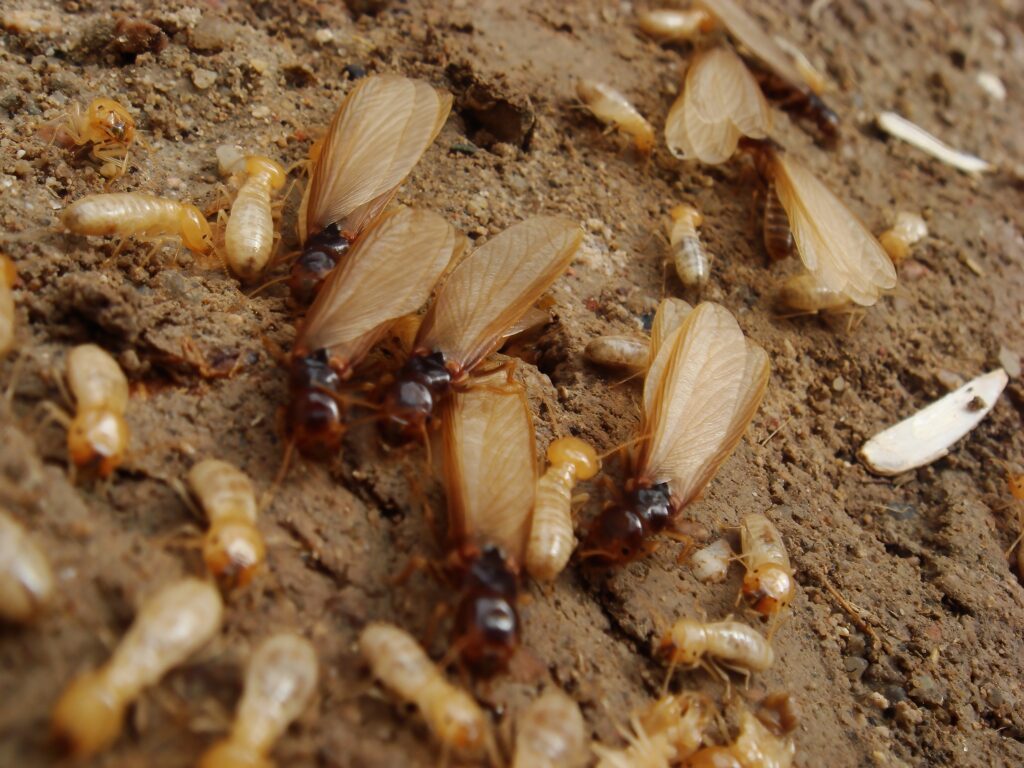
A termite swarm is a colony’s reproductive event, not an infestation spreading through your walls. Winged reproductive termites, called swarmers or alates, leave a mature colony to find a mate and start new colonies elsewhere. Swarming only occurs once a colony reaches maturity, which takes three to five years, depending on species. Because swarmer production signals a fully established colony nearby, a swarm on or near your property warrants a professional termite inspection, even if the swarmers themselves never enter your home.
After landing, swarmers shed their wings and attempt to pair with a mate. Most do not survive. The ones you see on your windowsills or around your porch lights are the visible tip of a much larger population underground or inside wood. A review of termite control published in Insects estimates that subterranean termites cause approximately 80% of global structural termite damage, making early detection in Florida particularly important.
Termite Species in Florida and Their Swarming Patterns
Four species account for most termite activity in Florida, and each follows a distinct swarming schedule. Knowing which species swarms when gives you a clearer picture of your risk window throughout the year.
Subterranean Termites Swarming in Florida in Spring
Eastern subterranean termites (Reticulitermes flavipes) are the most widespread termite species in North America, and they are present throughout Florida. These termites swarm during daylight hours, most often in late spring, from late February through May, typically following a warm rain. Swarms appear on warm, sunny days after a significant rainfall event. Workers build mud tubes from the soil to wood above ground, which is the most reliable sign of subterranean termite activity. Research on Reticulitermes distribution in the southeastern USA published in Insects confirms that multiple native species overlap in Florida, increasing overall pressure on homes throughout the state.
Subterranean termite colonies require soil contact to survive. They travel through mud tubes that protect them from open air and dehydration. Finding mud tubes along your foundation walls is the earliest and most definitive sign of active subterranean termite colonies working toward your home’s structure.
Formosan Termites Swarm in Florida During Summer Months
Formosan subterranean termites (Coptotermes formosanus) are an invasive species concentrated in South Florida and are among the most destructive termite species in the world. According to A peer-reviewed profile of Coptotermes formosanus, this species forms colonies that can exceed one million workers, far larger than any native species. Formosan termites swarm at night, from early May through late June, and are strongly attracted to exterior lights and porch lights. Turning off outdoor lights during peak swarming evenings in spring can reduce the number of swarmers drawn to your home.
A related invasive species, the Asian subterranean termite (Coptotermes gestroi), swarms earlier in the year. A Florida-specific flight phenology study published in the Journal of Economic Entomology found that Asian subterranean termites fly from mid-February through late May, while Formosan termites peak from early May through late June. These overlapping swarming windows mean South Florida homeowners face nearly continuous termite pressure from February through summer.
Drywood Termites Swarming in Florida in Late Summer
Drywood termites do not require soil contact and live entirely inside the wood they infest. Unlike subterranean termites, drywood termites tend to swarm during warmer months, from late summer into fall, often in the early evening. Swarmers enter homes through small gaps in fascia boards, window frames, and roof vents, making attic spaces and window trim common infestation sites. The first sign of a drywood termite problem is frass. Drywood termite droppings are hard, dry pellets that look like sawdust or dirt, and they often appear on windowsills or beneath wooden trim.
Drywood termites are not covered by subterranean-focused bait station programs. If you suspect drywood termite activity based on frass or unexplained wood damage, a separate inspection and treatment plan is required. Proforce’s standard termite protection service targets subterranean species; drywood activity should be evaluated independently.
Dampwood Termites and Their Swarming Behavior in Florida
Dampwood termites infest wood with high moisture content, making them a concern in homes with plumbing leaks, crawl spaces with poor ventilation, or wood in direct contact with the ground. They swarm less predictably than other species, with flights occurring in late summer and early fall in Florida. The most effective prevention is moisture control.
Fix leaky pipes, repair any plumbing leaks, and ensure crawl spaces have proper ventilation to reduce the moist environments dampwood termites prefer. Eliminating standing water near your foundation and fixing leaky air conditioning units that pool water against the structure addresses the root conditions that attract this species.
Warning Signs of Termites to Watch for in Florida
Recognizing early signs of termite activity can limit structural damage significantly. Most homeowners discover infestations only after visible damage appears, which means colonies have often been active for one or more years.
Flying Termites in Florida Homes During Swarms
Seeing flying termites indoors is one of the clearest signs of a nearby or active infestation. Swarmers found inside your home, especially near windows and light fixtures, suggest a colony has established inside the structure itself. Finding winged termites outdoors near your foundation or on your porch is a lower-urgency signal, but still warrants an inspection. Discarded wings on windowsills, along baseboards, or on countertops indicate swarmers have already paired and shed their wings, meaning a new colony may be starting nearby.
Mud Tubes, Frass, and Other Termite Activity Signs in Florida
Mud tubes running along your foundation walls are the signature warning sign of subterranean termite activity. These pencil-width tubes protect worker termites as they travel between the soil and the wood of your home. Breaking a mud tube and returning the next day to find it repaired confirms an active infestation. Hollow-sounding wood, small kickout holes in hardwood, honeycomb patterns in baseboards, and wood damage that resembles water damage are all signs of termite colonies working inside structural wood. A clicking sound inside walls can sometimes indicate soldier termites signaling the colony.
How to Prevent Termites and Protect Your Florida Home
Prevention reduces the risk of termite colonies establishing close enough to your home to cause damage. The most effective approach combines physical habitat modifications with professional ongoing protection.
Reducing Moisture and Wood Contact in Florida Homes
Moisture is the single largest attractant for termite colonies in Florida. Fix leaky pipes and plumbing leaks promptly, repair any air conditioning units that allow water to pool at the foundation, and keep gutters clear so rainwater does not saturate the soil around your home. Maintain a crushed rock barrier of at least 12 to 18 inches between your foundation and any soil or mulch.
Remove tree stumps, wood piles, and other damp or rotting wood from your property, since these are prime potential nesting sites that draw termites toward your home. Trim back shrubbery so sunlight reaches the soil near your foundation, keeping it drier.
Outdoor Lights and Entry Points in Florida Swarming Season
Exterior lights and porch lights attract Formosan and drywood termite swarmers during evening flights. During peak swarm seasons in spring and summer, switching outdoor lights off or switching to yellow-spectrum bulbs reduces the number of swarmers drawn to your home’s exterior. Seal cracks around windows, doors, and utility penetrations to reduce entry points for swarmers looking for a suitable location to establish new colonies. Inspect your home’s fascia, soffits, and roof vents annually, since small gaps in these areas are common entry points for drywood termite swarmers.
Professional Termite Inspection and Ongoing Protection in Florida
Habitat modifications lower risk, but they do not replace professional termite control for Florida homes. Proforce uses the Trelona Advanced Termite Bait System, manufactured by BASF with the active ingredient Novaluron. Stations are installed every 10 to 20 linear feet around the foundation, targeting foraging worker termites that consume the bait and transfer it back to the colony, with colonies showing results in as little as 15 to 45 days. The bait remains active for two to four years under typical conditions, after which Proforce replaces the cartridges during annual monitoring visits.
For homes with active infestations, foundation trenching creates a treated barrier around the base of the structure that lasts approximately five years. In Florida, new construction requires a termite pre-treatment by law before the foundation is poured, a service Proforce provides same-day for builders, remodels, and additions. As Proforce notes in its service guidance, every home without preventative termite treatment will eventually have termites. The Proforce Guarantee covers ongoing treatments, and the EPA’s integrated pest management framework that underlies these bait-focused programs prioritizes targeted treatment over broad-spectrum application.
Bottom Line on When Termites Swarm in Florida
Florida homeowners face termite swarming pressure from February through fall, with the most intense activity running from late spring through early summer. Subterranean termites swarm in daylight following spring rains, Formosan and Asian subterranean termites swarm at night toward outdoor lights from February through June, drywood termites swarm in late summer evenings, and dampwood termites follow moisture conditions into fall.
Each species leaves distinct warning signs, from mud tubes and discarded wings to frass and hollow wood, and each requires a different response. Seeing a swarm near your home means a mature termite colony is close. A professional termite inspection confirms whether activity is present and identifies the right protection plan before structural damage begins.
Proforce offers subterranean termite protection through bait stations and foundation treatments across Florida, with annual monitoring built into every program. If you have seen signs of termite activity or want to protect your home before swarming season, request a quote to schedule an inspection.
What time of day do termites swarm in Florida?
It depends on the species. Eastern subterranean termites swarm during daylight hours, most often in late morning or early afternoon following a warm rain. Formosan and Asian subterranean termites swarm at night, peaking around dusk and drawn to exterior lights. Drywood termites also swarm in the evening, typically in late summer and early fall. Identifying which species you are seeing helps determine the appropriate response.
Does seeing a termite swarm mean my home is infested?
Not necessarily. Swarmers outdoors indicate a mature colony nearby, but they may not have entered your structure. Swarmers found indoors, especially near windows or light fixtures, suggest a colony may already be established inside the home. In either case, a professional termite inspection is the right next step to confirm whether active termite colonies are present in or around your structure.
How long does termite swarming season last in Florida?
Florida’s termite swarming season effectively runs from February through November, with different species peaking at different times. Subterranean species are most active from late February through June. Drywood termite swarms occur from late summer into fall. Because Florida’s climate supports multiple species with overlapping peak swarm seasons, year-round monitoring is more useful than treating swarming as a single seasonal event.
What should I do if I find discarded wings or mud tubes at home?
Both are signs of active or recent termite activity and warrant a professional inspection. Discarded wings near windows or baseboards indicate swarmers have already paired and shed their wings. Mud tubes along your foundation walls are a direct sign of subterranean termite colonies actively foraging. Do not disturb mud tubes before an inspection, since intact tubes help a service professional confirm active versus inactive infestations.
Can I prevent termite swarms around my Florida home myself?
You can reduce attractants by fixing moisture issues, removing dead wood and tree stumps, sealing entry points, and turning off exterior lights during peak swarming evenings. These steps lower risk but do not replace professional termite control. Bait stations and foundation treatments provide ongoing colony-level protection that prevention measures alone cannot match, particularly for subterranean termites that forage underground before they become visible.