
Wasps in Virginia include yellowjackets, paper wasps, and hornets that nest near homes and sting when threatened. Here’s what to know.
Key Takeaways
- Virginia hosts four main stinging wasp types: yellowjackets, paper wasps, bald-faced hornets, and European hornets.
- Yellowjackets build underground nests and become most aggressive in late summer when colonies peak in size.
- Paper wasps and bald-faced hornets build exposed nests on eaves, trees, and wall voids of Virginia homes.
- Most wasps are beneficial insects that control other pests, but nests near entryways or high-traffic areas require professional treatment.
- Proforce service professionals identify the species, apply targeted treatments, and remove the nest when possible.
Which Wasp Species Live in Virginia Homes
Four social wasp species account for most calls to pest control companies in Virginia: eastern yellowjackets, paper wasps, bald-faced hornets, and European hornets. Each builds differently, behaves differently, and requires a species-specific treatment approach. Identifying the insect before treating it is the first step a Proforce service professional takes on every visit.
Eastern Yellowjackets Nesting in Virginia Ground and Walls
Eastern yellowjackets (Vespula maculifrons) build nests underground or inside wall voids, making them the hardest Virginia wasp species to detect before a sting occurs. Workers are yellow and black, about half an inch long, and fly in fast, direct lines. Colonies can exceed 5,000 workers by late summer, and foraging workers defend the nest entrance aggressively when disturbed. Research published in Pest Management Science by Grzegorz Buczkowski (2024) on eastern yellowjacket colony biology confirms that horizontal product transfer through foraging workers is one of the most effective control approaches for underground colonies.
Yellowjackets also scavenge food at cookouts, garbage cans, and ripe fruits, which brings them into contact with humans even away from the nest. Cold weather in late fall kills off workers, but new queens overwinter in protected places and restart colonies each spring. Attics, wall voids, and hollow trees inside Virginia homes offer ideal overwintering sites.
Paper Wasps Found on Eaves in Virginia Structures
Paper wasps build open, umbrella-shaped nests from chewed wood fiber, most often attached to eaves, door frames, deck railings, and tree branches. The nests look like gray paper honeycombs and are visible without digging or opening walls. Virginia has several Polistes species active from spring through late fall. Workers pollinate flowers while foraging for nectar and prey on caterpillars and other insects, making paper wasps genuinely beneficial in gardens and yards.
That beneficial role does not change the sting risk when a nest sits directly over a doorway or near a children’s play area. Paper wasp stings are painful and can trigger serious allergic reactions in sensitive individuals. A 2022 open-access study on Polistes nesting strategies published in the journal Insects documented bivoltine colony cycles in southeastern climates, with a first brood emerging in late spring and a second generation active through early fall. Virginia’s climate follows a similar pattern.
Bald-Faced Hornets in Virginia Trees and Overhangs
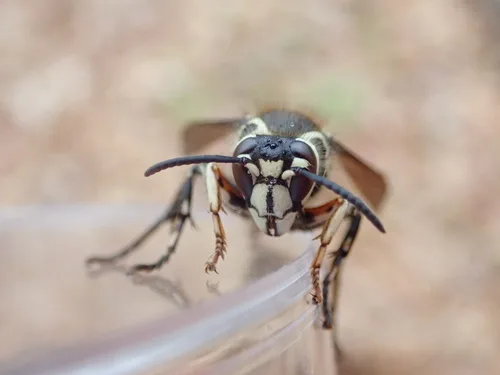
Bald-faced hornets (Dolichovespula maculata) build large, enclosed, football-shaped nests suspended from tree branches, eaves, and utility lines. The paper shell can reach basketball size by August. These insects are black with white markings on the face and abdomen, not yellow, which separates them visually from yellowjackets. Colonies are aggressive when the nest is threatened and workers will pursue and sting repeatedly. Nests near rooflines or overhangs bring foraging workers into close contact with residents entering and leaving the home.
European Hornets Nesting in Virginia Wall Voids
European hornets are Virginia’s largest wasp, reaching up to 1.5 inches long, with yellow and brown banding and a large, rounded abdomen. Unlike most wasps, European hornets forage at night and are drawn to outdoor lights, which surprises homeowners who encounter them after dark. They nest in hollow trees, attics, and wall voids, building enclosed paper nests similar to bald-faced hornets. The Virginia Tech Department of Entomology identifies European hornets as an established species throughout much of Virginia, particularly in wooded and suburban areas where hollow trees provide nesting habitat.
How Wasp Colonies in Virginia Grow Through the Season
Understanding the colony cycle helps Virginia homeowners time inspections and treatments before populations peak. Every social wasp colony follows the same annual arc, driven by temperature and food availability.
Spring Through Summer Colony Growth in Virginia
A single overwintered queen starts each new colony in early spring, building the first few cells and laying eggs without worker help. By late spring, the first workers emerge and take over foraging, nest construction, and brood care. The queen shifts entirely to egg-laying. Colony size grows steadily through June and July. During this period, wasps are focused on expanding the nest and feeding larvae, and aggression toward humans remains relatively low unless the nest is directly disturbed.
Late Summer Aggression Peaks for Wasps in Virginia
August and September mark the most dangerous period for wasp encounters in Virginia. Colonies reach peak population. The queen begins producing new queens and male drones instead of workers, and worker wasps stop tending larvae. Without larvae to feed, workers lose their main protein motivation and forage aggressively for sugars, scavenging at cookouts, garbage, and exposed food. Any perceived threat to the nest draws a fast, coordinated defense response. Most sting incidents in Virginia happen during this six-week window.
Cold Weather Ends the Colony Cycle in Virginia
Cold weather in late fall kills the entire colony except for newly mated queens, who leave the nest and seek protected places to overwinter. Old nests are not reused the following year, but a new colony may build in the same location if conditions remain favorable. Nests left in wall voids or attics over winter can serve as harborage for other insects and provide an attractive starting point for new queens inspecting the site in spring.
Where Wasps in Virginia Build Nests Near Your Home
Wasps in Virginia nest in a predictable set of locations around residential properties. Proforce service professionals check all of them during an exterior inspection before selecting a treatment method.
Common Nest Sites Found in Virginia Yards and Structures
Ground nests, wall voids, and eaves account for the majority of wasp problems in Virginia homes. Yellowjackets favor sandy or loose soil, lawn edges, and gaps in foundation walls. Paper wasps target eaves, shutters, and any horizontal surface that provides overhead cover. Bald-faced hornets attach nests to tree branches and the undersides of roof overhangs. European hornets use hollow trees, attics, and wall voids where cavity space is available. Wood piles, stored lumber, and dense shrubs near the foundation create additional nesting habitat that draws wasps closer to entry doors.
Signs That Wasps in Virginia Are Nesting in Wall Voids
A steady line of wasps disappearing into a gap in siding, a soffit joint, or a foundation crack is the clearest sign of a wall void nest. Yellowjackets and European hornets both use this type of harborage. Homeowners may also hear a low buzzing inside walls, especially in the morning and evening when foraging workers are most active.
Visible chewing damage on wood trim near the entry point and small piles of paper-like debris below a soffit gap are additional indicators. Do not seal an active nest entrance. Blocking the exit traps workers inside and forces them to chew through drywall into living spaces.
When to Call Proforce for Wasp Control in Virginia
Most wasp nests pose a low sting risk when located away from foot traffic. A paper wasp nest on a back fence post that nobody passes within five feet of rarely needs immediate treatment. The risk calculus changes quickly when nests appear near entry doors, play equipment, HVAC units, or anywhere a person might accidentally disturb the colony.
DIY Versus Professional Wasp Treatment in Virginia
Aerosol sprays sold at hardware stores can knock down exposed paper wasp nests when applied at dusk from a careful distance, but they are not appropriate for ground nests, wall void nests, or large bald-faced hornet colonies. Treating a ground nest without proper equipment risks a mass sting event. Wall void nests require void treatments that reach the colony through small injection points.
Bald-faced hornet colonies defend aggressively and can sting multiple times without losing the stinger. Proforce service professionals wear full protective equipment and carry species-specific products for each scenario, including D-Fense Dust for yellowjackets, and Stryker Wasp and Hornet Killer for bald-faced hornets, mud daubers, and paper wasps.
Proforce also recommends calling immediately if you are unsure of the species. Africanized honey bees, while rare in Virginia, look similar to European honey bees and respond to disturbance far more aggressively than any wasp species. Service professionals wear bee suits when any colony identification is uncertain.
What Proforce Does During a Wasp Service in Virginia
Every Proforce wasp service begins with a thorough exterior inspection to identify the species, locate the nest, and photograph hazardous conditions. Service professionals then apply species-specific treatments, which may include dusting, drenching, void injection, or direct aerosol application. Treatments are scheduled for early morning, evening, or dusk when worker wasps are least active and most are present inside the nest.
Once the colony is no longer active, the nest is removed when safely accessible, sealed in a bag, and disposed of at the branch office. The service does not prevent future nests. If a new colony establishes itself after treatment, contact Proforce for a follow-up visit.
Following the EPA’s integrated pest management framework, Proforce service professionals also document conducive conditions during the inspection and provide written recommendations for habitat modification, including sealing entry points, trimming vegetation touching the structure, and relocating wood piles away from the foundation.
Bottom Line on Wasps in Virginia
Wasps in Virginia range from the beneficial parasitic wasps and solitary mud daubers that pose almost no sting risk to aggressive yellowjacket colonies underground and bald-faced hornets in trees and eaves that defend fiercely when disturbed. Most species are active spring through fall, with peak colony size and peak aggression arriving together in late summer. The species, nest location, and distance to foot traffic determine whether a nest needs treatment now or can be monitored through the season.
When a nest is inside a wall void, near a doorway, or large enough to send workers into regular contact with your household, professional treatment is the right call. Proforce service professionals identify the species, select the correct treatment method, and remove the nest when possible. Done Right. Every Time.
Frequently Asked Questions
Are all wasps in Virginia aggressive?
No. Solitary wasps like mud daubers and parasitic wasps rarely sting humans because they do not defend a communal nest. Social wasps, including yellowjackets, paper wasps, and hornets, will sting when the colony is threatened. Aggression increases significantly in late summer when colonies reach peak size and workers forage for sugars rather than caring for larvae.
How do I know if I have yellowjacket nests underground in my yard?
Look for a steady stream of yellow and black insects flying in and out of a small hole in the ground, often near a lawn edge, landscape bed, or foundation gap. You may notice the hole after mowing disturbs the area and provokes a defensive response. Do not attempt to treat an underground nest without professional equipment. The colony can contain thousands of workers capable of multiple stings.
Do wasp nests in Virginia go away on their own?
Cold weather kills the workers and the queen each fall, so the active colony does not survive winter. However, the empty nest remains in place and new queens may return to the same site the following spring. Wall void and attic nests left in place can attract other insects over winter. Removing the nest after the colony dies reduces the chance of re-infestation at the same location.
What is the life cycle of a wasp colony in Virginia?
A single overwintered queen starts the colony in spring, builds the first cells, and lays the first eggs. Worker wasps emerge by late spring and take over nest construction and foraging. The colony grows through summer, reaching peak population in August. In early fall, the queen produces new queens and males. Workers die off as cold weather arrives, and newly mated queens leave to find protected overwintering sites before the cycle starts again.
When should I contact a pest control company for wasps in Virginia?
Contact a professional when the nest is inside a wall void, attic, or structure; when it is located within a few feet of a doorway, window, or play area; when the colony is large enough to send workers into regular contact with people; or when someone in your household has a known allergy to stinging insects. Proforce recommends calling immediately if the species is unknown, since some stinging insects require specialized protective equipment and handling protocols.