
Wasps in South Carolina include paper wasps, yellowjackets, mud daubers, and cicada killers. Here’s how to identify them and control nests safely.
Key Takeaways
- South Carolina is home to several wasp species, each with different nesting habits, aggression levels, and sting risks.
- Paper wasps and yellowjackets build the nests most likely to conflict with homeowners. Mud daubers and cicada killers are solitary and far less aggressive.
- Wasp stings can trigger severe allergic reactions, including difficulty breathing, hives, and abdominal cramps. Seek medical attention immediately if these symptoms appear.
- DIY nest removal carries real risk, particularly for hard-to-reach nests or large colonies. Professional wasp control is the recommended approach for active, aggressive nests.
- Prevention focuses on sealing entry points, securing food and garbage containers, and regularly inspecting eaves, attics, and trees for early nest construction.
What Wasps in South Carolina Mean for Homeowners
South Carolina’s warm climate and long active season give wasps several months to build colonies, expand nests, and defend territory. Most species are present from early spring through late fall, with populations peaking in mid-summer. Clemson Cooperative Extension identifies paper wasps, yellowjackets, and mud daubers as the wasp species homeowners in the state encounter most often. The key to managing them is understanding which species you’re dealing with before deciding how to respond.
Common Wasp Species Found in South Carolina Homes
South Carolina hosts several wasp species, ranging from highly aggressive colony insects to solitary wasps that rarely sting. Knowing the difference changes your response entirely.
Paper Wasps in South Carolina: Eaves, Porches, and Trees
Paper wasps build umbrella-shaped nests from chewed wood fiber, attaching them to eaves, porch ceilings, tree branches, and attic rafters. Their nests are open-celled and visible, resembling an upside-down honeycomb. They grow to roughly an inch in length and carry yellow stripes against a brown or reddish body, which leads to frequent confusion with yellowjackets. Paper wasps are moderately aggressive and will sting if the nest is disturbed. A single colony can house 20 to 75 insects by late summer.
Paper wasp nests are among the most common pest complaints in South Carolina during summer. They favor sheltered spots with easy access to insects and flowering plants, making residential properties ideal habitat. If you find paper wasp nests low on a porch or near a frequently-used door, professional removal is the practical choice.
Yellowjackets in South Carolina: Ground Nests and High Aggression
Yellowjackets are the most aggressive wasps in South Carolina, defending their colonies with repeated stings and little provocation. They build nests underground, inside wall voids, or inside attic spaces, which makes accidental disturbance common. Yellow jackets with their bold yellow stripes look similar to paper wasps at a glance, but their behavior is distinctly more defensive. A disturbed yellowjacket colony can mobilize hundreds of workers within seconds.
Ground nests are especially hazardous near lawn mowers, children playing in the garden, and pets. Yellowjackets are also attracted to food, so outdoor meals, open garbage containers, and sweet drinks draw foragers. Colonies are largest in late summer, which is when most stings occur. Do not attempt to treat a yellowjacket ground nest without protective equipment. Proforce service professionals use D-Fense Dust specifically for yellowjacket colony control.
Mud Daubers in South Carolina: Solitary Wasps That Target Spiders
Mud daubers are solitary wasps that build cylindrical mud tubes on walls, fences, and under overhangs. Their primary food source is spiders, which they paralyze and store inside mud cells as food for their larvae. They grow to about an inch in length and carry a slender, thread-waisted body, which makes them easy to distinguish from paper wasps and yellowjackets. Mud daubers rarely sting humans and do not defend their nests the way colonial species do.
Their presence is more nuisance than hazard. Old mud dauber tubes on a garage wall or under a deck are common in South Carolina. Removing the nest construction with a scraper and applying a targeted treatment to the area discourages rebuilding. The Proforce protocol for mud daubers uses Stryker Wasp & Hornet Killer applied directly to the nest.
Cicada Killers in South Carolina: Large but Low-Risk
Cicada killers are among the largest wasps in South Carolina, reaching up to 1.5 inches, but they are solitary and present minimal sting risk to most people. Females dig burrows in bare or sandy soil and stock them with paralyzed cicadas as food for their larvae. Males are territorial and will fly aggressively near humans, but they lack a stinger. The species is most active in July and August when cicadas peak.
Cicada killers alarm homeowners because of their size, but the actual threat is low. They do not form colonies, and a single female will not pursue a person who simply walks away. Their burrows can damage lawns and garden beds, and a cluster of females nesting in the same area can become a nuisance. If burrow density is high, a Proforce service professional can assess and treat the area during a regular visit.
Radioactive Wasps in South Carolina: Separating Fact from Fiction
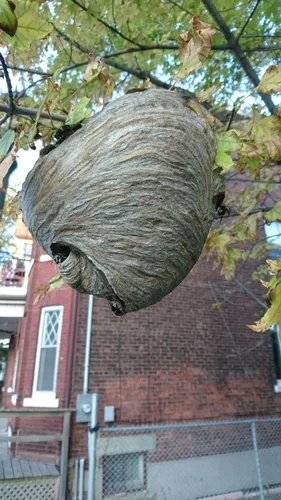
“Radioactive wasps” is a regional nickname that circulates online, but no actual radioactive wasp species exists in South Carolina. The term appears to reference the bald-faced hornet, a black-and-white wasp with a notably painful sting, or to play on the state’s history with nuclear research facilities. Bald-faced hornets are real and aggressive. They build large, enclosed paper nests in trees and shrubs and defend them vigorously. Proforce service professionals treat bald-faced hornet nests with Stryker Wasp & Hornet Killer or D-Fense Dust, depending on nest placement.
Wasp Sting Risks and When to Get Medical Attention in South Carolina
Most wasp stings cause localized pain, redness, and itching that resolves within a few hours. The greater concern is allergic reaction, which can escalate quickly and without warning.
Symptoms that require immediate medical attention include difficulty breathing, hives, swelling of the throat or tongue, abdominal cramps, dizziness, and loss of consciousness. These are signs of anaphylaxis, a life-threatening allergic response. If you or someone nearby experiences severe symptoms after a sting, call 911 and do not wait to see if the reaction resolves. According to the CDC, insect stings send more than 500,000 people to emergency rooms in the United States each year, and a subset of those cases involve fatal anaphylaxis.
People stung multiple times face higher risk even without a prior allergic history. Yellowjacket and bald-faced hornet stings are most likely to produce multiple stings in a single incident because both species are colonial and aggressive when defending nests. If you disturb a large nest, move away quickly and seek cover indoors. Do not swat at wasps, as this triggers further stinging.
When to Call Professional Wasp Control in South Carolina
DIY nest removal is practical for small paper wasp nests in accessible locations, treated early in the season when colony size is small. It is not the right call for most situations a South Carolina homeowner will face.
Signs You Need Professional Wasp Control in South Carolina
Call a professional if the nest is larger than a softball, located in a wall void or attic, or belongs to yellowjackets or bald-faced hornets. Hard-to-reach nests inside soffits, attics, or under elevated decks require protective equipment and species-specific treatment methods that are not practical for most homeowners. The same applies to any nest near a door, window, or HVAC entry point where daily foot traffic increases disturbance risk.
Proforce strongly recommends calling immediately if you suspect Africanized bees may be present. Service professionals wear full bee suits for protection when treating bee or hornet colonies. Interior wasp service requires manager approval and is handled as a specialty call, not a standard visit. The post-service reality is that treatment controls the current nest but does not prevent future nests. Proforce service professionals advise customers to call back if wasps rebuild in the same location.
How Proforce Treats Wasp Nests in South Carolina
Proforce service professionals identify the species before treating, then apply the method matched to that species and nest location. Treatment options include dusting, drenching, void treatments, and aerosol applications. Timing matters: treatments are often scheduled for early morning, evening, or dusk, when wasps are less active and more workers are present inside the nest. Once the nest is treated and the colony controlled, the nest is removed when accessible, sealed in a plastic bag, and disposed of at the branch office.
This protocol follows the EPA’s integrated pest management framework, which prioritizes targeted treatment over broad application and combines inspection, species identification, and pest-specific methods to reduce exposure and improve outcomes. Proforce’s 35-pest coverage plan includes wasps as a standard service category, backed by a re-treat guarantee.
How to Prevent Wasps Around South Carolina Properties
Long-term prevention reduces the likelihood of nests forming in the first place. These steps work across all common South Carolina wasp species.
- Seal entry points. Wasps enter wall voids, attics, and soffits through gaps as small as a quarter inch. Caulk cracks along the foundation line, repair screen tears, and install door sweeps on garage and utility doors.
- Secure food and garbage containers. Keep lids sealed tightly on outdoor trash bins. Clean up food and drink spills after outdoor meals. Store pet food inside.
- Remove attractive nesting sites. Clear debris, wood piles, and dense shrubs close to the structure. Wasps favor sheltered areas near flowering plants and trees.
- Regularly inspect eaves and attics. Check in early spring before colonies establish. A small wasp nest caught in May is far easier to address than one discovered in August with hundreds of workers.
- Trim trees and shrubs away from the roofline. Branches touching the home give wasps a direct path to eaves and attic vents.
Bottom Line on Wasps in South Carolina
Wasps in South Carolina range from low-risk solitary insects like mud daubers and cicada killers to aggressive colonial species like yellowjackets and bald-faced hornets that can send homeowners to the emergency room. The species, nest location, and colony size determine the right response. Early-season inspections, sealed entry points, and secured garbage containers are your best tools for keeping nests off your property. When a nest does appear in a wall, attic, or high-traffic area, professional wasp control is the approach that protects you and resolves the problem correctly.
Proforce covers wasps as part of its standard 35-pest service plan. If you find a nest on your property, contact a Proforce service professional to schedule an inspection and get a treatment plan matched to your specific situation.
Frequently Asked Questions
What is the most aggressive wasp species in South Carolina?
Yellowjackets are the most aggressive wasps in South Carolina. They nest underground and in wall voids, produce large colonies by late summer, and will sting repeatedly when their nest is disturbed. Bald-faced hornets, which build large enclosed paper nests in trees, are a close second for aggression and sting severity.
Are mud daubers dangerous to people in South Carolina?
Mud daubers are solitary wasps and rarely sting humans. They do not defend their nests the way colonial species do, and males have no stinger. Their presence is more of a nuisance than a health risk, though their mud tubes on walls and overhangs are unsightly and worth removing to discourage rebuilding.
When should I seek medical attention after a wasp sting?
Seek medical attention immediately if you experience difficulty breathing, swelling of the throat or tongue, hives, abdominal cramps, dizziness, or loss of consciousness after a sting. These symptoms indicate anaphylaxis and require emergency care. Multiple stings from yellowjackets or hornets also warrant prompt medical evaluation even if symptoms seem mild at first.
Can wasps come back after professional nest removal in South Carolina?
Yes. Nest removal controls the current colony but does not prevent new wasps from building in the same location the following season. Proforce’s post-service guidance is to contact the company if wasps rebuild, and the re-treat guarantee covers return visits. Ongoing prevention, including sealing entry points and regular inspections, reduces the likelihood of recurrence.
What time of year are wasps in South Carolina most active?
Wasps in South Carolina are most active from late spring through early fall, with populations peaking in July and August. Yellowjacket and paper wasp colonies reach maximum size in late summer, which is when most stings occur. Cicada killers are most active in July and August when cicadas emerge. Early spring is the best time to inspect for and address new nests before colonies grow.