
Wasps in North Carolina include yellowjackets, paper wasps, hornets, and more. Learn which species to watch for and when to call a pro.
Key Takeaways
- North Carolina hosts at least seven common wasp and stinging insect species, each with distinct nesting habits and sting risks.
- Yellowjackets and bald-faced hornets are the most aggressive stinging insects homeowners encounter in NC.
- Paper wasps build open, umbrella-shaped nests on eaves, deck rails, and tree branches throughout spring and summer.
- Mud daubers and cicada killers rarely sting humans and primarily serve as predatory insects that target other prey.
- Nests found near doorways, in wall voids, or underground should be handled by a service professional, not treated as a DIY project.
What Wasps in North Carolina Look Like and Do
North Carolina’s warm, humid climate supports a wide range of stinging insects from early spring through late fall. Most wasps are social insects that build nests, defend colonies, and sting multiple times when threatened. Unlike bees, most wasps lack the barbed stinger that limits a honey bee to a single sting. That distinction matters when you are standing near a disturbed nest.
Wasps range from slender, yellow-and-black insects you recognize immediately to large, black-and-white hornets you may mistake for something else. Some build exposed paper-like material nests you can see from the ground. Others nest underground, inside wall voids, or in protected areas you will not notice until you disturb them. Knowing what you are looking at is the first step toward knowing whether to back away or call a professional.
Why Wasps Build Nests in North Carolina Yards
Wasps build nests near food sources, protected areas, and structural voids that hold warmth. North Carolina’s long warm season gives colonies more time to grow before early winter slows them down. A paper wasp colony that begins in May can hold dozens of female workers by July. A yellowjacket colony can grow to thousands of individuals by late summer, which is when most stinging incidents occur.
Wooded areas, wood piles, and overgrown shrubs provide harborage. Trash cans, outdoor food, hummingbird feeders, and ripe fruit attract foraging workers. Gaps in siding, soffit voids, and spaces under deck boards become nest sites when queens scout in spring. Reducing food sources and sealing structural gaps before spring lowers the likelihood of a nest forming near your home.
NC State Extension Entomology documents the colony cycles and seasonal behavior of North Carolina’s most common stinging insects, and their guidance confirms that most wasp problems escalate in late summer as colonies reach peak population.
Common Wasps in North Carolina: Species Breakdown
Seven stinging insect species account for the overwhelming majority of encounters North Carolina homeowners report. Each species has different nesting habits, defensive behavior, and sting risk. Identifying the species correctly shapes the right response.
Yellowjackets in North Carolina: Ground and Wall Void Nesters
Yellowjackets are the stinging insects most likely to send someone to the emergency room in North Carolina. The eastern yellowjacket (Vespula maculifrons), the dominant species across the state, builds large underground nests or nests inside wall voids and structural cavities. Workers are black with yellow markings, fast fliers, and highly defensive when the colony is disturbed. Accidentally stepping on a ground nest or running a lawn mower over one triggers a mass defensive response.
A 2024 study published in Pest Management Science by Grzegorz Buczkowski on eastern yellowjacket colony biology found that horizontal product transfer, where foraging workers carry a treatment back to the nest, is among the most effective control approaches for this species. Colony size peaks in late summer, which is when sting incidents spike. Workers sting multiple times and release alarm pheromones that recruit other workers to attack.
Yellowjackets are also attracted to trash cans, outdoor meals, and sweet drinks. Keeping lids on trash containers and removing fallen fruit from the yard reduces foraging activity around high-traffic areas.
Paper Wasps in North Carolina: Eaves, Railings, and Tree Branches
Paper wasps (Polistes species) are slender, reddish-brown to dark brown insects with yellow markings and long hind legs that dangle in flight. They build open, umbrella-shaped nests made from a grey paper-like material chewed from wood fibers and plant matter. Nests appear on eaves, porch ceilings, deck railings, window frames, and tree branches throughout North Carolina from spring through early fall.
Paper wasp colonies are smaller than yellowjacket colonies, typically holding 20 to 75 female workers at peak. They are less aggressive than yellowjackets but will sting if the nest is touched or if a worker is trapped against skin.
A 2022 open-access study in the journal Insects on Polistes colony cycles in subtropical North America found that some paper wasp species in the southeastern United States run two colony cycles per year, meaning new nests can initiate in late summer after the first generation completes. That pattern is relevant for NC homeowners who treat a nest in July and see fresh activity by September.
Bald-Faced Hornets in North Carolina: Large Paper Nests in Trees
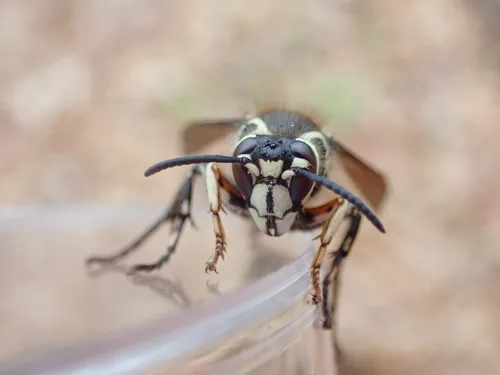
Bald-faced hornets (Dolichovespula maculata) are large black insects with white markings on the face and abdomen. Despite the common name, they are technically a yellowjacket species rather than a true hornet. They build enclosed, football-shaped nests from grey paper-like material, typically hanging from tree branches, shrubs, or building overhangs. Nests can reach the size of a basketball by late summer and house several hundred workers.
Bald-faced hornets are among the most aggressive stinging insects in North Carolina. They defend a larger perimeter around the nest than paper wasps do, and workers sting multiple times. The white markings on a black insect make them visually distinctive. If you see a large enclosed grey nest in a tree or under an eave, do not approach it without professional help.
European Hornets in North Carolina: Nocturnal Cavity Nesters
European hornets (Vespa crabro) are the only true hornet established in North Carolina. They are large, reddish-brown insects with yellow abdominal stripes and can reach 1.5 inches in length. European hornets nest inside hollow trees, wall voids, and attic spaces, which makes their nests harder to spot than above-ground paper nests. They are also active at night, which surprises homeowners who encounter them near porch lights.
European hornets are less immediately aggressive than bald-faced hornets but will defend the nest forcefully. They are predatory insects that hunt caterpillars, flies, and other insects to feed larvae. Their size alone makes encounters alarming. Nests inside wall voids or attic spaces require professional treatment because reaching the colony without proper protective equipment and targeted application methods is difficult.
Mud Daubers in North Carolina: Solitary Tube Builders
Mud daubers are solitary wasps that build small, tube-shaped nests from mud on walls, under eaves, and on wooden structures. The most common species in North Carolina are dark blue to black with a distinctive thread-waist. Unlike social wasps, mud daubers do not form colonies and do not defend their nests aggressively. Female mud daubers paralyze spiders, place them inside the mud tubes as food for larvae, then seal the tube and move on.
Mud daubers sting only if directly handled. Their primary nuisance is cosmetic: mud tubes left on siding, brickwork, and porch ceilings. Remove dried mud tubes with a scraper and the issue resolves without further treatment in most cases. If tubes reappear repeatedly in the same location, a service professional can apply a targeted treatment to the area.
Cicada Killers in North Carolina: Large Solitary Ground Wasps
Cicada killers (Sphecius speciosus) are the largest wasps North Carolina homeowners are likely to encounter. Eastern cicada killers can reach 1.5 inches in length and are black with yellow markings and a hairless black abdomen. Female cicada killers burrow into well-drained soil, particularly in lawns, garden beds, and sandy areas, to create nesting tunnels. They hunt cicadas, paralyze them with a sting, and drag the paralyzed cicada back to the burrow to feed developing larvae.
Despite their size, cicada killers pose little threat to humans. Female cicada killers can sting but almost never do unless physically restrained. Male cicada killers are territorial and may fly aggressively toward people near nesting areas, but males have no stinger. The only real danger from cicada killers is cosmetic damage to lawns from multiple burrows in a concentrated area. Burrowing activity peaks in summer months, typically July through August, when adult cicadas are abundant.
Bumble Bees and Carpenter Bees in North Carolina Yards
Bumble bees are fuzzy pollinators with chunky, black-and-yellow bodies that collect pollen from flowers across North Carolina. They nest in the ground, in dense grass clumps, or in abandoned rodent burrows. Bumble bees sting when the nest is threatened but are far less aggressive than yellowjackets. Because bumble bees are important pollinators, relocation rather than treatment is the recommended approach when a nest is discovered in a low-risk area.
Carpenter bees are large, mostly black bees with a hairless black abdomen that bore circular holes into unpainted wood on decks, eaves, and wooden structures. Female carpenter bees lay eggs in these tunnels. Males hover near the entry holes and show defensive behavior toward passersby but cannot sting. Female carpenter bees can sting but rarely do. Proforce recommends fall as the ideal time for prevention: painting or staining exposed wood, plugging holes, and sealing cracks along foundation lines before nests form. Citrus spray or almond oil applied to wood surfaces can deter carpenter bees without more aggressive treatment.
Wasp Sting Risks and Allergic Reactions in NC
Most wasp stings cause localized pain, swelling, and redness that resolve within a few hours. Multiple stings from yellowjackets or hornets can cause a more serious systemic reaction even in people without a known allergy. For individuals with venom hypersensitivity, a single wasp sting can trigger anaphylaxis, a life-threatening allergic reaction requiring immediate emergency care.
Key differences in sting risk by species: yellowjackets and bald-faced hornets sting multiple times and recruit additional workers, making encounters near large colonies especially dangerous. Paper wasps sting once the nest is contacted. Mud daubers and cicada killers present low sting risk under normal outdoor activities. Anyone who experiences throat swelling, difficulty breathing, or dizziness after a sting should call 911 immediately.
The EPA’s integrated pest management framework recommends controlling stinging insects through habitat modification, monitoring, and targeted treatment, reducing the need for broad applications while protecting non-target insects like honey bees and other pollinators.
When to Call a Pro for Wasps in North Carolina
DIY treatment is appropriate for small, accessible paper wasp nests treated at dusk, when workers have returned to the nest and activity is greatly reduced. Stand upwind and keep a clear exit path. Even then, avoid inhaling treatment aerosols, and keep children and pets away from the area until the product has dried per label directions.
Call a professional service when:
- The nest is inside a wall void, attic, or any enclosed structure.
- The colony is a yellowjacket or bald-faced hornet nest with more than a few dozen visible workers.
- Anyone in the household has a known venom allergy.
- The nest is underground and the entry point is not clearly visible.
- Previous DIY treatment did not resolve the problem.
Proforce service professionals perform a diligent exterior inspection, identify the species and nest location, and apply species-specific treatment methods: dusting, drenching, void treatments, and aerosol applications. Treatments are timed for early morning, evening, or dusk to target the full colony. Once the colony is no longer active, nests are removed when accessible, sealed in plastic bags, and disposed of at the branch. Proforce recommends calling immediately if there is any possibility of Africanized bees, as these insects are highly defensive and require service professionals equipped with full protective gear.
One important note: treatment controls the active colony but does not prevent future nests from forming at the same location. If a new nest appears, contact Proforce for follow-up service. The Proforce Guarantee covers re-treatment if stinging insects return.
Bottom Line on Wasps in North Carolina Homes
North Carolina’s stinging insect season runs from early spring through late fall, with peak activity and risk in late summer when yellowjacket and hornet colonies reach maximum population. Identifying the species correctly determines the correct response. Paper wasps and mud daubers in low-traffic areas carry limited risk. Yellowjackets, bald-faced hornets, and European hornets near entry points, play areas, or structural voids warrant professional attention. Carpenter bees and cicada killers are largely nuisance pests rather than sting threats.
Reducing attractants, sealing structural gaps in early spring, and treating nests at the right time with species-appropriate methods gives homeowners the best chance of keeping stinging insects from becoming a recurring problem. When the colony is large, hidden, or positioned near a high-traffic area, the right call is a trained service professional with the equipment and knowledge to handle it correctly.
Frequently Asked Questions
What is the most dangerous wasp in North Carolina?
Yellowjackets are the stinging insects most likely to cause serious harm in North Carolina. Their colonies can hold thousands of workers by late summer, they sting multiple times, and they recruit additional workers when the nest is disturbed. Bald-faced hornets are a close second, with similarly aggressive defensive behavior and large colonies by mid-to-late summer.
When is wasp season in North Carolina?
Wasp season in North Carolina runs from late March through November. Queens begin scouting nest sites in early spring. Colonies grow through summer and reach peak population in August and September. Activity drops sharply in early winter as workers die off and only fertilized queens survive to overwinter and start new colonies the following spring.
Do mud daubers and cicada killers sting?
Mud daubers sting only when directly handled and almost never do under normal conditions. Female cicada killers can sting but are not aggressive toward humans. Male cicada killers cannot sting at all. Both species are solitary, do not form colonies, and do not exhibit the defensive mass-attack behavior that makes social wasps like yellowjackets and hornets hazardous.
Can I treat a wasp nest myself in North Carolina?
Small paper wasp nests in accessible locations can be treated at dusk when activity is minimal. Stand upwind, wear protective clothing, and have a clear exit path. Avoid treating any nest inside a wall void, underground, or inside an enclosed structure. Large yellowjacket or hornet colonies should always be handled by a professional service with proper protective equipment and species-specific treatment methods.
How does Proforce treat wasps in North Carolina?
Proforce service professionals inspect the exterior, identify the species and nest location, and apply the appropriate treatment. Yellowjackets are treated with D-Fense Dust. Bald-faced hornets receive Stryker Wasp and Hornet Killer or D-Fense Dust. Paper wasps and mud daubers are treated with Stryker Wasp and Hornet Killer. Accessible nests are removed after treatment, sealed, and disposed of at the branch. Treatments are scheduled at dusk or early morning for maximum contact with the colony.