
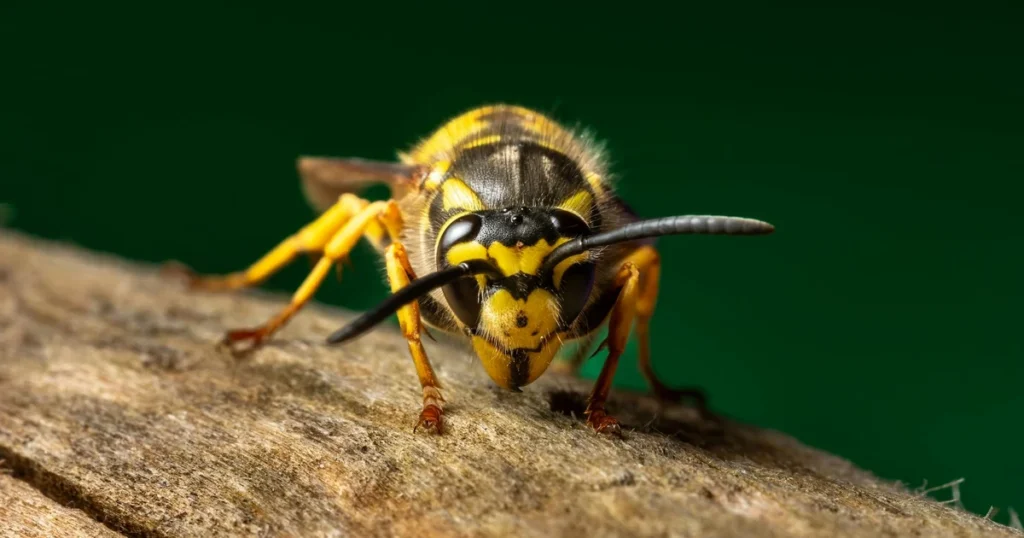
Wasps in Georgia can create costly problems when early signs are missed. Learn what to look for, why it matters, and when to call Proforce.
Key Takeaways About Georgia Wasps
- Georgia is home to several wasp species, including paper wasps, yellowjackets, mud daubers, cicada killers, and carpenter bees, each with distinct nesting habits and behavior.
- Paper wasps build open-cell nests under eaves and overhangs, while yellowjackets often nest underground, making both common around Georgia homes.
- Cicada killers appear for only about two to three weeks per year and are not aggressive toward people.
- Mishandling a yellowjacket nest can result in excessive stings serious enough to require hospitalization.
- Paper wasp colonies in Georgia typically begin forming in May or May and decline between July and October.
- Mud daubers construct vertical mud tubes four to six inches long on protected walls, housing larvae and spider prey.
- Cedar boards are particularly vulnerable to extensive carpenter bee damage over time.
- DIY wasp removal carries real danger. Proforce service professionals identify the species, apply targeted treatments, and remove nests when possible.
- Proforce wasp service does not prevent future nests. If wasps return, contact Proforce for follow-up treatment.
How to Identify Georgia Wasps
Knowing which wasp you are dealing with helps you understand the risk and decide on next steps. Georgia is home to several stinging species, and each one leaves different clues around your property. Learning to tell them apart starts with nest shape, location, and the insect’s overall appearance.
Telling Common Georgia Species Apart
Paper wasps are one of the most frequently encountered wasps in Georgia. According to UC IPM, they have long, slender waists and build open-cell paper nests under eaves. They tend to be less confrontational than other stinging insects, but they will defend their nest if disturbed.
Yellowjackets are stockier and often confused with bees. Their nests are typically concealed underground or inside wall voids, making them harder to spot until the colony is well established. From spring through midsummer, workers forage heavily for other insects to feed developing larvae.
Cicada killers are large, solitary wasps that dig burrows in bare soil. They look intimidating, but as University of Georgia pest guide notes, they are active for only about two to three weeks per year and are not aggressive toward people.
How to Spot Wasp Activity Inside Your Georgia Home
Wasps that enter your living space often arrive through gaps around windows, door frames, or damaged screens. You may hear a faint buzzing inside walls or ceilings where a nest is growing in a void. Finding a single wasp indoors during warm months is common, but repeated sightings in the same room suggest an entry point nearby.
Watch for dead wasps on windowsills, especially along south-facing walls where warmth draws them. Paper wasp nests attached to attic rafters or porch ceilings can go unnoticed until the colony grows large enough to produce visible traffic.
Where Wasp Activity Usually Shows Up in Georgia
Paper wasp nests typically appear under eaves, porch overhangs, and deck railings. Nest construction begins in spring when day length increases, usually around May or May. Yellowjacket nests are often hidden in abandoned rodent burrows, mulch beds, or hollow tree stumps. Ground-level activity near a small hole is a telltale sign.
Outdoor dining areas and trash cans also attract foraging wasps, particularly later in summer when colonies shift their diet. Keep an eye on areas where food or sugary drinks are left uncovered.
Exterior Entry Points Wasps Use in Georgia
Wasps exploit surprisingly small openings to build nests inside protected spaces. Common entry points include gaps where utility lines enter the house, weep holes in brick veneer, cracks along fascia boards, and uncapped fence posts. Damaged soffit panels and loose siding also offer easy access to wall voids.
Regularly inspect these areas, especially in early spring before nest foundation activity picks up. Sealing cracks and repairing torn screens can reduce the chances of wasps establishing a nest on or inside your home. If you spot a nest forming near a doorway or high-traffic area, contact Proforce Pest Control so a service professional can identify the species and treat accordingly.
Why Wasp Problems Develop in Georgia
Why Georgia’s Climate Supports Wasp Activity
Georgia’s warm, humid climate gives wasps a long window to build colonies each year. As Insects notes, paper wasp nest foundation begins when day length increases in spring, typically May or May, and colony decline follows later as day length decreases from July through October. That extended warm season means Georgia colonies have months to grow before cooler weather arrives.
Early-season colonies can persist for roughly 166 days, while late-season colonies last closer to 87 days. Either way, Georgia’s mild springs and drawn-out summers give wasps more active time than homeowners in cooler states deal with.
Food and Shelter That Attract Wasps in Georgia
Wasps are drawn to yards that offer steady access to protein and sugar. Outdoor dining areas, open trash cans, pet food bowls, and fallen fruit all pull foraging wasps closer to your living space. Georgia’s lush landscaping and flowering plants compound the draw during warmer months.
Shelter matters just as much. Paper wasps favor building open-cell nests under eaves, porch ceilings, and overhangs. Yellowjackets often nest underground in abandoned rodent burrows or in wall voids. Georgia homes with older siding, unsealed soffits, or dense ground cover provide ideal nesting conditions.
Why Georgia Wasps Adapt Around Homes
Residential properties create a reliable ecosystem for wasps. Irrigated lawns, garden beds, and structural crevices offer the combination of moisture, food, and protected nesting sites that colonies need. Bumble bees and yellowjackets both nest in the ground, and disturbing those nests accidentally during yard work can trigger aggressive responses.
Paper wasps are rarely aggressive under normal conditions, but their habit of building nests in high-traffic areas like doorways, mailboxes, and playground equipment puts families in close contact. The more sheltered overhangs and structural gaps your home has, the more inviting it becomes.
Seasonal Shifts That Move Wasps in Georgia
Spring kicks off colony establishment, but the real pressure builds in late summer and fall. As UC IPM describes, defensive behavior increases as the season progresses and colony populations grow while food becomes scarcer. That combination of larger colonies and shrinking resources pushes wasps to forage more aggressively near homes.
By late summer, yellowjackets in particular become bolder around cookouts, garbage bins, and sugary drinks. If you notice rising wasp activity around your Georgia home, contact Proforce Pest Control. Our service professionals identify the species, locate nests, and apply targeted treatment so you can reclaim your outdoor space.
Risks From Georgia Wasps
Wasps in Georgia are more than a nuisance. Several species across the state can sting, damage wood, soil exterior surfaces, and contaminate food. Understanding each category of risk helps you decide when to act and when to call a professional.
Health Risks Linked to Georgia Wasps
Stinging pests like yellowjackets and bumble bees become aggressive when their nests are disturbed. According to University of Georgia pest guide, bumble bees nest in the ground and may sting when they feel their colony is under pressure. Yellowjackets behave similarly, often nesting in ground holes or inside wall cavities, which means you can stumble into a nest without warning.
The danger escalates quickly with large colonies. A failed attempt to treat a yellowjacket nest on your own can lead to dozens or even hundreds of stings at once. As University of Georgia pest guide warns, a mistake during nest treatment can result in hospitalization or death from excessive stings. This is one reason Proforce service professionals wear full bee suits during every wasp treatment.
Property Damage From Wasps in Georgia
Carpenter bees are among the most destructive stinging pests for Georgia homeowners. These pests bore into wood decks, fascia boards, and eaves to create nesting galleries. Cedar boards are particularly susceptible to extensive damage over time, and repeated nesting seasons compound the problem as new generations reuse and expand old tunnels.
Mud daubers create a different kind of property concern. These pests build vertical mud tubes, typically four to six inches long, on exterior walls, under eaves, and inside sheds. While the structural impact is minor, the dried mud stains surfaces and creates an unsightly appearance that requires cleanup after removal.
Food Contamination Risks From Georgia Wasps
Yellowjackets are scavengers drawn to proteins and sugary foods. During outdoor meals, these pests land on plates, crawl into open drink containers, and hover around trash cans. Because yellowjackets forage across garbage, decaying matter, and food sources alike, they can transfer debris and bacteria onto the surfaces where your meals are prepared or served.
Reducing foraging activity around eating areas takes planning. Lure traps placed along the perimeter of your yard can help reduce the number of yellowjackets reaching patios and picnic spots, but they do not address the nest itself.
When a Wasp Problem in Georgia Needs Action
A single wasp flying through your yard is not necessarily cause for alarm. But repeated sightings near your roofline, deck, or foundation point to an active nest. Ground-nesting pests like yellowjackets are especially dangerous because foot traffic near the entrance can trigger a defensive swarm.
If you spot a nest in a wall void, under an eave, or in the ground near walkways, contact Proforce Pest Control rather than attempting removal yourself. Our service professionals identify the species, apply species-specific treatment methods, and remove the nest when it is low-risk to do so. Treatments are often performed during early morning, evening, or dusk when pests are less active and more likely to be inside the nest.
Professional Pest Control for Wasps in Georgia
Georgia’s warm climate supports multiple wasp species that build nests around homes from spring through fall. Paper wasps attach open-cell nests under eaves, while yellowjackets often nest underground or inside wall voids. Addressing an active nest on your own carries real risk. According to University of Georgia pest guide, a mistake during yellowjacket nest treatment can result in hospitalization or death from excessive stings. Working with trained service professionals helps protect your household and ensures the nest is handled correctly.
How to Reduce Attractants and Seal Entry Points
Prevention starts with making your property less inviting. Wasps forage for protein and sugary food sources, so keep outdoor trash cans sealed and clean up fallen fruit. Rinse recycling containers before storing them. During cookouts, cover food and drinks until you are ready to serve.
Structural maintenance matters just as much. Inspect eaves, soffits, and fascia boards for gaps where wasps could anchor a nest or enter a wall void. Seal cracks along your foundation line and repair torn window screens. Replace rotting wood trim, which can soften and create openings. These steps will not guarantee a wasp-free yard, but they reduce the conditions that attract nest-building activity near your living spaces.
Why the Process Starts With a Professional Inspection
Accurate species identification drives every treatment decision. Paper wasps, yellowjackets, and bumble bees each require different approaches. Some stinging insects are protected or regulated. As University of Georgia pest guide notes, honey bee removal in Georgia requires contacting the Georgia Department of Agriculture to locate a licensed specialist. A thorough inspection prevents the wrong species from being treated and the wrong method from being applied.
Proforce service professionals perform a detailed exterior inspection, observing flight patterns, noting nest locations, and documenting hazardous landscaping features with photographs. This assessment shapes the treatment plan and helps the team prepare the right protective equipment and products for your specific situation.
What to Expect During Professional Wasp Treatment
Proforce targets wasps with species-specific methods. Yellowjacket ground nests may be treated with D-Fense Dust, while paper wasp and mud dauber nests are addressed with Stryker Wasp & Hornet Killer. Treatments are often performed during early morning, evening, or dusk when wasps are less active and more likely to be inside the nest.
Methods include dusting, drenching, void treatments, and aerosol applications, selected based on nest type and location. Service professionals wear full bee suits for protection during the process. Once the nest is no longer active, it is removed when possible, sealed in a plastic bag, and disposed of properly. Interior service is not included as part of standard treatment and requires manager approval if needed.
What to Expect From a Georgia Wasp Control Plan
Proforce covers wasps and yellowjackets under its General Pest Control plan, which addresses 35 common pests. It is important to understand that treating an existing nest does not prevent future nests from forming on your property. If new wasp activity appears after service, contact Proforce so the team can return and address it.
Because Georgia wasp activity can begin as early as May and extend into fall, staying attentive to new nest construction around your home throughout the season is important. Proforce operates local branches staffed by service professionals who understand Georgia’s pest pressures. If you spot a nest forming on your eaves, in your yard, or near a doorway, reach out for an inspection rather than attempting removal yourself. Done Right. Every Time.
Bottom Line on Wasps in Georgia
Georgia’s warm climate supports a wide range of stinging insects, from paper wasps nesting under eaves to yellowjackets building colonies underground. Some species, like mud daubers and cicada killers, pose minimal threat and rarely sting. Others, especially yellowjackets, can be dangerous when disturbed. According to the University of Georgia pest guide, a mistake during yellowjacket nest treatment can result in hospitalization or even death from excessive stings. The safest approach is to leave nest removal to trained service professionals who carry proper protective equipment and apply species-specific treatments.
If you spot a nest on your property, contact Proforce Pest Control for a thorough exterior inspection and targeted treatment plan.
Frequently Asked Questions About Wasps in Georgia
Should I Remove a Wasp Nest Myself?
For most homeowners, the answer is no. Yellowjacket and bumble bee nests are often underground, and disturbing them can trigger aggressive stinging. Even paper wasp nests tucked under eaves can be risky at close range. Proforce service professionals wear protective bee suits and use species-specific treatment methods, including dusting, drenching, and aerosol applications. Treatments are often performed during early morning, evening, or dusk when wasps are less active. Once the nest is cleared, it is sealed and removed when possible.
What Should I Do If I Find Honey Bees Instead of Wasps?
Honey bees are not wasps and require a different response. Proforce does not treat honey bee colonies. As the University of Georgia pest guide notes, Georgia homeowners should contact the Georgia Department of Agriculture to locate a person licensed in Honey Bee Removal & Control. Proper identification matters because honey bees are valuable pollinators, and treating them as wasps can create unnecessary risk for both the colony and your household.
Will Treating a Nest Prevent New Wasps from Returning?
Nest treatment addresses the existing colony, but the service does not prevent future nests from being built on your property. Wasps scout for sheltered, undisturbed spots each season. If you notice new nesting activity after treatment, contact Proforce again. Staying on an ongoing general pest control plan helps you catch new activity early and keeps your home protected across all 35 covered pests throughout the year.
Are All Wasps in Georgia Dangerous?
Not all of them. Mud daubers build distinctive vertical mud tubes on walls and are solitary, nonaggressive insects. Cicada killers are large and intimidating but are active for only about two to three weeks per year and are not aggressive. Paper wasps, while capable of stinging, are rarely confrontational unless their nest is directly handled. The greatest concern in Georgia comes from yellowjackets and bumble bees, which can sting repeatedly when their ground-level nests are disturbed. Knowing which species you are dealing with is the first step toward the right response.