
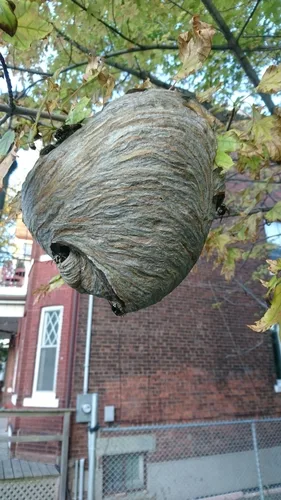
Wasps in Florida include paper wasps, yellow jackets, and hornets that peak in late summer, requiring professional removal when nesting near your home.
Key Takeaways
- Florida supports five common wasp species: paper wasps, yellow jackets, bald-faced hornets, mud daubers, and cicada killer wasps.
- Social wasps like yellow jackets and bald-faced hornets defend their colonies aggressively and can sting multiple times.
- Solitary wasps like mud daubers rarely sting unless directly handled.
- Wasp activity peaks in late summer and early fall when colonies reach maximum size.
- Nest removal without protective gear puts you at serious risk. Professional pest control is the right call for active colonies near your home.
Common Wasps in Florida You Need to Identify
Florida hosts both social wasps and solitary wasps, and the distinction matters for how you respond. Social wasps live in colonies with hundreds or thousands of other members and will swarm to defend the nest. Solitary wasps live and hunt alone. Most solitary wasp species rarely sting and do not defend a communal colony the way yellow jackets or paper wasps do.
Paper Wasps Found Nesting in Florida
Paper wasps are the most common wasp species homeowners encounter in Florida. They build open, umbrella-shaped paper wasp nests under eaves, inside attic vents, along fence lines, and beneath outdoor furniture. The nest resembles a honeycomb without an outer covering. Paper wasps have reddish brown bodies with yellow markings and long legs that dangle during flight. They are moderately aggressive. They will not chase you unprovoked, but they will sting if you get close to the nest. A paper wasp nest near a doorway or high-traffic area is a practical problem that warrants treatment.
Yellow Jackets in Florida: Underground and Wall Void Nesters
Yellow jackets are among the most aggressive wasp species in Florida and are responsible for the majority of wasp sting incidents. They build large colonies underground or inside wall voids, attic spaces, and hollow trees. A yellowjacket nest in a wall void can house thousands of insects by late summer.
Yellow jackets are attracted to food sources, particularly proteins and sugars, which is why they appear around cookouts, trash cans, and outdoor dining areas. They can sting multiple times without losing their stinger, and they release pheromone trails when threatened, signaling other colony members to attack. If you find a yellowjacket nest near your home, do not attempt removal yourself.
Bald-Faced Hornets Nesting in Florida Trees and Structures
Bald-faced hornets build large, enclosed paper nests on tree branches, eaves, and utility poles across Florida. Despite the name, they are a species of yellow jacket. They have black bodies with white markings. Colonies can exceed 700 workers by early fall, and bald-faced hornets are aggressive when defending the nest, pursuing threats for significant distances. A nest near your home requires professional attention.
Mud Daubers: Solitary Wasps Found in Florida
Mud daubers are solitary wasps that build small, tubular nests out of mud on exterior walls, under eaves, and in garages across Florida. They have metallic blue or black bodies with long, slender waists and long legs. Mud daubers hunt spiders, paralyze them with venom, and seal them inside mud chambers as food for their larvae.
Because mud daubers are solitary wasps, they have no colony to defend and rarely sting unless directly handled. The nests themselves pose little danger, but their presence on your home’s exterior is worth addressing, especially if they are nesting near entry points or air vents.
Cicada Killer Wasps in Florida Yards
Cicada killer wasps are large solitary wasps that dig tunnels in lawns and sandy soil throughout Florida. They reach two inches in length, making them alarming to encounter. Despite their size they are not aggressive toward people: males cannot sting, and females rarely sting unless grabbed. They hunt cicadas, paralyze them, and carry them underground to feed their larvae. Digging activity can damage turf, but cicada killers do not pose the threat that social wasps do.
Great Golden Digger Wasps in Florida
The great golden digger wasp is another large solitary species found in Florida. It has an orange abdomen, black wings, and a slender body. Like cicada killers, great golden diggers nest underground and hunt katydids and crickets for their larvae. They are not aggressive and rarely sting. Large wasps hovering near bare soil in your yard are likely this species.
Wasp Nesting Behavior in Florida and What It Means for You
Understanding where wasps build nests in Florida helps you catch a problem before a colony reaches full size. Most social wasps start new colonies in spring when a single queen emerges and begins building alone. By late summer and early fall, colony populations peak, making nests significantly more dangerous.
According to UF/IFAS Entomology and Nematology, Florida’s warm climate extends wasp activity across more of the calendar year than most northern states, with some species remaining active through winter in South Florida. Queens typically overwinter in protected harborage sites, such as inside wall voids, under bark, or in dense ground cover, then emerge in spring to establish new nests.
Common nest sites near Florida homes include eaves and soffits, attic vents, wall voids, underground burrows, and wooden fence posts. Mud daubers prefer smooth exterior walls and sheltered horizontal surfaces. Yellow jackets often exploit existing voids in structures or abandoned underground burrows. Paper wasps gravitate toward any sheltered overhang within reach of food sources like caterpillars, flies, and other insects. Regularly inspecting these areas in early spring, before colonies grow, gives you the best window to address a forming nest.
Why Wasp Stings in Florida Require Medical Attention
Most wasp stings produce localized pain, swelling, and redness that resolves within hours, but some stings trigger severe allergic reactions requiring immediate medical care. Social wasps like yellow jackets and bald-faced hornets can sting multiple times in a single encounter. For people with venom allergies, even a single sting can cause anaphylaxis, a life-threatening reaction involving throat swelling, a drop in blood pressure, and loss of consciousness.
The CDC notes that stinging insects send more than 500,000 people to emergency rooms in the United States each year. If you experience difficulty breathing, hives spreading beyond the sting site, or swelling in the face and throat after a sting, seek medical attention immediately. Small children and elderly family members are at higher risk for severe reactions from painful stings. Any yard with an active colony of aggressive wasps near play areas or entry points should be treated before an incident occurs.
How Proforce Treats Wasp Nests in Florida Homes
Proforce service professionals follow a structured process that accounts for species identification, nest location, and appropriate treatment method before applying any targeted treatment. The inspection comes first. The service professional performs a thorough exterior inspection, noting the nest location, species, and any hazardous landscaping features that affect access or application. No two wasp situations are identical, and the treatment method used depends on what is found during that inspection.
Treatments are applied early morning, at dusk, or in the evening, when wasps are least active and more of the colony is inside the nest. Species-specific methods include dusting for yellow jackets, aerosol treatments for mud daubers and paper wasps, and void treatments for colonies nesting inside wall voids or structural gaps. For yellow jackets, Proforce uses D-Fense Dust applied directly into the nest.
For paper wasps, bald-faced hornets, and mud daubers, Stryker Wasp and Hornet Killer is applied to active nest sites. Once the colony is controlled, nests are removed when possible, sealed in plastic bags, and disposed of at the branch office.
Interior service is not included in the standard wasp treatment. If the nest is inside the home’s structure and access requires interior work, a manager review is required first. Proforce service professionals also wear full bee suits when there is any possibility of Africanized bees being present, a real concern in South Florida and other warmer regions of the state. If you suspect Africanized bees rather than standard wasps or hornets, call immediately rather than approaching the nest.
Post-service, one thing to understand clearly: the treatment targets the active colony, but it does not prevent future nests from forming. If wasps return and build a new nest, contact Proforce for a follow-up service.
Proforce’s approach aligns with the EPA’s integrated pest management framework, which prioritizes accurate identification and targeted application over broad broadcast treatments. The USDA’s pest management policy similarly emphasizes matching the treatment method to the pest and minimizing unnecessary application. That approach is reflected in how Proforce structures every wasp service call.
How to Prevent Wasps in Florida Homes Year-Round
Reducing the conditions that attract wasps to your property lowers the chance of a colony establishing near your home. Wasps seek food sources, shelter, and nesting sites. Removing or reducing those attractants works alongside professional pest control to keep populations lower between scheduled services.
- Seal gaps around eaves, soffits, attic vents, and any wall voids larger than a quarter-inch to block nest-building access to your structure.
- Keep outdoor food sources covered. Protein and sugar attract yellow jackets, particularly at cookouts and around trash cans.
- Remove standing water and fix leaky outdoor fixtures. Wasps require water, and a humid climate already provides plenty.
- Inspect your yard in early spring before colonies grow. A forming paper wasp nest in March is far easier to address than a mature colony in September.
- Cut back dense ground cover and vegetation close to your foundation. This removes harborage and makes it easier to spot underground nest entries.
- Keep firewood and yard debris stored away from the home. These materials attract insects that wasps prey on, including beetles and caterpillars.
When to Call a Pro About Wasps in Florida
If you find an active nest near a door, window, play area, or high-traffic part of your yard, call a pest control professional before attempting any removal. DIY wasp control puts you at serious risk. Without protective equipment and the right product applied at the right time of day, you are likely to aggravate the colony rather than control it. Yellow jackets in wall voids need specialized equipment, and bald-faced hornets will pursue threats aggressively. The professional standard is species identification first, treatment matched to the species second, and nest removal third.
Proforce covers wasps, yellow jackets, and bald-faced hornets across its Florida locations as part of its 35-pest general pest control plan. If you have an active nest, request a quote before the colony grows. Late-summer colonies are significantly larger and more aggressive than the same colony was in spring.
Bottom Line on Wasps in Florida
Wasp colonies grow most dangerous in late summer, making professional removal essential. If you spot an active nest near your home, do not attempt removal yourself. Yellow jackets and bald-faced hornets defend their colonies aggressively, and DIY efforts often end in multiple stings. Contact Proforce to inspect your property and remove nests before the colony peaks.
Frequently Asked Questions
How do I tell paper wasps and yellow jackets apart in Florida?
Paper wasps have slender bodies with reddish brown and yellow markings, and they build open honeycomb nests with no outer covering. Yellow jackets are shorter and stockier with bright yellow and black banding, and they build enclosed nests underground or inside wall voids. If you can see individual cells of the nest from the outside, it is a paper wasp nest. Enclosed or underground nests indicate yellow jackets.
Are cicada killer wasps in Florida dangerous to people?
No. Cicada killers look alarming because of their size but pose very low risk. Males have no stinger. Females can sting but rarely do unless grabbed or squeezed. Their digging activity in lawns is a nuisance, but they do not defend a communal colony the way yellow jackets or bald-faced hornets do.
What time of year are wasps most active in Florida?
Wasp colonies grow from spring through early fall, peaking in late summer. In South Florida, warm winter temperatures allow some wasp activity year-round. The most aggressive defensive behavior occurs in late summer and early fall when colonies are largest. Spring is the best time to address a forming nest before it becomes a problem.
Can wasps nest inside my walls in Florida?
Yes. Yellow jackets in particular exploit wall voids, attic spaces, and gaps in siding. A wall void nest can grow to several thousand workers by late summer, with insects entering and exiting through a small exterior gap. If you hear buzzing inside a wall or see wasps entering a crack in siding, contact a pest control professional. Treating a wall void without the right equipment can drive wasps deeper into the structure.
Does treating a wasp nest prevent future nests in Florida?
No. Treating an active nest controls the current colony but does not prevent new queens from establishing a nest at the same site in future seasons. Sealing entry points after treatment and removing attractants reduces the likelihood of return, but ongoing spring and summer monitoring is the most reliable approach in Florida.