
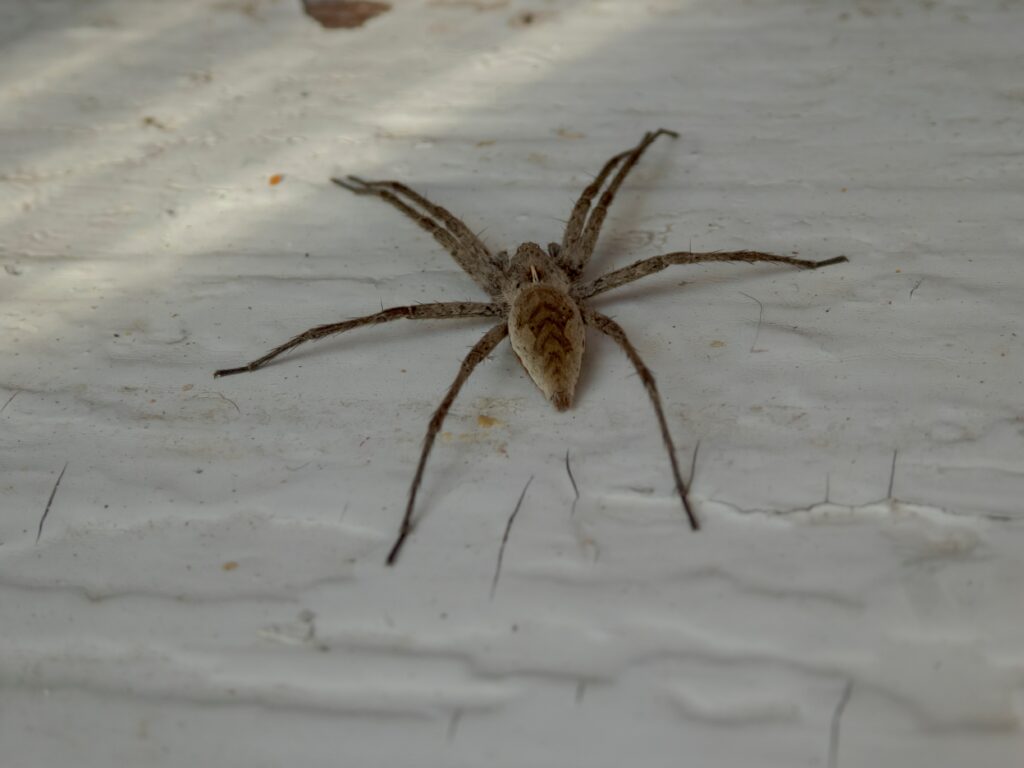
Discover the most common types of spiders in Georgia, including two venomous species and common house spiders, and learn which ones pose real threats.
Key Takeaways
- Georgia has two venomous spiders worth knowing: the black widow and the brown recluse, with the recluse documented primarily in the state’s northwestern corner.
- Most spiders in Georgia — wolf spiders, jumping spiders, cellar spiders, house spiders — pose no significant threat to people.
- Identifying the species matters. Knowing what you’re dealing with tells you whether to leave a spider alone or call for help.
- Persistent spider activity often signals a larger insect problem. Spiders follow their food supply into your home.
- Professional treatment targets both spiders and the flying insects and crawling pests that attract them.
Most Common Spiders Found in Georgia Homes
Georgia is home to dozens of spider species, but only two carry venom that matters medically. The table below is the fastest way to narrow down what you’re looking at. Match what you’ve seen on size, color, and where it showed up, then check the last column to decide whether to leave it alone or call for help.
| Species | Size | Color | Where to look | Risk | Sting |
|---|---|---|---|---|---|
| Black widow | 3/8–1/2″ body | Shiny black with red hourglass on the underside | Low webs under decks, in wood piles, window frames, storage areas | Medically significant venomous bite; seek medical attention | Yes |
| Brown recluse | 1/4–1/2″ body | Medium brown with dark violin shape on the back; six eyes in pairs | Documented populations only in northwest Georgia; dark undisturbed boxes and closets | Bite can cause a necrotic wound; warrants medical evaluation | Yes |
| Brown widow | 3/8–1/2″ body | Mottled brown with orange hourglass on the underside | Patio furniture, mailboxes, exterior corners near light fixtures | Venomous bite, less medically significant than the black widow | Yes |
| Wolf spider | 3/4–1 3/8″ body | Dark brown with hairy or spiny legs and large abdomen | Hunts on foot along baseboards and through tall grass; enters homes in fall | Startling size, but bite is mild and comparable to a bee sting | No |
| Joro spider | 3/4–1″ body | Yellow and black with red markings; very large webs | Invasive species, now visible statewide in trees, shrubs, fence lines | Not medically significant to humans; not aggressive | No |
| Yellow garden spider | 3/4–1 1/8″ body | Bright yellow patches on a black abdomen | Large zigzag orb webs in garden beds and shrubs | Beneficial pest predator; bite is mild if handled | No |
| Hobo spider | 3/8–5/8″ body | Medium to dark brown, no violin marking | Sheet webs with funnel retreats near foundations, wood piles, debris | Rarely bites unprovoked; frequently misidentified as brown recluse | No |
| Common house spider | 3/16–5/16″ body | Yellowish brown with a large round abdomen | Tangled cobwebs in ceiling corners, window frames, and storage areas | Rarely bites; high numbers signal an active indoor insect population | No |
| Jumping spider | 1/8–3/4″ body | Compact, often brightly colored, with forward-facing eyes | Active by day on walls, baseboards, and door frames | Rarely bites; bold but not aggressive | No |
| Cellar spider | 1/4–3/8″ body, very long legs | Pale tan with extremely long thin legs | Loose webs in basements, crawl spaces, garages, damp utility rooms | No medical concern; feeds on other small indoor insects | No |
| Lynx spider | 3/8–5/8″ body | Brightly colored with spiny legs | Active hunter in tall grass and low vegetation | Rarely bites; beneficial garden predator | No |
| Trapdoor spider | 1/2–1 1/8″ body | Dark brown to black, stout-bodied | Cork-like trapdoor entrance to a burrow in the soil | Rarely encountered; bite is not medically significant | No |
| Crevice spider | 3/8–5/8″ body | Dark brown, flattened body | Tight gaps along foundations, retaining walls, and stonework | Rarely bites; not medically significant | No |
If what you’re seeing doesn’t match any row cleanly, photograph it from a careful distance before handling. Persistent spider activity usually points to an underlying insect problem feeding them.
Georgia supports a wide range of spider species year-round. The state’s humid subtropical climate keeps insect populations high, which keeps spider populations fed and active. Most common spiders in Georgia are not dangerous — but a handful require immediate attention when found indoors.
Black Widow Spider in Georgia: Appearance and Risk
The black widow is the most recognized venomous spider in Georgia. Females are shiny black with a red hourglass marking on the underside of the abdomen. Males are smaller and less distinctive, with pale markings along the sides. Black widows build irregular, low webs near ground level — under decks, in wood piles, along window frames, and inside storage areas.
A retrospective review of black widow exposures published in Wilderness & Environmental Medicine found that exposures cluster in warm-weather states and peak in summer months, which matches Georgia’s seasonal pattern. Seek medical attention for any confirmed or suspected black widow bite.
Brown Recluse Spiders in Georgia: Where They Actually Live
Brown recluse spiders are the most misidentified spider in Georgia. Many brown spiders get labeled recluse by homeowners, but documented populations are concentrated in the northwestern corner of the state, not statewide. Research published in PLoS ONE tracking the brown recluse’s ecological range places northwest Georgia at the eastern edge of the spider’s documented territory. The brown recluse carries a dark brown violin shape on its back and has six eyes arranged in pairs rather than the standard eight. A brown recluse bite can cause a necrotic wound and warrants medical evaluation.
Brown Widow Spider in Georgia: The Lesser-Known Cousin
The brown widow has expanded its range across the southeastern United States over the past two decades. It resembles the black widow but with brown coloring and an orange hourglass marking rather than red. Brown widow venom is considered less medically significant than black widow venom, though a bite still warrants care.
Brown widows favor sheltered outdoor spots — patio furniture, mailboxes, and exterior corners near light sources that attract flying insects. A review of widow spider distribution and latrodectism published in the Journal of Venomous Animals and Toxins documents the brown widow’s northward spread through the Americas, including the Southeast.
Non-Venomous Spiders in Georgia You’ll Encounter
The majority of spiders in Georgia are not dangerous to people. They control common household pests, reduce flying insect populations, and rarely bite unless cornered or handled. Knowing what these species look like prevents unnecessary alarm.
Wolf Spider in Georgia: Big, Fast, and Misunderstood
Wolf spiders are among the largest spiders Georgia residents encounter indoors. They are dark brown with hairy or spiny legs, a large abdomen, and a body that can reach an inch or more. Most wolf spiders do not spin webs — they hunt on foot across floors, along baseboards, and through tall grass surroundings outside. They enter homes in fall when temperatures drop. A wolf spider bite is mild and comparable to a bee sting for most people. These nocturnal spiders are startling but not a significant threat.
Common House Spider in Georgia Walls and Ceiling Corners
The common house spider is a yellowish brown spider with a relatively large abdomen and elongated abdomens compared to its body width. It builds the classic tangled cobweb in ceiling corners, window frames, and undisturbed storage areas. Common house spiders eat common household pests like gnats, mosquitoes, and other flying insects. They rarely bite and pose no significant threat to people. High numbers of house spiders typically indicate an active insect problem in the structure.
Jumping Spiders in Georgia: Brightly Colored and Curious
Jumping spiders are compact, brightly colored, and noticeably bold compared to other spider species. The daring jumping spider is one of the most common — it has a dark body with pale markings and distinctive forward-facing eyes that track movement. Jumping spiders jump large distances relative to their body size to capture prey. They are active during daylight hours and move quickly across walls, baseboards, and door frames. Jumping spiders rarely bite and do not build webs to capture prey.
Cellar Spiders in Georgia: Long Legs, Damp Spaces
Cellar spiders are often called daddy longlegs for their extremely long legs relative to a small body. They build loose, irregular webs in basements, crawl spaces, garages, and damp utility rooms. Cellar spiders have elongated abdomens and move with a distinctive bouncing motion when disturbed. They pose no medical concern to people and feed on other small insects that share their habitat. The claim that cellar spiders are the most venomous spider is a widely repeated myth with no scientific basis.
Hobo Spider in Georgia: Often Misidentified
The hobo spider is a medium brown to dark brown spider with distinctive sheet webs built close to ground level, often with a funnel or escape tunnel at one end. Hobo spiders are frequently misidentified as brown recluse spiders because of their light brown coloring and size. The hobo spider lacks the violin marking that identifies recluse spiders and has a different eye arrangement. They favor wood piles, ground cover, and debris piles around foundations. Hobo spiders rarely bite humans unprovoked.
Other Notable Spiders in Georgia Worth Knowing
Georgia’s spider population extends well beyond the species above. Yellow garden spiders (also called orb weaver spiders) are large, brightly colored spiders with bright yellow patches on a black abdomen that build webs up to three feet across in garden beds and shrubs. Lynx spiders are brightly colored, active hunters found in tall grass surroundings and low vegetation.
The trapdoor spider builds a cork-like trapdoor entrance to a burrow in the soil. The joro spider, an invasive species originally from East Asia, has spread rapidly across Georgia since its first documented appearance and is now visible statewide. Crevice spiders are typically dark brown and shelter in tight gaps along foundations and retaining walls.
When Georgia Spiders Become a Problem Indoors
Seeing one or two spiders indoors is normal. A persistent spider problem signals something else: an active insect population feeding them. Spiders follow their food supply — if house spiders, wolf spiders, or jumping spiders appear regularly, the home likely has an underlying insect issue drawing them in.
Signs You Have a Spider Problem in Georgia
The difference between occasional spiders and a spider problem comes down to frequency and location. Finding venomous spiders in Georgia, particularly black widows or confirmed brown recluse spiders, in living areas warrants a professional assessment. Multiple webs in active, high-traffic areas rather than undisturbed corners are another indicator. Egg sacs stuck to baseboards, window frames, or stored boxes mean a population is reproducing indoors. UGA Cooperative Extension recommends that homeowners treat spider activity as a signal to inspect for the insect populations supporting them, not just treat the spiders in isolation.
How to Prevent Spiders in Georgia Year-Round
Reducing spider activity starts with removing what draws them in. Seal gaps around utility penetrations, window frames, and door frames. Cut back vegetation touching the exterior of the home. Move wood piles and debris piles at least ten feet from the foundation. Reduce outdoor lighting that attracts flying insects, which in turn attract spiders. Vacuum regularly to remove webs, egg sacs, and other spider evidence before populations establish. Empty boxes stored in garages and storage rooms are a common harborage for brown spiders and other species that favor undisturbed spaces.
What to Do When You Find Venomous Spiders in Georgia
Identifying a black widow or a suspected brown recluse indoors calls for a specific response. Do not handle the spider. Keep people and pets at a careful distance. Photograph the spider if possible, then contact a pest control professional for a targeted inspection and treatment plan.
Proforce service professionals inspect for harborage sites, entry points, and the insect activity supporting the spider population. The treatment and prevention plan targets both the spiders present and the conditions drawing them into the structure. Proforce covers spiders under its general pest control plan across its Georgia locations, with a re-treat guarantee if activity persists after service.
If you or a family member is bitten by a suspected venomous spider, contact poison control or seek emergency medical attention. The EPA’s integrated pest management framework emphasizes accurate identification before treatment — the same principle applies at the household level.
Bottom Line on Types of Spiders in Georgia
Georgia’s climate supports dozens of spider species, and most of them are more useful than harmful. Black widows and brown recluse spiders are the only two species with venom capable of causing serious medical problems in Georgia, and neither seeks out confrontation. Knowing how to identify common spiders in Georgia gives you the information to decide when to leave a spider alone and when to act.
Persistent spider activity inside the home is a sign that something else is drawing them in. Request a quote from Proforce for a thorough inspection and a treatment plan that addresses both the spiders and the insect populations supporting them.
Are there dangerous spiders in Georgia? How do I identify a brown recluse spider in Georgia?
Look for a dark brown violin shape on the top of the spider’s back and six eyes arranged in three pairs rather than the typical eight. Brown recluse spiders are medium brown to yellowish brown and move slowly compared to wolf spiders or jumping spiders. If you find a spider you suspect is a brown recluse, photograph it and contact a pest control professional before handling it.
Why do I keep seeing wolf spiders in my Georgia home?
Wolf spiders enter homes in fall when outdoor temperatures drop, searching for warmth and prey. If wolf spiders appear regularly indoors, the home likely has an active insect population feeding them. Sealing entry points around doors, windows, and utility penetrations, combined with a general pest control treatment, reduces both the insect population and the wolf spiders following it inside.
What is the joro spider and is it a threat in Georgia?
The joro spider is a large, brightly colored invasive species from East Asia that has spread across Georgia since its first documented appearance in the state. Females display striking yellow and black coloring with red markings on the abdomen. Joro spiders are not venomous to humans in any medically significant way and are not aggressive. They build large webs in trees, shrubs, and along fence lines across Georgia.
When should I call a pest control professional for spiders in Georgia?
Call a professional when you find black widows or suspected brown recluse spiders in living areas, when you find egg sacs in multiple locations, or when spider activity persists despite vacuuming and sealing entry points. A professional inspection identifies the harborage sites and the insect activity supporting the spider population, then builds a targeted treatment and prevention plan.