
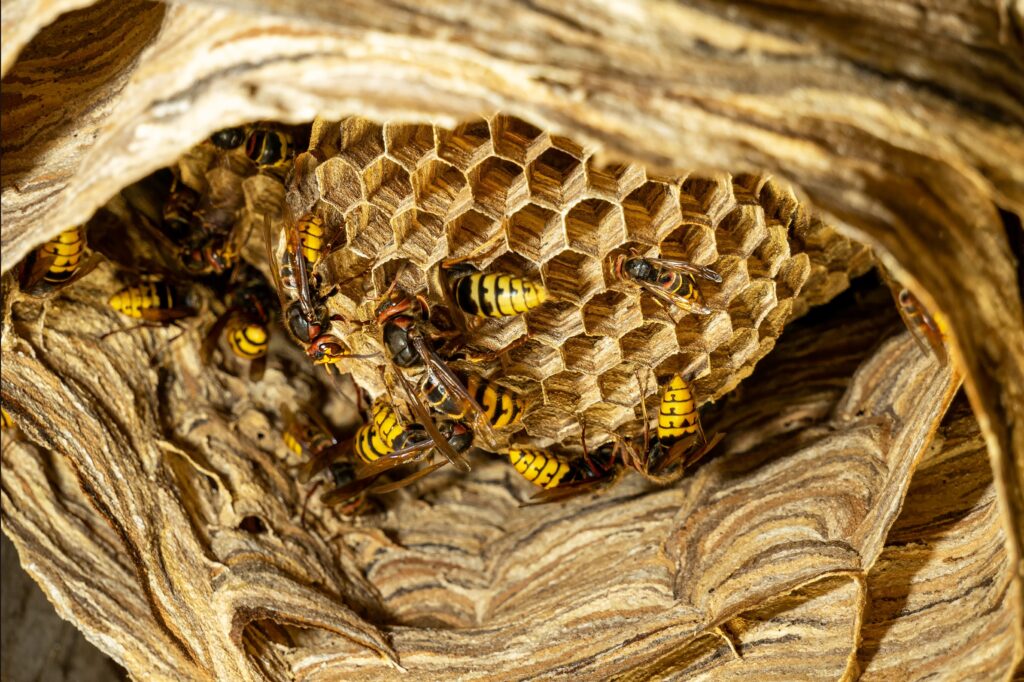
Hornets in Georgia can create costly problems when early signs are missed. Learn what to look for, why it matters, and when to call Proforce.
Key Takeaways About Hornet Types in Georgia
- Georgia homeowners may encounter several hornet and wasp species, each with distinct coloring and nesting habits that help with identification.
- Some species can be more defensive near their nests, so knowing what you are looking at helps you decide how to respond safely.
- Hornets and wasps are sometimes confused with less defensive look-alikes such as honey bees and bumble bees, making accurate identification an important first step.
- Proforce Pest Control service professionals identify the species and nest location before applying a species-specific approach, including nest removal when possible.
How to Identify Hornet Types in Georgia
Telling one stinging insect from another can be tricky, especially when several wasp species share similar color patterns. Knowing what to look for helps you decide how to respond when you spot activity around your property.
How to Tell Hornet Types Apart in Georgia
Most stinging-insect calls in Georgia come down to a handful of hornet and wasp species. The table below is the fastest way to narrow down what you’re looking at. Match what you’ve seen on size, color, and where the nest is sitting, then check the last column to decide how urgent the call is.
| Species | Size | Color | Where to look | Risk | Sting |
|---|---|---|---|---|---|
| European hornet | 3/4–1 3/8″ | Brown with yellow abdominal bands, reddish head | Protected aerial spots: wall voids, hollow trees, attics | Smooth stinger delivers multiple painful stings; active at night | Yes |
| Yellow-legged hornet | 3/4–1″ | Dark brown to black body, bright yellow lower legs | Invasive species first found in Georgia in 2023; nests in trees and shrubs | Predator of honey bees; can weaken nearby hives | Yes |
| Bald-faced hornet | 5/8–3/4″ | Black body with white face and white abdominal markings | Large gray paper nests hanging from tree branches, eaves, or shrubs | Highly defensive near the nest; multiple stings per encounter | Yes |
| Yellowjacket | 3/8–5/8″ | Bright yellow and black bands | Underground nests in lawns, garden beds, and old rodent burrows | Aggressive in late summer and fall; mowing the lawn can trigger swarming stings | Yes |
| Paper wasp | 5/8–3/4″ | Reddish brown to dark brown, some with yellow markings | Open umbrella-shaped combs under eaves, porch ceilings, and grills | Stings when nest is disturbed; less defensive than yellowjackets | Yes |
| Guinea wasp | 1/2–5/8″ | Yellow and brown markings, slimmer than a yellowjacket | Protected spots around buildings, equipment, and dense shrubbery | Defends nest with stings; often misidentified as a yellowjacket | Yes |
If what you’re seeing doesn’t match any row cleanly, that’s usually a sign the nest is tucked out of view or you’re dealing with a look-alike. A pro can confirm the species before any treatment decision.
The yellow-legged hornet, scientifically known as Vespa velutina, is an invasive wasp species originally from Southeast Asia. According to UF/IFAS Extension, it first arrived in Europe in 2004, likely transported through bonsai pot shipments to France. It has since expanded beyond its native range and is considered a notable pest species. Awareness of this hornet can help Georgia homeowners distinguish it from native wasp species such as yellowjackets and paper wasps.
Yellowjackets and paper wasps are among the most commonly confused species. Products labeled for wasp and hornet nests often list “yellowjacket,” “wasp,” and “hornet” on the label, reflecting how frequently these species overlap in residential settings.
How to Spot Hornet Activity Inside Your Georgia Home
Some wasp species, such as paper wasps, are not particularly aggressive and typically sting only when threatened. If you notice individual wasps flying through interior rooms, they may have entered through a gap rather than established a nest indoors. Proforce service professionals can assess the situation and determine the species involved.
Interior service for stinging insects requires manager approval at Proforce. If you see repeated wasp or hornet activity inside, note the time of day and location so the team can investigate during an exterior inspection.
Where Hornet Activity Shows Up Around Georgia Homes
Nests are the clearest sign of an active colony. Yellowjacket nests and wasp nests may appear under eaves, along rooflines, or in sheltered spots around the yard. Proforce service professionals perform a thorough exterior inspection, observing surroundings and noting hazardous landscaping features near nest locations.
According to UF/IFAS Extension, V. velutina is a predator of honey bees, hovering near hive entrances to capture returning foragers. A separate UF/IFAS publication notes that this predatory behavior can weaken roughly 30 percent of honey bee hives. If you keep bees or notice declining pollinator activity, hornet nests nearby may be a factor worth investigating.
Exterior Entry Points Hornets Use Around Georgia Homes
Hornets and wasps look for sheltered voids and protected overhangs to establish nests. Proforce service professionals take notes and photographs during exterior inspections to identify species and nest locations accurately. Treatments are often performed early morning, evening, or dusk, when wasps are less active.
According to UF/IFAS Extension, if a nest needs to be destroyed, it is easiest to do so in the evening when the wasps are inactive. Proforce uses species-specific treatment methods, including dusting, drenching, void treatments, and aerosol applications, depending on the hornet or wasp species involved.
Why Hornet Problems Develop in Georgia
Hornets and related stinging insects build nests near Georgia homes because residential properties offer the combination of shelter, food sources, and protected spaces these insects need. Understanding what draws them in can help you spot problems early and know when professional help is the right move.
Outdoor Nesting Areas for Hornets Around Georgia Homes
Different species choose different nesting sites. According to Penn State Extension, European hornets select protected aerial locations for their paper nests, while bald-faced hornets build large exposed nests in trees and yellowjackets typically nest underground. This variety means you may find nests in very different spots around your property depending on the species present.
Wall voids are another common nesting area. Overwintering queens seek out protected locations such as fallen tree bark crevices or wall voids in buildings to shelter through the cold months. When spring arrives, those queens can start new colonies right where they spent the winter.
Food and Shelter That Attract Hornets Around Georgia Homes
Residential landscapes give hornets access to the sheltered spaces they need for nest construction. Overhangs, soffits, and hollow trees near a home all provide the kind of protected spots these insects prefer. Colonies expand through summer and into fall, growing larger as the season progresses.
Regardless of species, paper wasp nests last only one season. However, new queens produced each year can select your home again the following spring, creating a recurring pattern if the conditions that attracted them remain unchanged.
How Hornets Move Around Georgia Homes
Hornet colonies are annual, meaning they perish with autumn frosts. According to Penn State Extension, only fertilized queens survive through winter. Colonies expand until reproductive females and males emerge around late October. This late-season activity often brings increased hornet traffic around homes right when outdoor gatherings are common.
If you see wasps or hornets indoors during winter, they are not coming from an active nest but from a sheltered overwintering spot. Yellowjacket queens overwinter alone, while paper wasp queens may shelter in groups.
Trails and Entry Points Hornets Use in Georgia
Gaps in siding, cracks around eaves, and openings near rooflines can all serve as access points. European hornets in particular favor wall voids and similar protected spaces, so any unsealed entry on your home’s exterior is a potential nesting opportunity.
Staying alert for nests around the home is an important first step. Keep in mind that Georgia has specific licensing requirements for certain stinging-insect situations. According to the University of Georgia pest guide, a person licensed in Honey Bee Removal and Control must be contacted through the Georgia Department of Agriculture when honey bees are involved.
Risks From Georgia Hornets
Health Risks Linked to Georgia Hornets
Hornets and related stinging insects sting to defend their colony. The main concern for Georgia homeowners is repeated stings. Unlike honeybees, whose barbed stingers lodge in the skin and detach, European hornets have smooth stingers that allow multiple stinging incidents, as Penn State Extension notes. Yellow jackets and paper wasps can also sting more than once.
European hornet stings produce pain comparable to honeybee stings, despite the hornet’s larger size. Some yellow jacket species can become aggressive during late summer and fall and may sting unprovoked, which raises the risk for anyone spending time outdoors near a nest.
Certain species may fly several feet to sting someone who simply happens to be near the nest site. That territorial behavior makes proximity to a nest the single biggest risk factor for getting stung.
Property Damage From Hornets in Georgia
Paper wasp nests built in the wrong place, where they are likely to cause stings, need to be addressed proactively. Nests attached to high-traffic areas of your home’s exterior can limit how you use porches, eaves, and entry points throughout the warmer months.
Anyone who attempts nest removal on their own should wear long sleeves, full-length pants, and socks pulled over pant cuffs to reduce sting probability. Where nests are accessible, nighttime treatment may prove more manageable because stinging insects are typically less active after dark.
Food Areas and Hornet Activity in Georgia Homes
According to the University of Minnesota Extension, social wasps and bees sting to defend their colony, and some yellow jacket species grow more aggressive in late summer and fall. Outdoor eating areas can bring you closer to active nests without realizing it. The defensive response from a nearby colony can turn a routine meal outside into a sting risk for everyone at the table.
When to Look Closer at Hornet Activity in Georgia
If you notice repeated flights to and from the same spot on your home, a nest is likely nearby. Paper wasp nests in high-traffic locations are worth addressing early, before the colony grows and defensive stinging becomes harder to avoid. Because hornets and wasps can sting multiple times per encounter, even a brief disruption near the nest can result in several stings.
Late summer and fall deserve extra attention. Yellow jacket aggression can increase during that window, and unprovoked stings become more likely as colonies reach their peak size.
Professional Pest Control for Hornets in Georgia
Identifying the pest correctly is the first step toward the right response. Georgia homeowners sometimes confuse guinea wasps with yellowjackets, but according to Mississippi State University Extension, yellowjackets are yellow and black and build their nests in the ground, while guinea wasps are small, yellow and brown wasps. Knowing which pest you are dealing with helps determine whether treatment is needed and what approach fits best.
How to Reduce Attractants for Hornets in Georgia
Proactive exclusion is the most reliable way to keep stinging pests from settling in or around your home. According to Mississippi State University Extension, the only way to prevent large numbers of overwintering wasps in attic or other building locations is to practice good, proactive exclusion. Sealing gaps around rooflines, vents, and eaves before the cooler months can reduce the chance of wasps moving indoors to overwinter.
Guinea wasps build their nests in protected areas around buildings or equipment, as well as in dense shrubbery. Trimming vegetation away from exterior walls and keeping storage areas tidy can make those spots less inviting to nest-building pests.
Why Hornet Control in Georgia Starts With Inspection
A thorough exterior inspection helps a service professional locate nest sites and identify the species involved. Because guinea wasps are often mistaken for yellowjackets, proper identification matters before any treatment decision is made. Proforce service professionals observe surroundings, note hazardous landscaping features, and take photographs during the inspection process.
Not every nest requires action. Paper wasp nests may not require treatment unless they are near people. An inspection helps determine whether a nest poses a genuine concern or can be left alone.
What to Expect During Professional Hornet Treatment in Georgia
When treatment is warranted, Proforce applies species-specific methods such as dusting, drenching, void treatments, or aerosol applications, depending on the pest and the nest’s position. Service is typically scheduled during low-activity hours for added safety.
Once the pests are addressed, nests are removed when possible. Nests are sealed in plastic bags and disposed of at the branch office. Service professionals wear bee suits for protection throughout the process.
What to Expect From a Georgia Hornet Control Plan
Proforce recommends that homeowners reach out promptly when stinging pests appear, since Africanized bees may be present in some situations. A Proforce service professional will perform a diligent exterior inspection and recommend a treatment approach tailored to the species and nest location.
It is important to know that service does not prevent future nests from forming. If new pest activity appears after treatment, homeowners should follow up so additional service can be scheduled. Ongoing exclusion work remains the strongest step you can take to keep stinging pests from returning to your home.
Bottom Line on Hornet Types in Georgia
Knowing what you are looking at is the first step toward handling any hornet or wasp encounter around your home. Coloring, nest style, and overall size can help you distinguish one species from another, while understanding that some types may be more defensive near their nests keeps you safer during the process. If you spot an active nest or are unsure which stinging insect you are dealing with, contact Proforce Pest Control to have a service professional assess the situation.
How Can I Tell a Hornet Apart From a Wasp?
Hornets tend to be larger than most common wasps, and their color patterns can differ noticeably. Looking at head and body coloring, along with where and how the nest is built, can help narrow down the type. If you are unsure, it is best to observe from a low-risk distance rather than approach the nest.
Are Hornet Nests Reused Year After Year?
Hornet and paper wasp nests generally last only one season. After autumn frosts, only fertilized queens survive by sheltering in protected spots through winter. A new colony starts fresh the following year, so an old nest does not necessarily mean an active problem.
What Should I Do If I Find a Nest on My Property?
Avoid disturbing the nest, especially during daytime when activity is highest. Proforce service professionals can assess the species and nest location, then apply the appropriate treatment method. Scheduling service during low-activity hours improves safety for everyone involved.
Will Removing a Nest Prevent Future Colonies?
Nest removal does not prevent a new colony from building in the same area in a future season. Once treatment is complete and the nest is removed when possible, monitoring the spot is still a good practice.