
Termites in Virginia can create costly problems when early signs are missed. Learn what to look for, why it matters, and when to call Proforce.
Key Takeaways About Virginia Termites
- Eastern subterranean termites and Formosan subterranean termites are the primary species Virginia homeowners should watch for, and both build colonies in or near the soil beneath your property.
- Subterranean termites depend on moisture and maintain a constant connection to the ground through shelter tubes made of saliva, soil, and wood fragments.
- Young subterranean termite colonies start small, but steady growth can eventually create serious structural wood damage.
- Formosan termite colonies field roughly three times more soldiers than eastern subterranean termite colonies, which can make infestations harder to manage.
- Subterranean termites cannot be reached by fumigation, heat treatment, or freezing because their nests sit underground, so targeted soil-level treatments are necessary.
- Keeping structural wood at least 12 inches above the soil and reducing ground moisture around your foundation are two of the most practical prevention steps you can take.
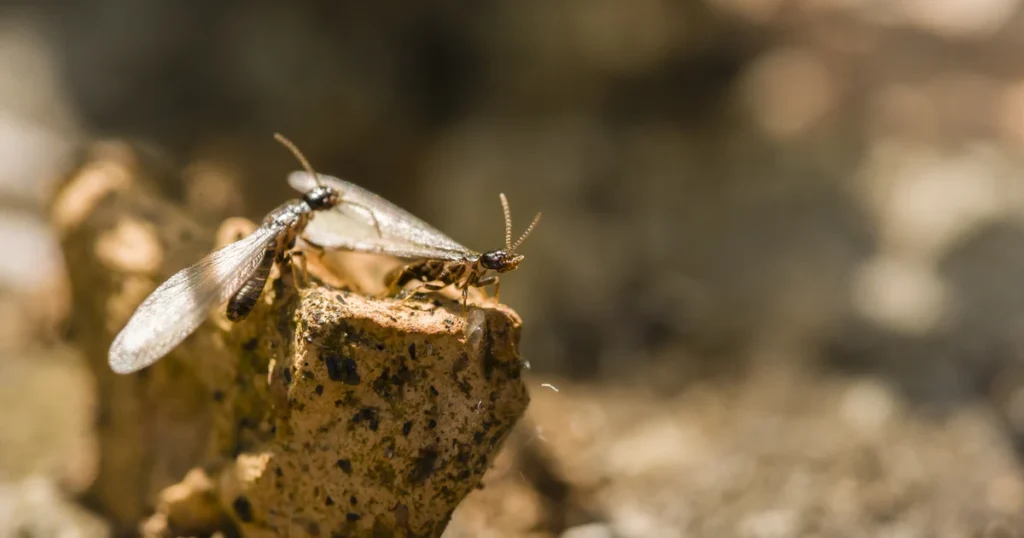
- Swarmers, the winged reproductive termites, are black to caramel colored and roughly 1/4 to 3/8 inch long. Spotting them near your home is an early warning sign worth acting on.
How to Identify Virginia Termites
Knowing what to look for is the first step toward protecting your home from termites in Virginia. Subterranean termites are the primary threat here, and they can go unnoticed for months because colonies stay hidden underground or inside wood. Understanding the differences between termite species, recognizing the warning signs of activity, and checking the right spots around your property will help you catch a problem early.
Telling Common Virginia Species Apart
Virginia homeowners are most likely to encounter subterranean termites. Colonies at maturity can range from several hundred to several million individuals, so even a single colony can pose a serious risk to your home’s structure. The most visible caste is the swarmer, the winged reproductive form that leaves the colony to start new ones.
Native subterranean termite swarmers are black to caramel colored and measure roughly 1/4 to 3/8 inch in body length. Formosan termite swarmers are larger, about 1/2 inch with wings included, and have a caramel-colored body with tiny hairs on the wings that are only visible under magnification. Telling these termite species apart matters because colony size and behavior can differ.
How to Spot Termite Activity Inside Your Virginia Home
Subterranean termites feed along the grain of wood, attacking softer springwood while leaving harder summerwood intact. This feeding pattern hollows out softer layers of wood while leaving harder grain intact, which can be visible when damaged wood is broken open. You may notice wood that sounds hollow when tapped or surfaces that appear wavy or slightly sunken.
Another indicator is the presence of shelter tubes. Subterranean termites build these tunnels from saliva mixed with soil and bits of wood so they can travel between soil and the wood in your home. Finding even a single tube along an interior wall or floor joist calls for a closer look.
Where Termite Activity Usually Shows Up in Virginia
Because subterranean termites require moist environments, they typically nest in or near the soil and maintain a connection to it through tunnels or shelter tubes. Inside your home, the warning signs most often appear in areas where moisture collects: crawl spaces, basements, and any spot where wood contacts or sits close to the ground.
Native subterranean termite species begin swarming in January and are mostly finished by early June. Swarms happen in the morning or early afternoon. If you see discarded wings near interior windowsills or door frames during this window, it may signal a colony nearby.
Exterior Entry Points Termites Use in Virginia
Outside, look for mud shelter tubes running up foundation walls, piers, or plumbing penetrations. These tubes let termites move from soil to wood without exposure to open air. Even small cracks in concrete or gaps around utility lines can provide enough access for a colony to reach your home’s framing.
Tree stumps, firewood stacks, and landscaping timbers near the foundation also draw subterranean termites closer to your home. Reducing wood-to-soil contact around the perimeter is one of the simplest steps you can take. If you spot any signs of termite activity outdoors, a professional inspection can determine whether the colony has already reached the structure.
Why Termite Problems Develop in Virginia
Virginia homeowners deal with termites because the state offers exactly what subterranean termite colonies need: warm soil, consistent moisture, and wood in close contact with the ground. Understanding what draws these pests toward your property helps you stay ahead of the damage they cause.
Why Virginia’s Climate Supports Termite Activity
Virginia’s humid summers and mild winters create conditions that keep subterranean termites active through much of the year. These colonies live in the soil, where steady moisture and moderate temperatures allow foraging workers to search for wood continuously. According to University of Kentucky termite guide, warmer temperatures and rainfall trigger winged swarmers to emerge from the colony in spring, launching the cycle that can introduce termite colonies to new areas around your property.
Because Virginia rarely experiences prolonged hard freezes across most of the state, colonies in the soil can persist year after year. Mature termite colonies can become large enough to send foragers widely beneath homes and outbuildings.
Food and Shelter That Attract Termites in Virginia
Subterranean termites nest in the ground and move into structures to access wood. They excavate galleries as they consume wood, sometimes leaving only a thin exterior shell behind. Mulch beds, stacked firewood, tree stumps, and wooden fences all serve as food sources that bring termite colonies closer to your foundation.
A property does not need visible wood-to-soil contact for termites to find a way inside. These colonies build mud tubes to bridge gaps between soil and structural wood, making even small cracks in a foundation a potential entry point.
Why Virginia Termites Adapt Around Homes
Homeowners sometimes confuse swarming termites with ants. Termites can be distinguished from ants by their straight antennae, uniformly thickened waist, and wings of equal size. Knowing the difference matters because termite colonies beneath your home may go unnoticed until swarmers appear indoors.
According to UC IPM, a home with a 2,400-square-foot footprint could have several termite colonies with hundreds of thousands of foragers seeking food and shelter. That foraging pressure means even well-maintained Virginia homes can become targets when colonies are nearby.
Seasonal Shifts That Move Termites in Virginia
Spring is the peak swarming season for native subterranean termites. Swarmers typically emerge during morning or early afternoon hours and are not attracted to lights, which means homeowners may spot them near windows or on exterior walls during the day. A swarm near your home is a strong indicator that established termite colonies are already present in the surrounding soil.
After a swarm, paired termites shed their wings and attempt to start a colony. Growth is slow at first. A colony may grow to only about 75 individuals after its first year, but over time it builds the numbers needed to cause real structural concern. That gradual buildup is why ongoing monitoring matters more than a single inspection.
Risks From Virginia Termites
Termites in Virginia pose a real threat to your home’s structure, your belongings, and your peace of mind. Because subterranean termites live in the soil and forage into structures from below, the damage they cause often goes unnoticed until it becomes serious. Understanding what these pests can do helps you recognize warning signs early and act before costly repairs pile up.
Structural Risks From Virginia Termites
Subterranean termite colonies can contain hundreds of thousands of individuals once they reach maturity, and a colony of that size poses a serious threat to any structure. Worker termites excavate galleries along the grain of wood, sometimes leaving only a thin exterior shell intact. According to the University of Kentucky termite guide, termites cause billions of dollars in damage each year across the United States.
Only worker termites consume wood. If you spot winged swarmers indoors, those insects cannot damage wood on their own. However, their presence signals that a colony is active nearby and already foraging into your home.
Hidden Termite Damage in Virginia Homes
One of the biggest challenges with termites in Virginia is how well they conceal their activity. Subterranean termites build mud-and-wood shelter tubes that let workers travel between the soil and your home’s wooden components without exposure.
Termite-damaged wood is hollowed along the grain, with bits of dried mud or soil lining the feeding galleries. From the outside, wood may look perfectly sound while being structurally compromised underneath. This hidden nature means damage often progresses for months or even years before a homeowner discovers it.
Belongings and Moisture Risks From Virginia Termites
Structural wood is not the only target. Termites also damage paper, books, insulation, and even swimming pool liners. Items stored in basements, crawl spaces, or garages can be at risk when colonies are foraging in or near the home.
Because subterranean termites require soil contact and moisture to survive, the conditions that attract them, such as damp soil near your foundation, often coincide with moisture concerns that compound the overall risk to your property.
When a Termite Problem in Virginia Needs Action
Swarmers emerging inside your home are a clear signal that a colony has established itself nearby. As the University of Kentucky termite guide notes, swarmers live for only about one day and cannot damage wood, but they confirm active foraging that demands professional attention.
Shelter tubes along your foundation, hollow-sounding wood, or small mud-lined galleries inside framing all point to an established colony. If you notice any of these signs, a professional inspection should be your next step. Every home without preventative termite treatment is at risk over time, and early action helps you avoid extensive repair costs.
Professional Pest Control for Termites in Virginia
Protecting your home from termites in Virginia starts well before you spot visible damage. Subterranean termites nest in or near the soil and travel into structures through mud shelter tubes, often consuming wood from the inside out and leaving only a thin exterior shell. A layered approach that combines habitat modification, regular inspections, and professional treatment gives your home the strongest defense against these colony-building pests.
How to Reduce Attractants and Seal Entry Points
Subterranean termites depend on moisture and soil contact, so removing the conditions they need is the first line of defense. Grade the soil around your foundation so water drains away from the structure. Fix leaky faucets, downspouts, and condensation lines that keep soil near walls consistently damp. According to UC IPM, all structural wood beneath a building should ideally be kept at least 12 inches above the soil.
Store firewood, lumber, and mulch away from exterior walls. Seal cracks in the foundation and close gaps around plumbing and utility penetrations. Watch for mud shelter tubes on foundation walls, piers, and crawl-space supports. These earth-hardened tunnels are a sign that termites have bridged the gap between soil and your home’s framing.
Why the Process Starts With a Professional Inspection
A mature termite colony can be enormous, yet the damage it causes often stays hidden until it becomes severe. A trained eye can catch shelter tubes, wood damage, and moisture conditions that homeowners overlook. Proforce service professionals perform an exterior inspection of your property, checking for active termite activity and conditions that invite foraging colonies toward the structure.
Because early colonies can be small and easy to miss, early detection matters. Catching activity at a younger colony stage allows treatment to work before structural damage accumulates. Regular professional inspections are the most reliable way to stay ahead of the problem.
What to Expect During Professional Termite Treatment
Proforce targets subterranean termites using two proven methods. The Trelona Advanced Termite Bait System, manufactured by BASF, uses the active ingredient Novaluron. Each station is pre-loaded with two Termite Bait Cartridges and installed in the soil approximately every 10 to 20 linear feet around the foundation. Worker termites consume the bait, which prevents them from molting, and carry it back to other colony members.
For homes needing a faster barrier, termiticide foundation trenching applies a liquid treatment around the foundation perimeter. This vertical barrier stops subterranean termites from reaching your home and features a transfer effect that spreads through the colony. Each liquid application lasts approximately five years, after which transitioning to the Trelona bait system is recommended.
What to Expect From a Virginia Termite Control Plan
Proforce offers both preventative and active termite protection for Virginia homeowners. After the initial installation, bait stations are monitored annually and refilled as needed. Bait remains active for two to four years under typical conditions. If issues arise between scheduled visits, additional service calls are available so your coverage never lapses.
The termite protection program is paired with ongoing general pest coverage. Proforce controls subterranean termites only; drywood and dampwood species, which require no soil contact, are not covered under this service. To learn how this plan fits your home, request a quote and schedule your inspection. Done Right. Every Time.
Bottom Line on Termites in Virginia
Subterranean termites nest underground and enter your home’s wood from below, sometimes hollowing out structural members while leaving only a paper-thin exterior intact. Because the damage stays hidden until it becomes severe, a preventative approach is the smartest path for any Virginia homeowner. Proforce Pest Control protects against subterranean termites using the Sentricon System and the Trelona Advanced Termite Bait System, with stations installed around your home’s perimeter and monitored on an ongoing basis.
If you suspect activity or simply want to get ahead of the problem, request a quote and let our service professionals take it from there.
Frequently Asked Questions About Termites in Virginia
How Do I Know If I Have Termites in My Home?
Look for mud shelter tubes running along your foundation walls or piers. These tubes are made from soil, wood particles, and termite secretions, and they allow termites to travel between the ground and your home’s structure. You may also spot swarmers, which are black to caramel-colored and about 1/4 to 3/8 inch long. Swarmers do not eat wood themselves, but their presence indoors signals a mature colony nearby that likely contains workers actively feeding on your home.
Can I Treat Termites in Virginia on My Own?
DIY treatment is not recommended. The professional-grade products and equipment required to address a subterranean termite colony are not available to homeowners. Proforce service professionals use targeted bait systems like the Trelona Advanced Termite Bait System, which contains the active ingredient Novaluron. When worker termites consume the bait, they carry it back to other colony members, disrupting molting across the colony. This level of control requires proper station placement and ongoing monitoring.
What Prevention Steps Can Virginia Homeowners Take?
Keep all structural wood beneath your home at least 12 inches above the soil. Fix leaks, improve drainage away from the foundation, and remove wood debris or stumps from your yard. These steps reduce conditions that attract foraging termites. For lasting protection, Proforce installs Sentricon bait stations approximately every 10 feet around your perimeter or applies termiticide foundation trenching that lasts approximately five years.
How Often Are Termite Bait Stations Checked?
Proforce inspects bait stations annually after the initial installation. Trelona bait is typically viable for a multi-year window, and our service professionals replace cartridges as needed. Additional visits are available if you notice signs of activity between scheduled inspections, so your home stays protected year-round. Done Right. Every Time.