Termites in South Carolina cause serious structural damage year-round. Here’s how to identify species, spot signs, and protect your home.
Key Takeaways
- South Carolina hosts three termite species: Eastern Subterranean, Formosan Subterranean, and Drywood termites.
- Formosan termites build colonies of up to 8 million members and cause far more damage than native species.
- According to a review published in Insects, subterranean termites cause approximately 80% of all termite damage globally.
- Mud tubes, discarded wings, and hollow-sounding wood are the earliest signs of a termite infestation.
- Bait stations and foundation trenching are the two primary professional treatment methods for subterranean termites in South Carolina.
Why Termites Thrive in South Carolina Homes
South Carolina’s warm, humid climate creates a perfect breeding ground for termite colonies. Mild winters mean colonies never fully die off, and the combination of moisture and abundant wood structures gives termites a year-round food source. Coastal South Carolina cities like Hilton Head, Myrtle Beach, and Charleston face especially heavy pressure from both native and invasive species. Clemson Cooperative Extension identifies termites as one of the most destructive pests in the state, with costly infestations affecting homes in York counties and inland communities as well.
The problem compounds in older neighborhoods where wooden structures have settled and gaps have formed around foundations. Standing water near the foundation, wood mulch pressed against the exterior, and clogged gutters all create moisture conditions that attract termites. Every home without preventative termite treatment will eventually face an infestation. That is not an exaggeration. It is how termite biology works in a climate like South Carolina’s.
Three Types of Termites Found in South Carolina
South Carolina homeowners need to know which termite species they are dealing with because treatment approaches differ by species. Not all treatments protect against all three types. Subterranean species require soil-based approaches, while Drywood termites live entirely inside the wood they consume, without any soil contact.
Eastern Subterranean Termites in South Carolina
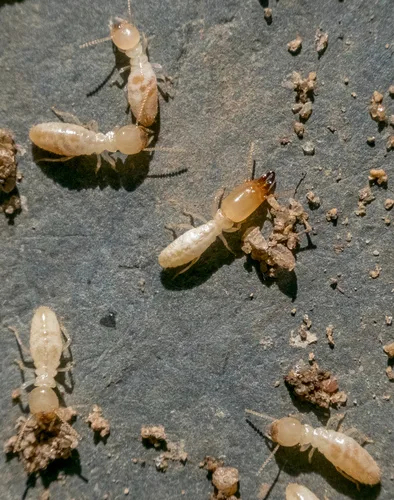
The Eastern Subterranean termite is the most common species found across South Carolina. These termites build underground colonies and travel to wood through mud tubes they construct along foundations, walls, and pipes. Research on the biodiversity and distribution of Reticulitermes in the southeastern USA confirms these native subterranean termites as the dominant species across the region. Workers are pale and small, often mistaken for ants until you notice they lack the pinched waist that ants have. Colonies can reach several hundred thousand members and cause extensive wood damage before homeowners notice anything wrong.
Formosan Subterranean Termites in South Carolina
Formosan termites are an invasive species and the most destructive termites found in South Carolina. A single Formosan colony can contain up to 8 million members and consume wood at a rate that causes structural damage within months rather than years. A peer-reviewed profile of Coptotermes formosanus documents their invasive status, aggressive foraging behavior, and capacity to infest not just wood structures but also boats and live trees. These are sometimes called “super termites” for good reason. Formosan termite swarmers appear in coastal South Carolina from May through June, typically at dusk around lights.
Drywood Termites in South Carolina
Drywood termites behave differently from both subterranean species. They need no soil contact and live entirely within dry wood. They infest furniture, picture frames, hardwood flooring, window frames, and structural lumber. Your first sign of Drywood termites is often frass, their hard, pellet-like droppings that look like sawdust on window sills or countertops. Drywood termites swarm in late summer and early fall in South Carolina. Because they establish new colonies inside the wood itself, they are harder to detect and require different treatment approaches than subterranean species.
When Do Termites Swarm in South Carolina
Termite swarms are the most visible sign that colonies are nearby. In South Carolina, swarms can occur from early spring through fall depending on the species. Eastern Subterranean termites typically swarm on warm days following rainfall in early spring, from February through May. Formosan termites swarm from May through July, often at night near exterior lights.
Drywood termites swarm from late summer into fall. Swarmers are winged reproductives that leave established colonies to start new ones. If you find discarded wings on window sills, flooring, or countertops inside your home, that indicates swarmers entered the structure, meaning an active colony is nearby.
Many homeowners confuse termite swarmers with flying ants. The distinction matters. Termite swarmers have straight antennae, equal-length wings that stack flat, and no pinched waist. Flying ants have bent antennae, wings of unequal length, and a clearly pinched waist. When in doubt, contact a professional for identification before assuming it is either one.
Warning Signs of a Termite Infestation in South Carolina
Termites are silent destroyers because most of their damage happens inside walls, flooring, and structural wood you cannot see. By the time visible signs appear, the infestation is usually well established. Knowing what to look for lets you act earlier and limit expensive damage.
- Mud tubes on foundation walls, interior walls, or pipes. Subterranean termites build these to travel from soil to wood.
- Hollow-sounding wood when you knock on baseboards, flooring, or door frames.
- Bubbling or warped paint on walls and ceilings that resembles water damage.
- Honeycomb patterns in baseboards or wood beams, where the interior has been eaten away.
- Discarded wings on window sills, countertops, or near exterior doors after a swarm.
- Frass, the dry, sandy droppings that Drywood termites push out of small kickout holes in wood.
- Clicking sounds inside walls, caused by soldiers tapping to signal the colony.
How Professional Termite Treatment Works in South Carolina
Professional termite control targets the colony, not just the individual insects you can see. Two methods are most common for subterranean termites in South Carolina: bait stations and foundation trenching. Both are effective approaches that work through different mechanisms. The right choice depends on whether the goal is prevention or treating an active infestation.
Termite Bait Stations for South Carolina Homes
Bait stations are installed in the soil around your home’s perimeter, spaced approximately every 10 to 20 linear feet. Proforce uses the Trelona Advanced Termite Bait System, manufactured by BASF with the active ingredient Novaluron. The bait prevents termites from molting, which disrupts colony growth and leads to colony collapse. Worker termites feed on the bait and share it with other colony members through trophallaxis, the fluid-transfer feeding behavior that spreads the active ingredient through the colony.
Termite colonies can begin showing impact in as little as 15 to 45 days. Bait remains effective for two to four years under typical conditions, and stations are inspected annually.
Bait stations follow the integrated pest management framework recommended by the EPA, which prioritizes targeted treatment methods over broad-area applications. This approach places the treatment exactly where foraging termites encounter it, reducing non-target exposure. Proforce also uses the Sentricon System as part of its termite protection program, with stations placed every 10 feet around the home’s perimeter.
South Carolina Foundation Trenching for Active Subterranean Termites
Foundation trenching applies a liquid termiticide barrier around your home’s foundation to block subterranean termites from accessing the structure. If termites contact the treated zone, they carry the active ingredient back to colony members, acting like a virus that spreads through the population. Each application provides protection for approximately five years, at which point Proforce recommends transitioning to the Trelona bait system for ongoing prevention. Foundation trenching addresses both prevention and active infestations, making it a strong option when termite activity is already confirmed inside the structure.
Protect Your South Carolina Home from Termites Year-Round
Prevention reduces your risk significantly, even in a high-pressure termite environment like South Carolina. The goal is to remove the moisture, wood contact, and entry points that attract foraging termites to your foundation. These steps work alongside professional treatment, not as a substitute for it.
- Create a 12 to 18-inch crushed rock barrier between your foundation and any soil or mulch.
- Store firewood at least 20 feet from the house and off the ground.
- Install gutters and keep them clear so water drains away from the foundation, not into it.
- Repair leaking pipes, fixtures, and air conditioning units that let water pool near the slab.
- Trim back shrubbery and trees so that branches and root systems do not contact the structure.
- Seal cracks and gaps in the foundation, exterior walls, and roofline to remove entry points.
- Remove tree stumps and dead wood from your property, which serve as food sources that draw colonies toward the structure.
- Schedule regular inspections so active termite activity is caught before it becomes expensive damage.
DIY treatments are not a reliable substitute for professional service. Store-bought products treat surface-level contact but do not reach the colony inside wood or soil. Because termites only swarm a few times a year, you may believe a problem is resolved when the colony has simply gone quiet for a season. Proforce’s termite protection program includes annual monitoring and re-treatment as needed, backed by the Proforce Guarantee.
Bottom Line on Termites in South Carolina
South Carolina’s warm climate, high humidity, and coastal geography make it one of the most active termite environments in the country. Three species are present, subterranean termites are the most destructive, and Formosan termites pose the highest risk in coastal areas. The combination of bait stations and foundation trenching covers both prevention and active infestation control for subterranean species. Drywood termites require separate identification and treatment. If you see mud tubes, discarded wings, or frass in your home, do not wait. Request a termite inspection before the colony expands further.
Frequently Asked Questions
What are the most common termites in South Carolina?
The most common species are Eastern Subterranean termites, Formosan Subterranean termites, and Drywood termites. Eastern Subterranean termites are the most widely distributed native species. Formosan termites are invasive and most prevalent in coastal South Carolina, where they are also the most destructive due to their large colony size.
When do termites swarm in South Carolina?
Eastern Subterranean termites swarm in early spring, from February through May, on warm days following rain. Formosan termites swarm from May through July, usually at dusk near lights. Drywood termites swarm in late summer and fall. Discarded wings on window sills or countertops are a reliable sign that swarmers have entered your home.
Can I treat termites myself?
Over-the-counter products can contact and kill individual termites but do not reach the colony inside wood or soil. Termite colonies only swarm a few times a year, so a quiet period after DIY treatment can be mistaken for success. Professional treatment methods like bait stations and foundation trenching are designed to reach and control the colony, which is what stops the damage.
Does Proforce cover all types of termites in South Carolina?
Proforce’s termite protection service covers subterranean termites, including Eastern Subterranean and Formosan species. Drywood and Dampwood termites are not covered because they live inside wood without soil contact and require different treatment methods. If you suspect Drywood termite activity, contact Proforce to discuss inspection and next steps.
How do bait stations protect my South Carolina home long-term?
Bait stations are installed around your home’s perimeter and monitored annually. The Trelona bait system’s active ingredient remains effective for two to four years before replacement is needed. Worker termites feed on the bait and transfer the active ingredient to other colony members, targeting the colony at its source rather than just the termites that contact the station.