
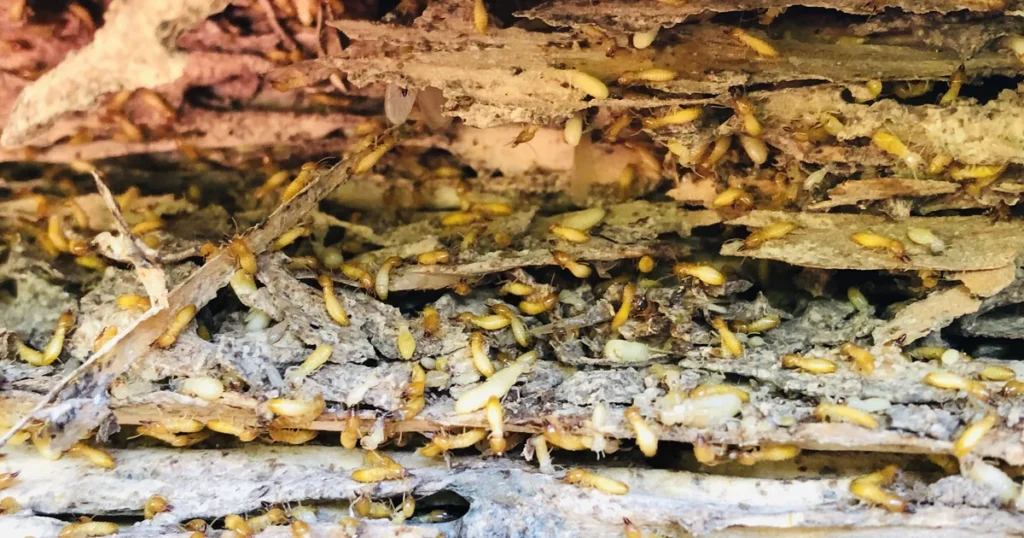
Termites in Florida can create costly problems when early signs are missed. Learn what to look for, why it matters, and when to call Proforce.
Key Takeaways About Florida Termites
Florida’s warm, humid climate makes termite activity a year-round concern for homeowners. Before you read further, here are the most important points to keep in mind about termites in Florida.
- Multiple species are present. Subterranean termites, drywood termites, dampwood termites, and Formosan termites all appear in Florida, each behaving differently and requiring different approaches to termite control.
- Mud tubes are a key warning sign. Subterranean termites travel through mud tubes. Spotting these along your foundation is a strong indicator of a termite infestation.
- Swarmers are often mistaken for flying ants. Termites swarm to start new colonies, and swarmers are frequently confused with flying ants. Knowing the difference matters for early detection.
- Structural damage adds up fast. University of Kentucky termite guide notes that termites cause billions of dollars in damage each year in the U.S., feeding on wood, paper, and insulation.
- Professional termite control is essential. Proforce covers subterranean termites using bait systems and liquid treatments. Drywood and dampwood termites require separate strategies.
- Prevention is your best move. Every home without preventative termite treatment is eventually at risk.
How to Identify Florida Termites
Florida’s warm, humid climate makes it one of the most active states for termite pressure in the country. Knowing what to look for , and what you’re looking at , is the first step to protecting your home. Two termite species you’re most likely to encounter here are native subterranean termites and Formosan subterranean termites, and they behave differently enough that telling them apart matters.
Telling Common Florida Species Apart
Subterranean termite swarmers are the most visible caste you’ll typically see. According to University of Georgia termite guide, native subterranean swarmer body color ranges from black to caramel and measures roughly 1/4 to 3/8 inch in body length. Formosan swarmers are noticeably larger. According to University of Georgia termite guide, Formosan swarmers measure about 1/2 inch including wings, carry a caramel-colored body, and have tiny hairs on their wings visible only under magnification. Workers from both species are pale, soft-bodied, and rarely seen in the open.
Soldiers have darker, hardened heads.
Colonies of either termite species can grow large. According to University of Georgia termite guide, mature colonies range from several hundred to several million individuals, which is why a single nest can cause extensive structural damage over time.
How to Spot Termite Activity Inside Your Florida Home
Inside your home, the signs of termite activity are often subtle at first. Look for wood that sounds hollow when tapped, doors or windows that suddenly stick without an obvious reason, and paint that bubbles or blisters along baseboards. Discarded wings near windowsills or light fixtures are a strong indicator that swarmers have been active nearby. According to University of Georgia termite guide, termite workers eat wood but swarmers do not, so shed wings without other visible damage can still signal a serious colony nearby.
Frass, or small pellet-like droppings, can appear near wood surfaces. Unlike mud tubes, frass is more associated with drywood termite species. Proforce’s termite protection service covers subterranean termites specifically.
Where Termite Activity Usually Shows Up in Florida
Subterranean termites nest underground and travel upward to find food. Inside your home, you’ll most often notice activity along the lowest points first: baseboards, door frames, window sills, wood flooring, and the framing behind drywall. Crawl spaces and garage walls are common early targets. Attic spaces and interior wood framing can be affected once a colony matures and expands its foraging range, making the mound of damage far larger than what’s visible from the surface.
Exterior Entry Points Termites Use in Florida
According to UC IPM, shelter tubes (mud tubes) as the most commonly seen evidence of a subterranean termite infestation. Workers build these earth-hardened tubes from saliva mixed with soil and bits of wood or drywall. Check your foundation walls, crawl space piers, and exterior siding for pencil-width tubes running vertically from soil to wood.
Termites also enter through wood-to-soil contact at deck posts, fence boards, or wood mulch pressed against your foundation. Expansion joints in concrete slabs, utility penetrations, and gaps around pipe entry points are additional entry paths. A thorough exterior inspection is the starting point for identifying where activity is present before it reaches the interior of your home.
Why Termite Problems Develop in Florida
Florida’s warm temperatures, high humidity, and abundant rainfall create year-round pressure on homes. Termites in Florida are not just a spring concern. The conditions that support termite activity rarely let up, which means colonies can grow and forage across every season. Understanding what drives that pressure helps you see why protecting your home sooner rather than later matters.
Why Florida’s Climate Supports Termite Activity
Termites need warmth and moisture to survive and reproduce. Florida delivers both consistently. Subterranean termites live in the soil, and the state’s moist ground gives colonies a stable base from which to forage upward into structures. According to University of Kentucky termite guide, warmer temperatures and rainfall trigger swarmers to emerge, and Florida provides those triggers across a long stretch of the year. That extended window means new colonies have more opportunities to establish near your home.
Food and Shelter That Attract Termites in Florida
Wood is the primary food source for subterranean termites, and Florida homes offer plenty of it. Structural framing, wood mulch, dead plants, tree stumps, and wood debris near the foundation all serve as food. According to University of Georgia termite guide, subterranean termites forage into structures to access wood, sometimes leaving only a thin exterior behind. Moisture-damaged wood is especially accessible. According to UC IPM, a home with a 2,400-square-foot footprint could host several termite colonies with hundreds of thousands of foragers seeking food and shelter at any given time.
Why Florida Termites Adapt Around Homes
Termite colonies grow gradually but persistently. According to UC IPM, a newly established subterranean termite colony may reach only 75 individuals after one year, yet University of Georgia termite guide confirms mature colonies can number from several hundred to several million individuals. That growth happens quietly inside walls, under slabs, and along foundation lines. Subterranean termites travel through soil and mud tubes, allowing them to move around treated zones and find new entry points in your home’s structure over time.
Seasonal Shifts That Move Termites in Florida
Each season brings different termite behavior. According to University of Georgia termite guide, native subterranean termite species begin swarming in January and are mostly finished by early June, swarming during morning or early afternoon hours. After swarming, new colonies begin forming in nearby soil. As temperatures stay warm through fall, established colonies continue foraging. Florida’s mild winters rarely slow this activity enough to give your home a true break. That consistent pressure across every season is why ongoing prevention matters here more than in colder climates.
Risks From Florida Termites
Termites in Florida are not a distant threat. Florida’s warm temperatures and high humidity give termite colonies ideal conditions to grow year-round. Understanding what these pests can do to your home is the first step toward protecting it.
Structural Risks From Florida Termites
Subterranean termites are relentless. According to University of Georgia termite guide, they live in the soil and forage into structures to access wood, excavating galleries as they feed and sometimes leaving only a thin wooden exterior behind. Load-bearing beams, floor joists, wall framing, and window sills are all at risk. Structural damage of this kind can compromise the stability of your home and lead to costly repairs that far exceed the cost of prevention.
Hidden Termite Damage in Florida Homes
Much of the damage termites cause happens out of sight. According to University of Kentucky termite guide, termite-damaged wood is hollowed out along the grain, with bits of dried mud or soil lining the feeding galleries. Because the outer surface can look intact, homeowners often discover serious damage only after it has progressed. According to University of Kentucky termite guide, termites cause billions of dollars in damage each year in the United States, feeding not only on wood but also on paper, books, insulation, and even swimming pool liners and filtration systems.
Belongings and Moisture Risks From Florida Termites
The threat from these pests extends beyond your walls. Books, stored documents, and insulation are all vulnerable to termite feeding. Termite activity can also mask or worsen moisture problems, since the soil and mud tunnels workers build create conditions that attract additional pests. Your family’s belongings and the hidden systems inside your home deserve the same attention as your framing and subfloor.
When a Termite Problem in Florida Needs Action
Swarmers emerging indoors are a clear warning sign. According to University of Kentucky termite guide, swarmers themselves cannot damage wood and live only about a day, but their presence tells you a mature colony is already nearby. Warmer temperatures and rainfall trigger swarming in spring, making that season a key window for inspection. If you spot swarmers, mud tubes, or hollow-sounding wood, waiting is not an option. A professional inspection helps you understand the scope of activity before damage advances further.
Professional Pest Control for Termites in Florida
Termites in Florida are not a question of if but when. Every home without preventative termite treatment will eventually face an infestation. Professional pest control gives you a structured, ongoing plan before colonies grow large enough to cause real structural damage. Acting early is the most reliable way to protect your home.
How to Reduce Attractants and Seal Entry Points
Prevention starts with your yard and foundation. Keep mulch pulled back from your home’s exterior, remove dead wood or stumps near the structure, and fix any moisture issues like leaking gutters or standing water. Subterranean termites travel through soil, so gaps where pipes or conduits enter the foundation are common access points. Sealing those gaps and keeping wood-to-soil contact to a minimum reduces the conditions that draw foragers toward your home.
Good drainage matters as well. Damp soil near the foundation creates ideal foraging conditions. Grading the yard so water runs away from the house is a straightforward step that supports your overall termite prevention efforts.
Why the Process Starts With a Professional Inspection
Termite activity is often hidden inside walls, under slabs, or below grade. A Proforce service professional performs an exterior inspection, checking for live activity and conditions that favor infestation. That assessment shapes the treatment approach. Skipping inspection means treating blind, which wastes time and money.
According to UC IPM, mature subterranean termite colonies can contain hundreds of thousands of individuals and pose a serious threat to structures. Because colonies grow gradually, early detection through professional inspection is the clearest path to catching a problem before it reaches that scale.
What to Expect During Professional Termite Treatment
Proforce uses the Trelona Advanced Termite Bait System, manufactured by BASF. Stations come pre-loaded with two Termite Bait Cartridges and are installed in the soil around your home’s perimeter approximately every 10 to 20 linear feet. The active ingredient, Novaluron, prevents termites from molting. Worker termites carry the bait back to the colony, working through the population over time.
For homes needing a liquid barrier, Proforce performs termiticide foundation trenching. A barrier is applied around the foundation, and University of Kentucky termite guide notes that liquid termiticides are required to control termites for at least five years when applied according to label directions. After that window, switching to the Trelona bait system is recommended. Both approaches target subterranean termites specifically. Drywood and Dampwood termites are not covered under this service.
What to Expect From a Florida Termite Control Plan
After installation, your bait stations are monitored annually and refilled as needed. If concerns arise between visits, additional visits are available. This ongoing structure is what separates a termite plan from a one-time treatment. Florida’s warm, humid climate keeps termite foragers active through much of the year, so continuous monitoring matters more here than in cooler regions.
Proforce’s termite protection is also available as part of a bundled plan that includes general pest control, covering 35 pests under one ongoing program. Clients who add termite service tend to stay longer, and that continuity is exactly what a preventative plan requires. Done Right. Every Time.
Bottom Line on Termites in Florida
Termites in Florida are not a matter of “if” but “when.” Subterranean termites forage up from the soil, feeding inside walls and framing while leaving little visible trace until damage is already done. Because their colonies can number in the millions, over-the-counter products are no match for an established infestation. Professional treatment, consistent monitoring, and early prevention are the most reliable path to protecting your home’s structure. Proforce handles that entire process, from initial inspection through annual station checks, so you are never managing this alone.
Frequently Asked Questions About Termites in Florida
Can I treat termites in my Florida home myself?
It is not recommended. According to University of Georgia termite guide, the products and equipment professionals use are simply not available to homeowners. Store-bought sprays are unlikely to reach a subterranean colony, which nests at or below ground level and can number in the millions. A trained Proforce service professional has access to proven systems, including bait stations and foundation treatments, that are not sold over the counter.
How long does a liquid termiticide barrier last?
According to University of Kentucky termite guide, all liquid termiticides are required to control termites for at least five years when applied according to label directions. Proforce’s termiticide foundation trenching follows that same timeline. After roughly five years, Proforce typically recommends transitioning to the Trelona Advanced Termite Bait System for continued protection.
What is the Trelona Advanced Termite Bait System?
It is a bait system manufactured by BASF, pre-loaded with two Termite Bait Cartridges per station. Stations are installed in the soil approximately every 10 to 20 linear feet around your home’s perimeter. The active ingredient, Novaluron, prevents termites from molting. Worker termites consume the bait and share it with the colony, working toward full colony collapse. Bait remains active for two to four years under typical conditions, with annual inspections by Proforce service professionals in between.
Does Proforce cover all termite species in Florida?
Proforce’s termite protection service covers subterranean termites. Drywood and Dampwood termites, which can live inside a structure without soil contact, fall outside this service scope. If you are unsure which species you are dealing with, a Proforce service professional can inspect your home and point you toward the right path. Request a quote to get started and learn which protection option fits your situation best.