
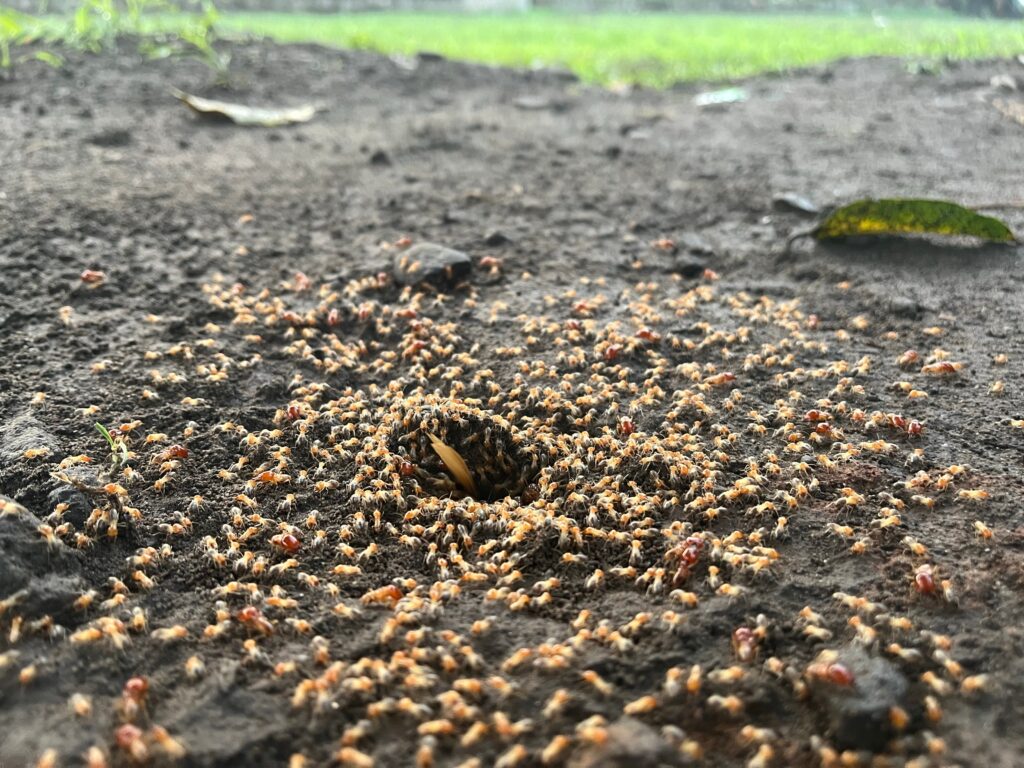
Termite swarming season in South Carolina peaks February through May, with Formosan termites swarming into summer. Here’s what to watch for.
Key Takeaways
- South Carolina’s warm, humid climate supports three termite species: Eastern subterranean, Formosan subterranean, and drywood termites.
- Eastern subterranean termites swarm February through May. Formosan termites swarm May through July, mostly at night near outdoor lights.
- Swarmers themselves do not damage wood. They signal an existing, mature colony nearby, often inside your home’s structure.
- Discarded wings on windowsills or mud tubes on your foundation are the two most common signs of active termite activity.
- Proforce’s Trelona Advanced Termite Bait System targets foraging workers and can collapse a subterranean colony in as few as 15 to 45 days.
When Termite Swarms Occur in South Carolina
The Proforce Pest Almanac
Termite swarming in South Carolina, by the month.
Bar height shows when swarming activity peaks in a typical year. Swarm-peak months get a green edge.
South Carolina homeowners face termite swarms from February through July, with timing that shifts by species. Eastern subterranean termites begin swarming on warm afternoons as early as February, peaking through May. Formosan subterranean termites follow, swarming from May through July, typically after sunset near outdoor lights. Drywood termites swarm less predictably, with activity possible from late spring through early fall.
The mild winters and humid climate along the coast, from Charleston to North Charleston and the surrounding Lowcountry, compress the dormant period. That means termite swarms can arrive weeks earlier than they do in northern states. Inland areas of South Carolina experience slightly later swarm windows, but the overall season remains long compared to most of the country.
Why Termites Swarm and What It Means for Your Home
A termite swarm is a reproductive event, not a feeding event. When a colony matures, it produces winged reproductive termites, called swarmers, whose only job is to leave the nest, find a mate, shed their wings, and start a new colony. The swarm itself lasts minutes to a few hours. Most swarmers die without establishing a new nest. But the colony that produced them remains active inside your walls, your floor joists, or the soil beneath your foundation.
Seeing a swarm indoors is a strong signal that a mature colony is already living inside the structure. Swarmers do not travel far. If termite swarmers appear inside your home near windows or doors, the source is almost certainly within the building, not migrating from a neighboring property. Finding discarded wings on windowsills or countertops is one of the clearest early signs of a termite infestation.
A review of termite control published in the journal Insects establishes that subterranean termites cause roughly 80% of termite-related property damage in the United States, with the global economic impact of all termite species estimated at $40 billion annually. South Carolina’s climate places it among the highest-risk states in the country.
Termite Species Active in South Carolina in Swarming Season
Three species drive most of South Carolina’s termite damage: Eastern subterranean termites, Formosan subterranean termites, and drywood termites. Each swarms at a different time and in different conditions. Knowing which species you’re dealing with changes how you respond.
Eastern Subterranean Termites in South Carolina
Eastern subterranean termites are the most widespread species in South Carolina. Their swarms occur on warm, sunny afternoons following rain, from February through May. Research on the biodiversity and distribution of Reticulitermes in the southeastern United States confirms these native subterranean termites occupy nearly every county in the region. Colonies live in the soil and require ground contact to reach the wood in your home. Mud tubes on your foundation wall are their signature sign.
Formosan Termites Swarming in South Carolina
Formosan subterranean termites represent a more serious threat wherever they establish. Their colonies are dramatically larger than native species, and they consume wood at a faster rate. A peer-reviewed profile of Coptotermes formosanus, this invasive species has spread throughout coastal South Carolina and maintains large colonies capable of causing significant structural damage in months rather than years. They swarm at night, drawn to outdoor lights, from May through July.
If you live in Charleston, North Charleston, or other coastal communities, Formosan termites are a real concern. Swarms near porch lights or streetlights after a warm spring evening are a strong indicator. Their swarmers have wings of equal length, which distinguishes them from flying ants, whose wings are unequal.
Drywood Termites in South Carolina
Drywood termites do not require soil contact. They live entirely within the wood they consume, making them harder to detect and requiring different control methods. Their swarms occur later in the season, from late spring into summer, often entering homes through attic vents, window frames, or untreated wood. The first sign of a drywood termite infestation is typically frass, dry pellets that resemble sawdust, found near baseboards or on windowsills. Proforce’s termite protection covers subterranean termites specifically. Drywood termite concerns warrant a separate inspection conversation.
How to Identify Termite Swarmers Versus Flying Ants in South Carolina
Termite swarmers and flying ants are frequently confused, but the identification is straightforward once you know what to look for. Termite swarmers have two pairs of wings of equal length, a straight waist with no pinch, and straight antennae. Flying ants have unequal wings, a pinched waist, and elbowed antennae. Both swarm in spring, sometimes on the same warm afternoon. Finding shed wings alone, without spotting the insects, makes identification harder. In that case, the location matters: wings near the foundation or inside near a wall suggest termites. Wings near food sources suggest ants.
Signs of Termite Activity to Watch for in South Carolina Homes
Termite swarms are the most visible warning, but they are rarely the first sign of an infestation. By the time a colony swarms, it has typically been active for three to five years. South Carolina homeowners should inspect regularly for these indicators between swarm events.
- Mud tubes on foundation walls, piers, or crawl space framing. These pencil-width tunnels connect subterranean termites to the wood above.
- Discarded wings on windowsills, countertops, or near doors. Swarmers shed their wings immediately after landing.
- Wood that sounds hollow when tapped. Subterranean termites consume wood from the inside, leaving a thin shell.
- Frass near baseboards or window frames. Dry, pellet-like droppings signal drywood termites.
- Damage that resembles water damage. Bubbled paint or warped wood near the floor can indicate termites working beneath the surface.
How to Protect Your South Carolina Home from Termite Swarms
Effective prevention starts before the swarm season begins. The conditions that attract subterranean termites, moisture in the soil, wood-to-ground contact, and debris near the foundation, can be reduced with straightforward home maintenance. Clemson Cooperative Extension recommends maintaining at least a 12-to-18-inch crushed rock or gravel barrier between your foundation and any mulch or soil. Remove leaf piles, wood scraps, and tree stumps from around the property. Fix leaky gutters and HVAC condensation lines that pool water near the foundation. Cut back shrubs so sunlight reaches the soil and keeps it dry.
These habitat modifications reduce the conditions that draw foraging termite workers toward your home. They do not substitute for a professional termite treatment program, but they lower your risk between service visits and make treatments more effective over time.
Turning off or redirecting outdoor lights during Formosan termite swarming season (May through July) reduces attraction. Swarmers are drawn to light, so a well-lit porch during a warm May evening creates a landing zone near your home.
Proforce’s Termite Treatment Options in South Carolina
Proforce uses two primary methods to control subterranean termites: the Trelona Advanced Termite Bait System and termiticide foundation trenching. Both target subterranean species, which are responsible for the vast majority of termite damage in South Carolina.
Trelona Bait System for South Carolina Subterranean Termites
The Trelona Advanced Termite Bait System, manufactured by BASF, uses the active ingredient Novaluron to prevent termites from molting. Bait stations are installed in the soil every 10 to 20 linear feet around the home’s perimeter, each pre-loaded with two bait cartridges. Worker termites consume the bait and carry it back to the colony through natural behavior, spreading it to other workers and to the queen.
Proforce data shows colonies can be controlled in as few as 15 to 45 days. Bait remains effective for two to four years under normal conditions, and Proforce service professionals inspect stations annually.
The bait system aligns with the integrated pest management approach, which the EPA’s integrated pest management framework recommends as a lower-impact alternative to broad liquid barrier applications. Targeted bait placement reduces the amount of active ingredient needed while still reaching the colony.
Termiticide Foundation Trenching in South Carolina
Foundation trenching creates a treated barrier in the soil around the home’s perimeter. Subterranean termites contacting the barrier are affected, and the treatment has a horizontal transfer effect, spreading through the colony as workers groom and feed each other. A single application lasts approximately five years. Proforce typically recommends transitioning to the Trelona bait system at renewal. For active infestations, trenching provides a rapid protective barrier while the bait system works on the colony over time.
Bottom Line on Termite Swarming Season in South Carolina
South Carolina’s long, humid spring makes it one of the most active termite states in the country. Swarming season runs from February through July across the three species most common in the state. Eastern subterranean termites arrive first in spring. Formosan termites follow through summer. When you see swarmers, indoors or out, a mature colony is already nearby.
Acting at the first sign, whether wings on a windowsill, mud tubes on the foundation, or swarmers near a light, gives you the shortest path to protecting your home’s structure. Proforce offers termite inspections and ongoing bait station programs designed to intercept foraging workers before they reach the wood in your home. Request a quote to get a service professional on your property before the peak of swarming season.
When does termite swarming season peak in South Carolina?
Eastern subterranean termites peak in February through May. Formosan subterranean termites swarm from May through July, most actively at night. The combined swarming window for all species runs roughly February through July, with the Lowcountry and coastal areas typically seeing earlier and more intense activity because of the humid climate.
What should I do if I find termite swarmers inside my house?
Finding swarmers indoors means a mature colony is active within or directly adjacent to the structure. Do not spray swarmers and assume the problem is resolved. Collect a few specimens in a sealed container if possible and schedule a professional termite inspection immediately. The colony producing the swarmers remains active regardless of what happens to the swarmers themselves.
How do I tell termite swarmers apart from flying ants?
Termite swarmers have two pairs of wings of equal length, a thick waist with no pinch, and straight antennae. Flying ants have unequal wings, a pinched waist, and bent antennae. Both can appear on the same warm spring afternoon. If you find only discarded wings, look for mud tubes on foundation walls or frass near baseboards to confirm which pest you’re dealing with.
Does Proforce cover Formosan termites in South Carolina?
Proforce’s termite protection service targets subterranean termites, which includes both Eastern subterranean and Formosan subterranean species. Drywood and dampwood termites, which do not require soil contact, are not covered under the standard termite protection program. A service professional can assess which species are present during an inspection.
How long does termite treatment take to work in South Carolina?
Proforce’s Trelona Advanced Termite Bait System can begin reducing colony activity in as few as 15 to 45 days as worker termites carry the active ingredient back to the colony. Termiticide foundation trenching creates a barrier immediately on application and lasts approximately five years. Active infestation severity and soil conditions affect how quickly results occur.