
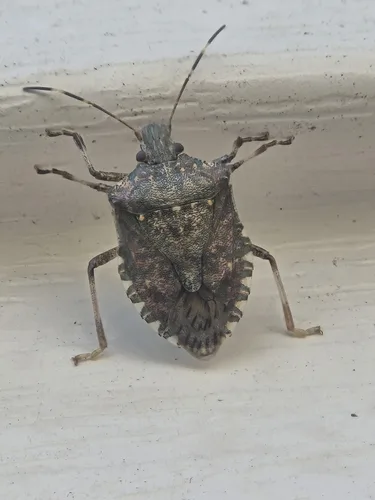
Stink bugs in South Carolina invade homes each fall seeking warmth, and three species are common. Here’s how to identify, prevent, and control them.
Key Takeaways
- Three stink bug species are common in South Carolina: the brown marmorated stink bug, the southern green stink bug, and the native green stink bug.
- Stink bugs enter homes through cracks, gaps around doors and windows, and poorly sealed utility penetrations as temperatures drop in fall.
- They do not bite, sting, or damage structures, but they release a foul odor when crushed or disturbed.
- Sealing entry points and vacuuming live bugs are the most effective first steps for homeowners.
- Persistent infestations call for professional pest control treatment to reduce populations before they overwinter inside your walls.
Why Stink Bugs Are a Problem in South Carolina Homes
Stink bugs become nuisance pests when they move indoors each fall to shelter from colder temperatures. South Carolina’s mild climate means the overwintering season starts later than in northern states, but homes in the Upstate, Midlands, and Lowcountry all see activity from September through November. Once inside, these insects are not feeding or reproducing. They shelter behind walls, in attics, and along light fixtures until spring. The problem is numbers. A single home can harbor dozens or hundreds, and disturbing them releases the foul odor that gives the pest its name.
Stink bugs pose no direct risk to humans. They do not bite, sting, or carry disease. According to Clemson Cooperative Extension, the brown marmorated stink bug is primarily an agricultural pest and a nuisance pest in structures. The real cost is to fruit crops, vegetables, and ornamental plants during the growing season, and to your patience when they find their way indoors in fall.
Three Stink Bug Species You’ll Find in South Carolina
How the Brown Marmorated Stink Bug Spreads in South Carolina
The brown marmorated stink bug (Halyomorpha halys) is the most damaging species now established across South Carolina. It arrived in Pennsylvania in the mid-1990s after being accidentally introduced from Asia and has since spread throughout the eastern United States. Adults are roughly 3/4 inch long with a mottled dark brown and gray pattern, alternating light and dark bands on the antennae, and a distinctive banded edge along the abdomen. This is the species South Carolina homeowners most commonly collect on windowsills and in light fixtures each fall.
The brown marmorated stink bug feeds on more than 100 host plants. It pierces fruit and plant tissue to extract plant juices, leaving behind scarred, deformed produce. Apples, peaches, corn, soybeans, and lima beans are among its preferred food sources in South Carolina’s agricultural regions. Adult stink bugs overwinter in structures and emerge in early spring to begin feeding again on ornamental plants and fruit crops.
What the Southern Green Stink Bug Damages in South Carolina
The southern green stink bug (Nezara viridula) is a native species that targets vegetable gardens and row crops across South Carolina. Adults are a bright light green with a light-colored band along the upper edge of the abdomen. Nymphs pass through five instars, shifting from dark coloring to the green of the adult. This species is particularly damaging to soybeans, vegetables, and fruit crops throughout the growing season. Unlike the brown marmorated stink bug, the southern green stink bug is less likely to invade structures in large numbers, but it remains a serious agricultural concern.
How the Native Green Stink Bug Behaves in South Carolina
The native green stink bug (Chinavia hilaris) is often confused with the southern green stink bug because both species are solid green as adults. The green stink bug tends to have a narrower body shape and bright orange or red eyes. Both feed on plant juices from fruits, vegetables, and ornamental plants. Like its relatives, the green stink bug uses its defense mechanism of releasing a stench when threatened to deter predators, including birds and wasps that would otherwise prey on it. The rice stink bug and spined soldier bug are also present in South Carolina, though at lower densities.
How Stink Bugs Get Inside South Carolina Homes in Fall
Stink bugs enter homes through any gap large enough for a 3/4-inch insect to squeeze through. Cracks in siding, gaps around windows and doors, poorly sealed utility penetrations, and spaces along the roofline are all common entry points. Stink bug populations begin pressing against structures in late September as nighttime temperatures drop. Once a few individuals find a warm shelter, they release a pheromone signal that draws more bugs to the same site. This aggregation behavior is why infestations can build quickly and why the same home tends to see problems year after year.
Stink bugs do not feed, breed, or chew on structures once inside. They stay dormant until warm temperatures return. In early spring they become active again, and many find their way back into living spaces while searching for a way out. Crushing or startling them at any point triggers the release of the foul odor that makes these insects such persistent nuisance pests.
Signs of a Stink Bug Problem in Your South Carolina Home
The clearest sign of a stink bug infestation is finding live or dead adult insects along south- and west-facing walls, windowsills, and light fixtures. Stink bugs are drawn to warmth and light, which is why they collect on sunny exterior walls before entering. Inside, you are most likely to find them near windows, in attics, and in wall voids.
The odor itself is a sign: if disturbing a bug or turning on an attic light releases a strong smell, you likely have more bugs hidden nearby. Egg clusters are a sign of outdoor activity. Stink bug eggs are barrel-shaped, laid in tight clusters of about 28 on the underside of leaves, and hatch into dark-colored nymphs.
Controlling and Preventing Stink Bugs in South Carolina
DIY Steps for Reducing Stink Bugs in South Carolina
Sealing entry points is the most effective step a homeowner can take to reduce stink bug entry before fall. Inspect the exterior of your home in late summer. Caulk gaps around windows, doors, and utility penetrations. Install door sweeps on exterior doors. Check attic vents and replace any torn screening. These steps reduce the number of bugs that successfully overwinter inside your home. Once bugs are already inside, vacuum them up with a sealed-bag vacuum. Dispose of the bag immediately to contain the odor. Do not crush stink bugs, as this releases the stench and can stain surfaces.
Remove stink bug food sources and outdoor harborage to reduce populations around your property. Harvest garden produce promptly. Clear brush piles, wood piles, and dense vegetation along your home’s foundation. Store firewood at least 20 feet from the exterior. Disposing of overripe or damaged fruit removes the food that attracts adult stink bugs during the growing season. Soapy water in a bowl placed beneath a light source can trap and kill bugs drawn to illumination at night.
When Professional Pest Control for Stink Bugs in South Carolina Makes Sense
Professional treatment is worth scheduling if you find large numbers of stink bugs inside your home or if exclusion efforts have not reduced the population. A Proforce service professional will inspect the exterior for entry points, apply targeted treatments to harborage areas and exterior surfaces, and recommend habitat modifications specific to your property. The EPA’s integrated pest management framework prioritizes exclusion and targeted treatment over broad application, which is the approach Proforce follows for stink bug control in South Carolina.
Treatment works best when a service professional applies it in late summer and early fall, before stink bugs begin aggregating on exterior walls. Waiting until bugs are already inside limits what any professional treatment can accomplish, because bugs already overwintering in wall voids are largely inaccessible. The USDA’s integrated pest management policy recommends combining structural exclusion with targeted product application for overwintering pests, which is the most durable approach for South Carolina homeowners dealing with repeat invasions.
Bottom Line on Stink Bugs in South Carolina Homes
Stink bugs in South Carolina are a growing nuisance, driven by the spread of the invasive brown marmorated stink bug. These insects do not damage your home or pose a health risk, but an overwintering population inside your walls can number in the hundreds and cannot be reached with treatment once bugs settle into wall voids. The most effective strategy combines fall exclusion work, prompt removal of live bugs, and professional treatment on the exterior before the overwintering season begins.
Proforce serves homeowners across South Carolina with targeted stink bug control as part of its general pest plan. If stink bugs have become a recurring problem at your home, request a free inspection to get a treatment plan before this fall’s population arrives.
Frequently Asked Questions
Do stink bugs in South Carolina bite humans?
Stink bugs do not bite humans. They have piercing mouthparts designed for feeding on plant tissue, not skin. Their only defense mechanism against humans and predators is the foul odor they release when disturbed or crushed. They are considered nuisance pests rather than a health risk.
What do stink bugs eat in South Carolina gardens?
Stink bugs feed on a wide range of plants by piercing tissue and extracting plant juices. Common targets include apples, peaches, corn, soybeans, lima beans, tomatoes, and other vegetables. The brown marmorated stink bug is documented to feed on more than 100 host plants, making it damaging to both home gardens and commercial fruit crops in South Carolina.
When are stink bugs most active in South Carolina?
Adult stink bugs are most active in late summer and fall, when they begin searching for shelter to overwinter. In South Carolina, this period typically runs from September through November. They re-emerge in early spring as temperatures rise. During winter months they remain dormant inside wall voids, attics, and other sheltered structures.
Why do stink bugs keep coming back to the same house in South Carolina?
Stink bugs release a pheromone signal when they find a suitable overwintering site, which draws additional bugs to the same location. If entry points are not sealed between seasons, the same structure will attract new populations each fall. Professional exclusion work combined with exterior treatment before fall is the most reliable way to break this cycle.