
Spiders in South Carolina can create costly problems when early signs are missed. Learn what to look for, why it matters, and when to call Proforce.
Key Takeaways About South Carolina Spiders
- Several spider species may appear around South Carolina homes, and knowing how to tell them apart helps you decide when to act.
- Some spiders found indoors can look similar to one another, so accurate identification matters before choosing a response.
- Reducing clutter and keeping storage areas tidy can make your home less inviting to spiders that prefer undisturbed spaces.
- Proforce Pest Control covers spiders under its General Pest Control plan, backed by the Proforce Guarantee and 35-pest coverage.
How to Identify South Carolina Spiders
Knowing what you are looking at is the first step toward deciding how to respond to a spider in or around your South Carolina home. A few key physical traits and web styles can help you tell one type from another.
How to Tell Spider Types Apart in South Carolina
Spider activity around South Carolina homes usually narrows to the species below. Match what you’ve seen on body size, web style, and where it turned up, then check the last column to decide whether the bite risk is real.
| Species | Size | Color | Where to look | Risk | Sting |
|---|---|---|---|---|---|
| Black widow | ~1/2″ | Shiny black with red or orange hourglass underneath | Eaves, woodpiles, sheltered outdoor structures | Medically significant bite; intense pain and muscle cramping | Yes |
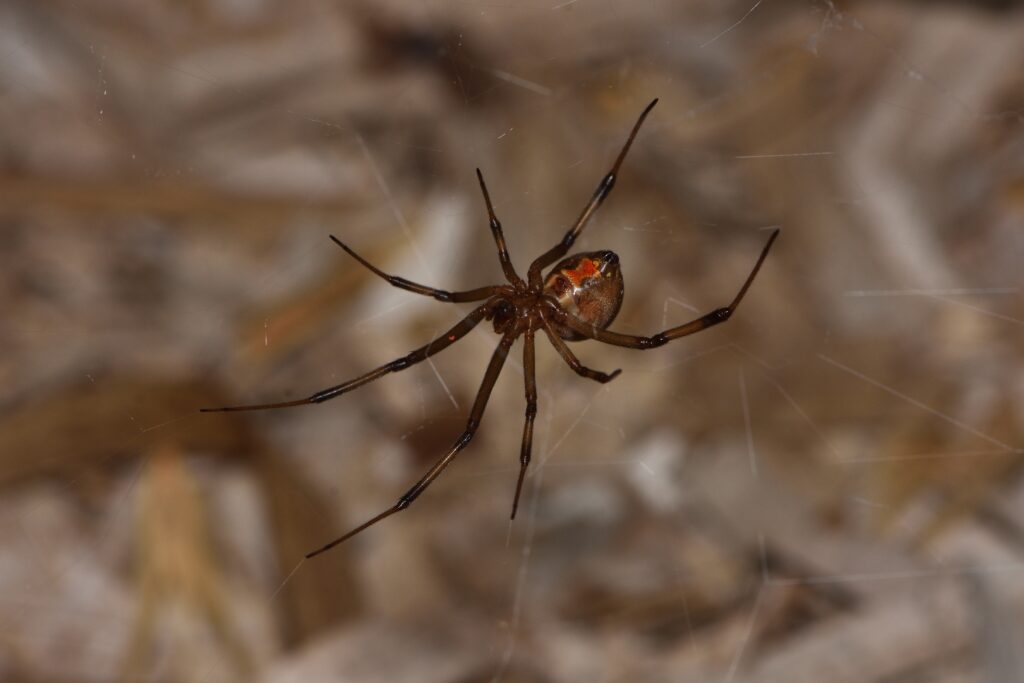
| Brown widow | ~3/8–1/2″ | Light to dark brown with orange hourglass underneath | Eaves, woodpiles, sheltered outdoor structures | Venomous bite; typically less severe than black widow | Yes |
| Brown recluse | ~3/8″ | Golden brown with violin-shaped mark behind the head | Dark, undisturbed storage areas; verified SC sightings uncommon | Bite can cause tissue damage; misidentification is frequent | Yes |
| Joro spider | Up to 1 1/4″ | Bright yellow and gray with red and black markings, long legs | Large gold-colored orb webs between trees, porch columns, eaves | Egg sacs hold hundreds of eggs; populations grow year over year | No |
| Southern house spider | Up to ~3/4″ | Females dark brown with silver leg joints; males light brown, slender | Cracks and crevices, garages, sheds, undisturbed storage areas | Males often mistaken for brown recluse; bites are not significant | No |
| American house spider | ~1/4″ | Brown with banded legs and rounded abdomen | Cobwebs in garage corners, basement windows, undisturbed closets | Passive hunter; bite produces only minor symptoms if it occurs | No |
If the spider doesn’t match any row cleanly, photograph it rather than handling it. A pro can confirm the species before you take any next step.
Two spiders that sometimes draw attention from homeowners are the Joro spider and the brown recluse. The Joro spider is an orb weaver whose adult females can reach up to 1¼ inches in body size, with long legs and large, spiral, wheel-shaped webs that are sometimes gold-colored, according to the University of Georgia pest guide. Their size and web color make them relatively easy to recognize.
The brown recluse is a single species, Loxosceles reclusa, according to UC IPM. Because several other spiders share a similar brown coloring, accurate identification matters. Confirming the exact species helps you understand what you are dealing with before taking any next steps.
How to Spot Spider Activity Inside Your South Carolina Home
Webbing is the most obvious indoor sign. Some spiders spin organized webs in corners, along ceilings, or between furniture. Others leave irregular strands that collect dust and debris over time. Finding fresh webbing in the same area repeatedly may point to an active spider rather than an old, abandoned web.
Shed skins can also appear near web sites. Spiders molt as they grow, and these translucent casings are easy to overlook but worth noting when you are trying to gauge how much activity is present in a room.
Where Spider Activity Shows Up Around South Carolina Homes
Outdoors, large orb-shaped webs stretched between trees, porch columns, or eaves can signal the presence of orb weavers such as the Joro spider. These webs can span several feet and are often easiest to spot in the morning when dew outlines the silk.
Garages, sheds, and covered porches tend to collect webs as well, especially in areas that stay undisturbed for long stretches. Checking these spots regularly gives you a clearer picture of spider activity around your property.
Exterior Entry Points Spiders Use Around South Carolina Homes
Spiders can move indoors through gaps around doors, windows, and where utility lines enter the structure. Cracks in foundation walls and torn window screens also provide access. Keeping an eye on these openings helps you understand where spiders may be entering your home.
Vegetation that touches the roofline or siding can serve as a bridge from the yard to the house. Trimming branches and shrubs back from exterior walls reduces the pathways available to spiders looking for shelter.
Why Spider Problems Develop in South Carolina
Spiders show up around South Carolina homes when they find the right combination of shelter, food, and undisturbed space. Understanding what draws them in can help you recognize early activity and reduce the conditions that keep them around.
Outdoor Nesting Areas for Spiders Around South Carolina Homes
Brown widow spiders tend to occupy habitat similar to that of the black widow, so areas like eaves, woodpiles, and sheltered outdoor structures can harbor either species. Brown recluses and southern house spiders gravitate toward dark, undisturbed storage areas, according to Mississippi State University Extension. Garages, sheds, and seldom-moved boxes offer the quiet conditions these spiders prefer.
Food and Shelter That Attract Spiders Around South Carolina Homes
Southern house spiders consume pest species such as cockroaches, moths, and flies. Where those prey insects gather, spiders often follow. Outdoor lights that attract flying insects at night can create a steady food source near doors and windows, drawing web-building spiders closer to your home’s exterior.
Dark, undisturbed storage areas inside the home serve the same purpose. Cluttered closets, attic corners, and crawl spaces give spiders both shelter and access to prey that already live in those spaces.
How Spiders Move Around South Carolina Homes
Spiders typically move toward areas that stay still. Brown recluses and southern house spiders nest in dark, undisturbed spots, so rooms or storage areas that go untouched for weeks can become nesting sites. Activity may increase when seasonal shifts push prey insects indoors, bringing spiders along with them.
Trails and Entry Points Spiders Use in South Carolina
Gaps around door frames, foundation cracks, and openings where utility lines enter a wall can give spiders a path inside. Once indoors, they move toward quiet areas that offer cover. Because brown recluses and southern house spiders favor dark, undisturbed storage areas, they may settle deep into spaces you rarely check.
Keeping storage areas organized and reducing clutter removes some of the shelter these spiders rely on, making your home less inviting over time.
Risks From South Carolina Spiders
Most spiders you encounter around your South Carolina home are nuisance pests rather than dangerous ones. Still, understanding the risks they can pose helps you decide when spider activity deserves closer attention and when it is simply part of living in the Southeast.
Health Risks Linked to South Carolina Spiders
The two spiders that typically raise health concerns are the brown recluse and the black widow. According to UC IPM, the brown recluse (Loxosceles reclusa) is a common house spider in the midwestern United States. That means verified encounters in South Carolina are possible but far less routine than many homeowners assume.
Misidentification is a frequent issue. Several harmless species resemble the brown recluse at first glance, so confirming the spider’s identity matters before drawing conclusions about health risk.
Property Damage From Spiders in South Carolina
Spiders themselves rarely cause structural damage. However, certain species can leave behind visible webbing on siding, eaves, porches, and window frames that affects your home’s appearance and creates extra cleaning work.
Joro spiders can add to this burden. According to the University of Georgia pest guide, Joro spider egg sacs contain hundreds of eggs and are deposited on leaves, walls, tree bark, and nearby human structures. When those eggs hatch, the resulting population can produce dense webs across outdoor living spaces.
Food Areas and Spider Activity in South Carolina Homes
Spiders do not target stored food, but kitchens and pantries can still attract them. Other insects drawn to food preparation areas become prey, and spiders follow that food source indoors. Webs in or near food storage spots are a sign that another pest population may be present as well.
Keeping food areas clean reduces the smaller insects that spiders rely on, which in turn makes those spaces less appealing to spiders.
When to Look Closer at Spider Activity in South Carolina
A single spider indoors usually is not cause for concern. Pay closer attention when you notice repeated webbing around the same entry points, egg sacs attached to walls or structures, or spiders appearing in living spaces regularly.
Joro spider egg sacs, for instance, each hold hundreds of eggs. Finding multiple sacs on your home’s exterior may signal a growing population worth monitoring before the next hatch cycle.
Professional Pest Control for Spiders in South Carolina
Managing spiders in South Carolina starts with understanding what draws them indoors and how a professional approach differs from occasional DIY efforts. Spiders such as brown recluses, American house spiders, and southern house spiders are insect predators. A large spider population typically indicates abundant insect prey, according to Texas A&M AgriLife Extension. Addressing the insects that attract spiders is just as important as addressing the spiders themselves.
How to Reduce Attractants for Spiders in South Carolina
Because indoor spiders prey on insects that get inside your home, anything you do to exclude insects will also help reduce spider populations. Sealing gaps around doors, windows, and utility entry points limits the insects that spiders follow indoors. Fewer prey insects means fewer spiders setting up residence in your living spaces.
According to Mississippi State University Extension, sanitation is the critical first step in controlling heavy infestations of brown recluses, southern house spiders, and other spiders that infest indoor storage areas. Clearing clutter and organizing storage spaces removes the sheltered spots these spiders prefer and cuts down on the insects that gather there.
Why Spider Control in South Carolina Starts With Inspection
Accurate identification matters. Southern house spiders (Kukulcania hibernalis) are relatively large spiders, up to 3/4 inch excluding the legs, that build small, funnel-like webs in cracks and crevices. The males are light brown, long-legged, and slender-bodied and are often mistaken for brown recluse spiders. Misidentifying one species as another can lead to the wrong approach entirely.
Female southern house spiders have thick, dark brown bodies and legs, but the area where each leg joins the body is silver. A trained eye can tell them apart from brown recluses quickly. A thorough inspection maps where spiders are active, what species are present, and how large the insect prey population is throughout your home.
What to Expect During Professional Spider Treatment in South Carolina
Proforce service professionals begin by inspecting your home to locate webs, egg sacs, and the cracks and crevices where spiders build their retreats. They also look for signs of the insect populations that sustain spider activity. This inspection guides the treatment plan so it targets the right areas.
Because spiders follow their prey, treatment focuses on reducing the insects that attract them as well as addressing spider activity directly. Proforce covers spiders under its General Pest Control plan, which also addresses ants, cockroaches, beetles, centipedes, fleas, flies, silverfish, ticks, and other common pests. Reducing that broader insect pressure helps lower spider numbers over time.
What to Expect From a South Carolina Spider Control Plan
Ongoing treatment is key. A one-time visit may knock down visible spiders, but recurring service keeps insect prey populations low so spiders have less reason to move back in. Proforce builds plans around your home’s specific pressure points, backed by the Proforce Guarantee and a 92.5 NPS across more than 23,000 reviews.
With 11 locations across 5 states, Proforce combines local knowledge with consistent standards. Done Right. Every Time. Your service professional knows the species common to your area and adjusts the plan as conditions change through the year.
Bottom Line on Spiders in South Carolina
South Carolina homeowners may encounter a range of spider species around their property. Learning to tell harmless spiders apart from those that deserve more caution is the first step toward managing them. Keeping storage areas tidy, reducing clutter, and watching for webs in and around the home can all help limit spider activity. When spiders become a persistent concern, Proforce Pest Control can help. Contact us to request a quote and get a professional assessment for your home.
Are Most Spiders Found Around Homes Dangerous?
Many spiders that show up in and around homes are not a serious concern. Some species are actually beneficial because they feed on other pests. However, a few species do warrant caution, so accurate identification matters when you spot an unfamiliar spider indoors.
How Can I Tell a Harmless Spider From One I Should Worry About?
Pay close attention to body shape, leg proportions, and especially eye arrangement. Some look-alike species can be distinguished by the number and grouping of their eyes. If you are unsure, a service professional can help with identification during an inspection.
What Attracts Spiders Into My Home?
Spiders may move indoors when they find quiet, undisturbed spaces that offer shelter. Dark storage areas tend to be particularly appealing. Reducing clutter and sealing gaps around doors and windows can make your home less inviting to them.
Does Proforce Cover Spiders Under Its Pest Control Plan?
Yes. Spiders are one of the primary call drivers under the Proforce General Pest Control plan, which covers 35 pests in total. Ongoing treatment helps address spider activity as part of a broader approach to keeping your home comfortable year-round.