
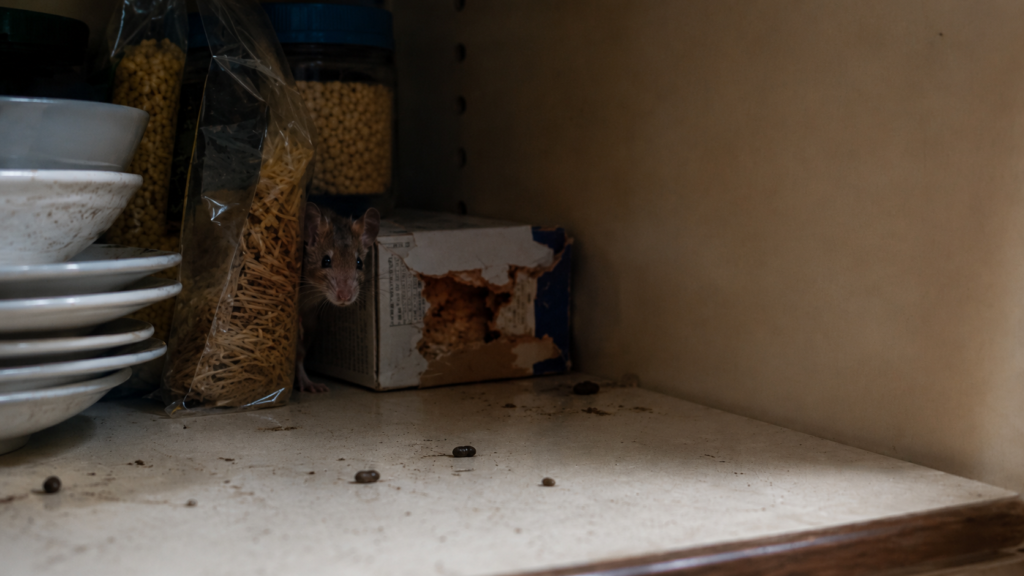
Finding mouse droppings in the garage, or hearing something scurry in the attic, is unsettling. It also raises a fair question: how risky is this, really? For most homeowners the risk is low, but it is real, and the way you clean up matters more than almost anything else you do.
The main concern is a virus called hantavirus. It is rare in the United States, it does not spread from person to person here, and a careful cleanup removes most of the danger. Here is what it is, how it spreads, and the step-by-step method public health agencies recommend, written for a regular homeowner rather than a lab.
| QUICK ANSWER: CLEANING UP RODENT DROPPINGS SAFELY Never sweep or vacuum droppings or nests, because that pushes infectious particles into the air. Instead, put on rubber gloves and an N95 mask, spray the area with a bleach solution (1 part bleach to 10 parts water) until it is damp, and let it soak for five minutes. Wipe everything up with paper towels, seal it inside two bags, and wash your hands thoroughly. |
What is hantavirus, and how does it spread?
Hantaviruses are a small family of viruses carried by wild rodents. In most of the country, the main carrier is the deer mouse. Across the Southeast you will also find the cotton rat and the rice rat, both of which can carry it, so it is not strictly a deer mouse problem in our region.
People almost always catch it the same way, by breathing in contaminated dust. When dried urine, droppings, or saliva get stirred up in a closed, poorly ventilated space like an attic, crawl space, shed, or cabin that has been shut up for a while, tiny particles drift into the air and can be inhaled. That is why a space that has been untouched over the winter carries more risk than a room you use every day.
To put it in perspective, the disease is uncommon. The CDC recorded roughly 860 cases nationwide between 1993 and 2022. It can be serious when it does happen, which is the reason these cleanup steps are worth following closely, but it is not something most households will ever run into.
The three ways it reaches people
- Breathing it in: This is by far the most common route, and it usually happens when someone sweeps or vacuums dry droppings and sends a fine dust into the air.
- Direct contact: Touching contaminated nesting material or waste, then touching your eyes, nose, or mouth.
- Bites or scratches: Possible through the saliva of an infected rodent, but rare.
The safe cleanup method, step by step
When you are dealing with an area where mice or rats have been, treat all of it as if it could be contaminated. The steps below follow CDC guidance.
1. Air the space out first
Before you go into a closed-up room, shed, or cabin, open the exterior doors and windows and let it air out for at least 30 minutes. Step outside while it airs rather than waiting in the room. If you have central heating or air conditioning, switch it off first so you are not circulating dust through the ducts.
2. Wet it down, do not sweep
Put on rubber, latex, or vinyl gloves and an N95 respirator. Never run a broom or a vacuum over dry droppings. A standard household vacuum does not filter these particles and will spray them right back into the air. Everything from here uses a wet method instead.
3. Mix and apply your disinfectant
Soak the droppings, urine, and nesting material until they are visibly wet, then leave the disinfectant in place long enough to work.
| Disinfectant | How to mix it | Soak time | Use it on |
| Household bleach solution | 1 part bleach to 10 parts water (about 1.5 cups of bleach per gallon) | 5 minutes | Droppings, urine, and nesting material |
| EPA-registered disinfectant | Follow the label; some are ready to use, others need diluting | Per the label (usually around 5 minutes) | Hard surfaces, plus drywall, insulation, or subfloors if contaminated |
A couple of safety notes: mix a fresh batch each time, and never combine bleach with ammonia or other cleaners, since that can create toxic fumes.
4. Wipe, double-bag, and seal
With your gloves still on, use paper towels to wipe up the soaked waste. Put the towels, the debris, and finally your gloves into a heavy-duty garbage bag. Seal it, place it inside a second bag, seal that one too, and put it in an outdoor trash can. Finish by wiping or mopping hard surfaces, including floors, countertops, cabinets, and drawers, with the same disinfectant. Then wash your hands well with soap and water.
How to keep rodents out for good
The most reliable way to lower your risk is to stop giving rodents a way in and a reason to stay. A few habits handle most of it.
Seal the entry points
Walk your foundation, exterior walls, and the spots where pipes and wires enter the house. A mouse can squeeze through a gap about the width of a pencil, roughly a quarter inch, so seal anything that size or larger. Steel wool packed into the gap and topped with caulk works well, and hardware cloth is good for the bigger openings.
Cut off the food
Store pet food, birdseed, grass seed, and pantry staples in sealed metal or heavy plastic containers. Do not leave pet bowls out overnight, and keep outdoor trash in bins with tight-fitting lids.
Clean up the yard
Move wood piles as far from the house as your lot allows, ideally around 100 feet, and keep them raised off the ground. Trim back brush and tall grass along the foundation and keep bird feeders away from the walls of the house, since spilled seed is a dependable draw.
Trap, then confirm they are gone
Set snap traps along walls and behind appliances and keep trapping for about a week. Once you stop catching anything, the active infestation is likely cleared, which is the right time to do a thorough cleanup of the space.
When to see a doctor
Symptoms of hantavirus usually show up one to eight weeks after exposure. Early on they look like the flu, with fever, fatigue, and aching in the large muscles of the thighs, hips, and back. Later, a cough and shortness of breath can develop. If you have been around rodents or cleaned up after them and you start feeling this way, see a doctor and mention the rodent exposure.
When to call in a professional
Some situations are worth handing off. If droppings are turning up in more than one area, if rodents have reached your attic, crawl space, or HVAC system, or if the problem keeps coming back after you have sealed and trapped, a licensed technician can handle the inspection, removal, and cleanup safely and make sure the entry points are actually closed for good.
| Pests out, peace in. Not sure how bad it is? Let us take a look. Proforce has local, licensed teams across Virginia, the Carolinas, Georgia, and Florida. Tell us where you are and we will confirm a crew works in your area, then set up a safe inspection and cleanup. CHECK YOUR SERVICE AREA |
This article is general guidance based on current CDC recommendations and is not a substitute for medical or professional advice. If you think you may have been exposed to hantavirus, contact a healthcare provider.