
Mosquitoes in North Carolina are active March through October, with peak pressure in summer. Here’s what species to know and how to control them.
Key Takeaways
- North Carolina hosts at least three common mosquito species, including the Asian tiger mosquito and northern house mosquito, each with different biting habits and breeding preferences.
- Mosquito season in NC runs from early spring through late fall, peaking in July and August when heat and humidity are highest.
- Standing water in bird baths, buckets, old tires, and outdoor flower pots is the single biggest driver of mosquito populations on residential properties.
- Mosquitoes in NC carry West Nile virus, Eastern equine encephalitis, and Zika virus, making control a public health concern, not just a nuisance issue.
- Professional mosquito control combines barrier treatments, larvicide for standing water that cannot be removed, and targeted trapping to reduce active populations through the season.
What Mosquitoes in North Carolina Do to Your Yard
Mosquitoes do not just bite. They breed in your yard, rest in your shrubs, and can transmit dangerous diseases to humans, pets, and birds. A single female mosquito lays up to 200 eggs at a time in standing water, and those eggs hatch within 48 hours under warm, humid conditions. One neglected bird bath or clogged gutter can sustain hundreds of adult mosquitoes by mid-summer.
North Carolina’s climate is ideal for mosquitoes. Warm summers, high humidity, and frequent rainfall create the standing water and dense vegetation these insects need. NC State Extension Entomology documents multiple mosquito species active across the state, several of which are capable of transmitting pathogens that affect human health.
Homeowners often underestimate how quickly mosquito populations build on a single property. By the time bites become frequent, breeding is well established and adult populations are already high. Early-season control prevents that buildup before it starts.
When Mosquito Season in NC Peaks and Why
Mosquito season in North Carolina starts in early spring and runs through October. The first adult mosquitoes emerge when soil temperatures rise above 50 °F, which in most of NC happens in late March or early May. Activity increases through May and June, peaks in July and August, then tapers as temperatures drop in September and October.
Heat and humidity are the two main accelerators. When temperatures stay above 80 °F and relative humidity remains high, mosquito larvae develop faster, adult lifespans extend, and biting frequency increases. Coastal and Piedmont regions of NC experience the most intense pressure because of their warm, humid environments throughout summer.
Rainfall timing matters as much as total rainfall. A two-inch rain that fills containers and leaves standing water in low-lying areas will produce a noticeable adult mosquito surge seven to ten days later. That lag is the larval development window, and it is the most effective intervention point for mosquito control.
Common Types of Mosquitoes Found in NC Homes and Yards
Three species account for the majority of mosquito activity around homes and yards in North Carolina. Each feeds at different times of day, breeds in different water sources, and carries different disease risk. Knowing which species is active on your property helps target control at the right time and place.
Asian Tiger Mosquito Activity in North Carolina
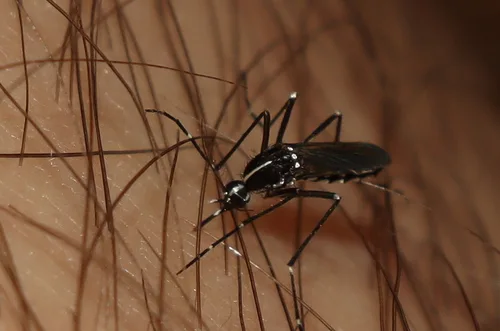
The Asian tiger mosquito (Aedes albopictus) is the most aggressive biter homeowners encounter in NC. It is identifiable by its bold white stripes on a black body and by its daytime biting behavior. Unlike most mosquito species, the Asian tiger mosquito feeds from early morning through dusk, not just at night. It breeds in small containers, tree holes, old tires, and outdoor flower pots rather than large bodies of water, making residential yards its primary habitat.
This species is a known vector for Zika virus, dengue, and chikungunya. Its preference for containers near homes means that reducing standing water in small items like potted plants, buckets, and bird baths directly reduces the Asian tiger mosquito population on your property.
Northern House Mosquitoes Active Across NC
The northern house mosquito (Culex pipiens) is the primary carrier of West Nile virus in North Carolina. It feeds primarily at dusk and through the night, targeting humans, birds, and other warm-blooded animals. This species breeds in stagnant, organically rich water, including neglected gutters, standing water in low-lying yards, and natural bodies of water with slow or no movement.
West Nile virus transmission from northern house mosquitoes to humans typically peaks in late summer when adult populations reach their highest density. Birds are an amplifying host, meaning the virus cycles through bird populations before spreading to humans via mosquito bites. Reducing breeding grounds near your home is the most direct way to lower your household’s exposure risk.
Eastern Saltmarsh Mosquitoes in Coastal NC
Eastern saltmarsh mosquitoes (Aedes sollicitans) are a major nuisance along the North Carolina coast. This species breeds in tidal saltmarsh areas and can travel several miles from breeding sites, meaning coastal homeowners experience heavy pressure even without standing water on their own property. Eastern saltmarsh mosquitoes feed aggressively at dawn and dusk, and large populations can make outdoor activity difficult for days after a high tide or storm surge.
Control for this species depends more on regional vector management programs than on individual property action, though barrier treatments to foliage and resting areas around your home reduce the number of adults that settle and bite on your property.
Diseases North Carolina Mosquitoes Carry and Transmit
Mosquitoes in North Carolina transmit several diseases that pose real public health risk. West Nile virus is the most common mosquito-borne illness in the state, with cases reported annually. Eastern equine encephalitis (EEE) is rarer but carries a higher fatality rate and has been documented in NC. Zika virus became a concern after the 2016 outbreak, and while local transmission in NC is limited, the Asian tiger mosquito present in the state is capable of spreading it.
Malaria was historically endemic in parts of the Southeast and yellow fever outbreaks shaped early NC history. Both diseases are now controlled through public health infrastructure, but the mosquito species capable of transmitting them remain present in the region. According to the CDC, mosquitoes remain one of the most dangerous insects on the planet because of their capacity for disease transmission to humans and animals.
Dogs and horses are also at risk. Heartworm disease, transmitted by mosquitoes, is common in North Carolina. Pet owners should speak with their veterinarian about preventive heartworm medication, especially in high-pressure mosquito seasons.
How to Reduce Mosquitoes on NC Properties Before Calling a Pro
The single most effective step homeowners can take is removing standing water from their property. Mosquitoes lay eggs in as little as a half inch of water, and they do not need a pond or ditch. Common residential breeding grounds include bird baths, buckets, clogged gutters, old tires, outdoor flower pots, tarps, and tree holes. Emptying these containers every five to seven days breaks the breeding cycle before larvae become adult mosquitoes.
Beyond standing water, dense vegetation gives adult mosquitoes resting sites during the heat of the day. Trimming shrubs, cutting back overgrown areas, and keeping grass short reduces the harborage available to mosquitoes between feeding periods. These habitat modifications lower the baseline population before any treatment is applied.
Insect repellents applied to skin before outdoor activity provide personal protection during peak biting hours. For early morning and evening outdoor events when mosquito pressure is highest, repellents containing DEET or picaridin provide reliable bite reduction for adults and children.
Professional Mosquito Control Options for North Carolina Homeowners
Professional mosquito control uses a three-part process that addresses adults, larvae, and breeding sites together. Treating only one component leaves the other two untouched and allows populations to rebuild within days. An integrated approach produces durable results that hold up through rain and heat.
Proforce’s mosquito service in North Carolina begins with a barrier treatment applied to foliage, shaded resting areas, and harborage zones using a mister. In NC locations, Proforce service professionals apply Duraflex CS, a targeted treatment that controls active adult mosquitoes resting in treated areas. Each service takes approximately thirty minutes, though treatment time varies based on yard size.
For standing water that cannot be drained, such as ornamental ponds, low-lying drainage areas, or water that accumulates after heavy rain, Proforce applies Altosid, a larvicide that prevents mosquito larvae from developing into biting adults. This step is critical in NC because of how frequently rainfall replenishes water sources through the summer.
Where applicable, Proforce also uses the In2Care mosquito trap system, placed along property lines and monitored monthly. The In2Care system attracts mosquitoes to treated water, where they ingest the active ingredient and carry it to other water sources on the property. The EPA’s integrated pest management framework supports this type of multi-method approach because it targets multiple points in the pest life cycle rather than relying on a single application.
Pets must be kept out of treated areas for at least four hours after service. Treatment is applied according to label directions and non-target exposure protocols. If mosquitoes remain active between scheduled visits, Proforce’s Pest-free Service Warranty covers a reservice at no additional charge.
Bottom Line on Mosquitoes in North Carolina
Mosquitoes in North Carolina are a season-long problem that starts in early spring and does not let up until October. Three species dominate residential pressure: the Asian tiger mosquito biting through the day, the northern house mosquito active at night and carrying West Nile virus, and the eastern saltmarsh mosquito pushing in from the coast. Diseases including West Nile virus, Eastern equine encephalitis, and Zika virus make mosquito control a health decision, not just a comfort one.
Removing standing water and trimming dense vegetation give homeowners a meaningful head start. Professional barrier treatments, larvicide applications, and trapping systems handle the rest. Done together and maintained through the season, these steps keep mosquito pressure low enough to reclaim your yard. Proforce serves NC homeowners across multiple locations, and every mosquito service is backed by the Pest-free Service Warranty.
Frequently Asked Questions
When do mosquitoes become active in North Carolina?
Mosquitoes in NC emerge in late March or early May when temperatures rise above 50 °F. Activity builds through spring, peaks in July and August, and tapers through September and October. Treating in early spring, before populations build, produces better season-long results than waiting until biting pressure is already high.
What diseases do NC mosquitoes carry?
North Carolina mosquitoes carry West Nile virus, Eastern equine encephalitis, and Zika virus. West Nile is the most commonly reported mosquito-borne illness in the state. Eastern equine encephalitis is rare but serious. Dogs are also at risk for heartworm, which is transmitted by mosquitoes and common in NC.
How do I stop mosquitoes from breeding in my yard?
Remove or empty any container that holds water, including bird baths, buckets, old tires, outdoor flower pots, and clogged gutters. Do this every five to seven days. Mosquitoes only need a small amount of standing water to lay eggs, and larvae develop into adults within a week under warm conditions.
How does professional mosquito control work in NC?
Professional service combines a barrier treatment applied to foliage and resting areas, a larvicide for standing water that cannot be drained, and trapping where applicable. Proforce applies Duraflex CS for barrier treatment at NC locations and Altosid for larvicide applications. Each visit takes about thirty minutes and is backed by a reservice warranty if mosquitoes remain active.
Are Asian tiger mosquitoes active during the day in NC?
Yes. The Asian tiger mosquito bites from early morning through dusk, which is unusual compared to most mosquito species that feed primarily at night. It breeds in small containers near homes rather than large water bodies, making residential yards its primary habitat. White stripes on a black body are the easiest identification marker.