
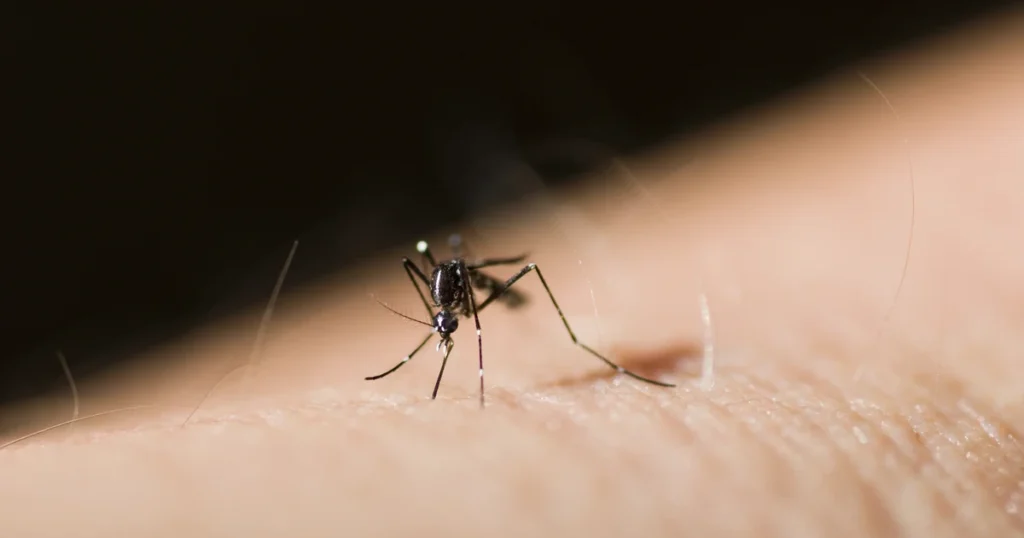
Mosquitoes in Georgia can create costly problems when early signs are missed. Learn what to look for, why it matters, and when to call Proforce.
Key Takeaways About Georgia Mosquitoes
- Georgia homeowners may encounter several mosquito species in their yards, and knowing what to look for can help you stay ahead of bites.
- Mosquitoes can carry diseases that pose risks to both people and animals, making ongoing awareness and prevention worth your attention.
- Reducing standing water around your property and limiting time outdoors during peak activity periods are practical steps you can take on your own.
- Proforce Pest Control offers a mosquito control program that includes barrier treatments, breeding site treatment, and optional trapping to help reduce mosquito activity around your home.
How to Identify Georgia Mosquitoes
Knowing which mosquito species are active around your property can help you understand what you’re dealing with. Different species look different, behave differently, and show up in different parts of your yard. Here’s what to watch for in Georgia.
How to Tell Mosquito Types Apart in Georgia
Not every mosquito you encounter is the same species. Some species, like the black salt marsh mosquito, can act as bridge vectors between infected birds and uninfected mammals, according to UF/IFAS Extension. Others, like Culiseta melanura, have been found carrying West Nile virus in several studies, though this species is not considered an important vector of the virus to humans, as UF/IFAS Extension notes.
Paying attention to when mosquitoes bite you can also help with identification. Some species are active at dawn and dusk, while others may bite throughout the day. Size, color patterns, and flight behavior can vary from one species to the next.
How to Spot Mosquito Activity Inside Your Georgia Home
Mosquitoes that make it indoors often rest on walls, ceilings, and shaded corners. You may hear their familiar buzzing near your ears, especially in the evening. Because activity patterns vary by species, you may notice bites at different times of day depending on which mosquito has entered your home.
Where Mosquito Activity Shows Up Around Georgia Homes
Outdoors, mosquito activity tends to concentrate in shaded, sheltered areas of your yard. Foliage, under eaves, and areas near standing water are common resting and gathering spots. According to UC IPM, activity levels shift throughout the day, with some species peaking around dawn and dusk and others remaining active in daylight.
Repellents may offer some personal protection when you’re outside, but keep in mind that they do not offer the same level of protection to all users. The response you get from a repellent depends on the mosquito species biting, as well as your age, sex, level of activity, and individual attractiveness to mosquitoes.
Exterior Entry Points Mosquitoes Use Around Georgia Homes
Mosquitoes enter through open doors and windows. Gaps in screens, tears in mesh, and doors left ajar during warmer months give mosquito species easy access to your living space. Keeping entry points sealed reduces the number of mosquitoes that make it inside.
Why Mosquito Problems Develop in Georgia
Mosquito activity in Georgia ties to standing water and the conditions that create it. About 200 different species of mosquitoes live across the United States, each inhabiting specific environments, yet all of them share the same four-stage life cycle: egg, larva, pupa, and adult. Every stage before adulthood depends on water, so the factors that put water on your property are the same factors that invite mosquitoes.
Outdoor Nesting Areas for Mosquitoes Around Georgia Homes
Different species prefer various standing water sources for egg-laying. Permanent bodies of water like ponds and streams often contain predators that help control mosquito larvae. The more problematic breeding sites tend to be marshes, swamps, clogged ditches, and temporary pools, according to the EPA. Heavy rains saturate the ground and create additional breeding habitat.
Overgrown vegetation can also provide shelter for mosquitoes. Regular landscape maintenance can help reduce these potential breeding sites around your yard.
Food and Shelter That Attract Mosquitoes Around Georgia Homes
Mosquitoes need sheltered, shaded resting spots during the day and access to water for reproduction. Rain gutters, old tires, buckets, plastic covers, and toys can all collect enough water for mosquitoes to breed. Plastic pools left uncovered when not in use give mosquitoes another place to lay eggs.
Even small, overlooked containers hold enough water to support a new generation. Storing containers upside down, covering them, or disposing of them removes those opportunities before mosquitoes can use them.
How Mosquitoes Move Around Georgia Homes
Mosquito populations appear in predictable waves based on their preferred breeding environments. After periods of heavy rain, you can expect to see increased mosquito activity in the days and weeks that follow, as newly flooded areas produce fresh populations. Container-breeding species such as the Asian tiger mosquito can multiply in residential yards where small water sources are common.
Trails and Entry Points Mosquitoes Use in Georgia
Mosquitoes follow moisture and shelter from one breeding site to the next across a property. Draining standing water from any item that collects it cuts off the resources mosquitoes need to reproduce near your home.
Risks From Georgia Mosquitoes
Mosquitoes bite people and animals, and certain species can carry diseases. Georgia homeowners should understand these risks so they can take the right steps to protect their households.
Health Risks Linked to Georgia Mosquitoes
Mosquitoes can spread diseases such as West Nile virus, according to UC IPM. Culex mosquitoes are the primary disease-carrying mosquitoes of concern to public health officials. Aedes albopictus and Aedes aegypti mosquitoes can transmit dengue, Zika, and other viral diseases.
The EPA describes mosquito-borne disease control as a coordinated public-health effort involving federal, state, and local agencies. Staying vigilant about preventing bites is one of the most practical ways to reduce risk.
Property Damage From Mosquitoes in Georgia
Mosquitoes are nuisance pests rather than structural pests. They do not cause direct damage to your home, deck, or landscaping. However, their presence around your yard can make outdoor spaces difficult to enjoy and may discourage time spent in your own backyard.
Food Areas and Mosquito Activity in Georgia Homes
Outdoor dining areas, grills, and patios near standing water can attract mosquito activity close to where your family gathers. Any site that accumulates standing water should be inspected for possible mosquito breeding and noted for follow-up control efforts.
When to Look Closer at Mosquito Activity in Georgia
If you notice persistent biting activity around your yard, it may be worth inspecting your property for standing water. Mosquito larvae may be submitted to specialists for species identification if disease-transmitting mosquitoes are suspected. Urban breeding sites can occur in underground storm drains, making prediction and control challenging.
To manage mosquito populations and support disease prevention, the EPA recommends a combination of control tools. Keeping your yard free of stagnant water and pairing that effort with professional treatment can help reduce mosquito activity around your home.
Professional Pest Control for Mosquitoes in Georgia
Keeping mosquitoes under control around your Georgia home takes more than a single step. A layered approach that combines attractant reduction, thorough inspection, and professional treatment gives you the best chance of lowering mosquito activity in your yard throughout the season.
How to Reduce Attractants for Mosquitoes in Georgia
Mosquitoes can lay eggs in surprisingly small amounts of water. Aedes aegypti mosquitoes deposit eggs in tree holes, artificial containers, and tires, according to the EPA. Even very small water-collecting items like bottle caps can support mosquito breeding, so removing or emptying anything that collects standing water is one of the simplest ways to cut down on breeding activity around your property.
Window and door screens also play an important role. Keeping screens in good repair helps exclude mosquitoes from your living spaces. When spending time outdoors, staying away from areas where mosquito activity is high can reduce your exposure.
Why Mosquito Control in Georgia Starts With Inspection
Before any treatment begins, a Proforce service professional walks your yard to identify conditions that support mosquito activity. They look for containers holding stagnant water, shaded resting spots in dense foliage, and low-lying areas where moisture gathers. This assessment shapes the treatment plan for your specific property.
Successful mosquito control programs rely on combining adult mosquito control strategies with breeding site manipulation. That same principle guides the Proforce inspection process: find where mosquitoes rest and where they breed, then address both.
What to Expect During Professional Mosquito Treatment in Georgia
Proforce uses a threefold mosquito control process. First, a barrier treatment is applied to foliage, shaded areas, and resting sites using a mister or blower. Second, a larvicide called Altosid is applied to stagnant water that cannot be removed. Third, when applicable, Inzecto Mosquito Traps are placed along property lines and monitored monthly.
Each treatment takes approximately 30 minutes, though timing varies with yard size. Before service begins, your yard must be clear of people, pets, pet food, water bowls, and toys. Doors and windows should remain closed during treatment.
Pets must be kept out of treated areas for at least four hours after service. As the EPA notes, mosquito control products are evaluated to confirm they do not pose risks to vulnerable populations, including children and pregnant women, when used according to label directions.
What to Expect From a Georgia Mosquito Control Plan
Proforce mosquito control is designed as an ongoing service. The barrier treatment targets adult mosquitoes in their resting areas, while the larvicide addresses breeding sites. The In2Care system works on water that has accumulated in lower areas, attracting mosquitoes that ingest the liquid and then spreading it to additional water sources, making those areas unable to support new larvae. This is why the treatment holds up after rainfall.
Customers are covered by the Pest-free Service Warranty. If mosquitoes remain persistent between visits, you can call for a reservice at no extra charge. That accountability reflects the Proforce standard: Done Right. Every Time.
Bottom Line on Mosquitoes in Georgia
Mosquitoes in Georgia can be more than a backyard nuisance. They may carry diseases that affect people and pets, and breeding populations can build quickly wherever standing water collects. Reducing those water sources is one of the most practical steps you can take. Pairing your own prevention efforts with a professional mosquito control plan helps keep your yard more comfortable through the warmer months. Proforce Pest Control uses a barrier treatment, larvicide application, and optional trapping approach designed to target mosquitoes where they rest and breed.
Contact Proforce to request a quote and learn how our mosquito service fits your property.
Frequently Asked Questions About Mosquitoes in Georgia
Why Are There So Many Mosquitoes in My Yard?
Mosquitoes breed in standing water, and even small amounts collected in containers, tree holes, or low spots can support larvae. Shaded areas and dense foliage also give adult mosquitoes places to rest during the day. Inspecting your yard after rain and removing or emptying water-holding items can help reduce the population around your home.
How Long Does a Mosquito Treatment Take?
Each Proforce mosquito treatment takes approximately 30 minutes, though timing depends on yard size. The service covers foliage, shaded resting sites, and any stagnant water that cannot be removed.
Is the Yard low-risk for Pets After Treatment?
Pets should stay off treated areas for at least four hours. Pet food, water bowls, toys, and items that may be placed in the mouth should be removed before treatment begins. Treatments are applied according to label directions and non-target exposure warnings.