
Hornets in Georgia can create costly problems when early signs are missed. Learn what to look for, why it matters, and when to call Proforce.
Key Takeaways About Georgia Hornets
- Knowing how to tell hornets apart from other stinging insects helps you choose the right response when you spot a nest on your property.
- Hornets can sting when they feel threatened, so avoiding nests and understanding their behavior reduces your risk of an encounter.
- Nest removal is best handled by a service professional who can identify the species, apply the right treatment method, and safely dispose of the nest.
- A single treatment does not prevent future nests, so staying watchful after service and requesting follow-up treatment when needed keeps your yard more comfortable.
How to Identify Georgia Hornets
Knowing what you are looking at is the first step when you spot stinging insects around your Georgia property. The species most often called a “hornet” in this region is the baldfaced hornet (Dolichovespula maculata). According to UF/IFAS Extension, the baldfaced hornet is actually a yellowjacket that gets its common name from its largely black color but mostly white face, and the label “hornet” from its large size and aerial nest.
How to Tell Hornet Types Apart in Georgia
The baldfaced hornet stands out because of its black-and-white coloring, with a predominantly white face that distinguishes it from other yellowjacket species. Its larger body size also sets it apart from the smaller, yellow-and-black yellowjackets you may see around outdoor meals. Baldfaced hornets are not as annoying at picnics as other species, so their behavior alone can be a clue to identification.
This species is not particularly aggressive and typically stings only when threatened. If you can observe the insect from a low-risk distance and notice the white facial markings paired with a stocky black body, you are likely looking at a baldfaced hornet.
How to Spot Hornet Activity Inside Your Georgia Home
Interior hornet activity is uncommon because these insects prefer to build nests outdoors. You may notice a lone hornet that has entered through an open window or door. Repeated sightings of large black-and-white wasps indoors could suggest a nest is close to an exterior opening. If you see activity inside your home, keep your distance and avoid swatting, which can provoke a sting.
Where Hornet Activity Shows Up Around Georgia Homes
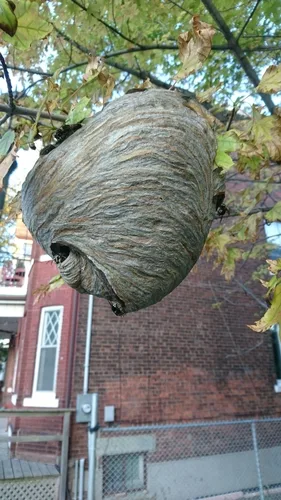
Nests may be aerial or terrestrial, depending in part upon the species. Some species may construct both types of nests. Baldfaced hornets are known for building aerial nests, which are often visible hanging from tree branches or elevated structures on your property. Colonies are founded in the spring by a single queen that mated the previous fall and overwintered as an adult, usually under the bark of a log.
Look for a gray, papery, enclosed nest that grows throughout the warmer months. If you spot one, stay away from the nest and tolerate it if possible.
Exterior Entry Points Hornets Use Around Georgia Homes
Hornets building aerial nests tend to attach them to overhangs, eaves, and tree limbs near structures. Because nests can be aerial, check elevated areas where a sheltered attachment point is available. If a nest needs to be addressed, according to UF/IFAS Extension, it is easiest to do so in the evening when the wasps are inactive.
Regular visual checks of your home’s exterior, especially sheltered spots under rooflines and porch ceilings, can help you catch nest-building activity early in the season.
Why Hornet Problems Develop in Georgia
Hornets are social insects that live in colonies of hundreds to thousands of individuals. Understanding where they nest, what draws them to your property, and how colonies grow can help you recognize a developing problem before it escalates near your Georgia home.
Outdoor Nesting Areas for Hornets Around Georgia Homes
Hornets typically nest above ground. Bald-faced hornets build paper nests in trees, while other species, including baldfaced hornets, may also nest in open places under eaves of buildings. Regardless of the exact location, each nest is a series of horizontal combs completely surrounded by a paper envelope. These nests can appear on branches, overhangs, or other elevated structures around your home.
Some yellowjacket species can nest both above ground and below the soil surface. According to UF/IFAS Extension, southern yellowjackets have been documented building ground nests roughly 20 cm wide and 20 cm deep, positioned about 22.5 cm below the surface. This means nesting activity may not always be visible at eye level.
Food and Shelter That Attract Hornets Around Georgia Homes
In spring, a solitary queen must construct brood cells, forage for food, lay eggs, feed her offspring, and defend the nest from intruders. She needs a sheltered spot with access to foraging areas. Trees, eaves, and protected overhangs near your home provide the cover and stability a founding queen looks for when starting a colony.
How Hornets Move Around Georgia Homes
A colony grows quickly once the queen’s first offspring emerge as adults. A colony grows once the queen’s first offspring reach adulthood. For most of the season, worker activity around the nest increases as the colony expands.
Later in the season, the queen begins to lay unfertilized eggs that produce males. New queens also leave the nest, mate, and seek shelter for the winter. These mated queens become the founders of the following spring’s colonies, which can mean new nests appearing on or near your property the next year.
Trails and Entry Points Hornets Use in Georgia
Because hornets nest above ground, workers travel between the nest and foraging areas along predictable flight paths. Aerial nests in trees or under eaves of buildings place these flight paths close to doorways, walkways, and outdoor living spaces. Identifying both the species and nest location is the first step toward understanding where hornet traffic crosses your daily routine.
Risks From Georgia Hornets
Health Risks Linked to Georgia Hornets
Stinging insects around your Georgia home deserve caution, especially when a nest is nearby. Bumble bees, for example, are social insects that nest in the ground and can become aggressive when their nest is threatened, stinging in defense. According to University of Georgia pest guide, this defensive behavior makes ground-level encounters a real concern for anyone walking through a yard or garden.
Disturbing a nest accidentally is one of the most common ways stings happen. Because some colonies build in hidden spots, you may not realize a nest is close until the insects respond to perceived threats.
Property Damage From Hornets in Georgia
Beyond stings, certain stinging insects can affect the structures around your property. Carpenter bees, which are often grouped alongside hornets and wasps in Georgia pest discussions, target wood surfaces. According to University of Georgia pest guide, cedar boards are particularly susceptible to extensive damage from carpenter bees, making decks, fascia, and eaves potential problem areas.
Yellowjackets can also create property concerns through nest construction. Nests have been documented in garages, around tree stumps, and within materials stored outdoors. One recorded Vespula squamosa nest reached roughly 2.5 meters (about 8.2 feet) in height and contained 74 layers of comb, as described by UF/IFAS Extension.
Food Areas and Hornet Activity in Georgia Homes
Outdoor eating and cooking areas can draw stinging insects closer to your living space. Yellowjackets and hornets forage for protein and sugars, which means patios and porches where food is present may see increased activity during warmer months. Keeping these areas clean and covered can help reduce unwanted visits.
When to Look Closer at Hornet Activity in Georgia
Pay attention when you notice repeated insect traffic around a single spot on your property. Some colonies grow to surprising sizes. According to UF/IFAS Extension, evidence has suggested that a single large nest structure may actually represent a coalition of two or three independently founded Vespula squamosa colonies on the same tree. That kind of buildup means a larger number of insects defending the area.
If you spot a nest forming in a garage, under an eave, or near ground level, monitoring it early gives you more options for low-risk management. A growing colony only becomes harder to address over time.
Professional Pest Control for Hornets in Georgia
Dealing with hornets around your Georgia home calls for a careful, measured approach. Staying alert to nests near your property is the first step toward keeping your household comfortable. When a nest is active and close to high-traffic areas, professional treatment helps reduce the risk of stings during removal.
How to Reduce Attractants for Hornets in Georgia
Routine awareness goes a long way. As Mississippi State University Extension recommends, be alert for wasp and hornet nests around the home so you can address them before they grow. Check eaves, overhangs, porch ceilings, and other sheltered spots regularly throughout warmer months.
Keep outdoor eating areas clean and cover food and drinks when dining outside. Seal garbage cans with tight-fitting lids. These simple habits make your yard less appealing to foraging hornets looking for protein or sugar sources.
Why Hornet Control in Georgia Starts With Inspection
A thorough exterior inspection is the foundation of every Proforce hornet service. Service professionals observe the surroundings, note hazardous landscaping features, and take photographs to document nest locations and activity levels.
Proper identification matters. If the stinging insects turn out to be honey bees rather than hornets, Georgia law requires a different path. According to the University of Georgia pest guide, a person licensed in Honey Bee Removal and Control must be contacted through the Georgia Department of Agriculture. Proforce service professionals verify the species before any treatment begins.
What to Expect During Professional Hornet Treatment in Georgia
Proforce applies species-specific treatment methods tailored to the type of hornet or wasp and the nest location. These methods include dusting, drenching, void treatments, and aerosol applications. Treatments are often performed early morning, evening, or dusk, when hornets are less active and more likely to be inside the nest.
Aerosol products labeled for hornet and wasp nests can work against yellowjackets and paper wasps, but as UC IPM notes, they must be used with extreme caution. Proforce service professionals wear bee suits for protection during every treatment, following proper PPE guidelines based on product labels.
Once the hornets have been addressed, nests are removed when possible. Removed nests are sealed in plastic bags and disposed of at the branch office.
What to Expect From a Georgia Hornet Control Plan
Proforce hornet service focuses on treating the current nest and removing it. The service does not prevent future nests from forming in or around your home.
Because hornets can rebuild in previously occupied areas, periodic inspections of your home’s exterior help you catch new activity early. Staying vigilant between services, especially during warm months, keeps you a step ahead.
Bottom Line on Hornets in Georgia
Hornets in Georgia deserve respect and awareness. Knowing how to spot a nest, understanding that stings can pose real risks, and keeping your property maintained all help you stay ahead of problems. When a nest appears in a high-traffic area around your home, professional removal is the safest route. Proforce Pest Control service professionals identify the species, locate the nest, and apply targeted treatment methods so you do not have to put yourself in harm’s way. Contact Proforce to request service if you find a hornet nest on your property.
Frequently Asked Questions About Hornets in Georgia
Are Hornets Dangerous to People?
Hornets can sting when they feel their nest is threatened. Some species are less aggressive than others, but disturbing any active nest carries risk. If you notice a nest near walkways, doorways, or play areas, it is best to keep your distance and call a professional.
What Should I Do if I Find a Nest?
Avoid disturbing the nest. Stay alert for nests around the exterior of your home, and do not attempt to knock one down on your own. A Proforce service professional can assess the situation, identify the species, and choose the right approach for removal.
Will Removing a Nest Keep Hornets Away for Good?
Nest removal addresses the current colony, but it does not prevent future nests from being built in the same area.
When Is the Best Time to Address a Hornet Nest?
Proforce service professionals time their visits to reduce the chance of stings and handle the nest as safely as possible.