
Virginia has dozens of spider species. Most pose no threat, but two are venomous. Learn which spiders you’ll find, how to ID them, and when to call a pro.
Key Takeaways
- Virginia has two medically significant spider species: the black widow and, rarely, the brown recluse.
- Research published in PLoS ONE confirms the brown recluse’s documented range sits west of Virginia — a spider misidentified as a recluse is almost always a sac spider or wolf spider.
- Wolf spiders, orb weavers, and jumping spiders are the species Virginia homeowners encounter most.
- Spiders follow their food source indoors. Controlling the insects in and around your home reduces spider pressure.
- If you spot a black widow or are unsure of a bite, seek medical attention and contact a pest control professional.
Venomous Spiders in Virginia Worth Knowing About
For region-specific identification and updated guidance on Virginia spider activity, the Virginia Tech Department of Entomology publishes ongoing extension materials on the species most relevant to Virginia homeowners.
Black Widow Spiders in Virginia: What to Look For
Black widow spiders are the only confirmed venomous spider species found across Virginia. Females are unmistakable: shiny black bodies roughly half an inch long, with a red or orange hourglass marking on the underside of the abdomen. Males are smaller, lighter in color, and rarely bite. Both the northern black widow (Latrodectus variolus) and the southern black widow (Latrodectus mactans) are found in Virginia, with the northern species more common in the western and central parts of the state.
Black widows build irregular, low webs in dark, sheltered spots: woodpiles, garage corners, under deck boards, and inside unused outdoor equipment. A retrospective review of National Poison Data System records published in Wilderness and Environmental Medicine found that black widow exposures cluster in warm-weather states and summer months, a pattern that fits Virginia’s seasonal profile. If you see the hourglass, leave the area and call a professional.
Are There Brown Recluse Spiders in Virginia?
Brown recluse spiders are not native to Virginia and are rarely found here. Climate modeling research published in PLoS ONE maps the brown recluse’s natural range west of the Appalachians, placing Virginia outside it. Confirmed sightings in Virginia almost always trace back to spiders transported in cardboard boxes, furniture, or stored goods from states where the species is common.
That said, the brown recluse’s reputation means it gets blamed for many bites. The real suspects in Virginia are yellow sac spiders and wolf spiders, both of which can produce a bite wound with localized redness. A violin-shaped mark on the back, six eyes arranged in pairs, and a golden-brown body identify a recluse. If you suspect tissue death or a worsening bite wound, seek medical care immediately, regardless of whether you can confirm the species.
A comprehensive review of widow spider distribution and latrodectism published in the Journal of Venomous Animals and Toxins reinforces that bite severity varies widely by individual, and any significant reaction warrants professional evaluation.
Most Common Spiders in Virginia Homes and Yards
Wolf Spiders in Virginia: Large, Fast, and Frequently Misidentified
Wolf spiders are the large, ground-dwelling spiders Virginia homeowners encounter most often. They range from half an inch to over an inch in leg span, with dark brown bodies marked by darker stripes and a darker midline stripe running down the back. Females carry their egg sac attached to their abdomen, a behavior unique among common Virginia spiders. Wolf spiders are nocturnal ambush hunters — they don’t spin webs. They pursue prey on the ground, which is why you’ll find them running across basement floors or garage slabs at night.
Their large size and speed make them alarming, but their bites produce mild symptoms: temporary redness and swelling at the bite site. They bite only when handled or trapped against skin. Wolf spiders and similar ground-hunting species contribute to natural insect control and seldom require treatment unless populations build indoors.
Yellow Sac Spiders in Virginia and Their Bite Risk
Yellow sac spiders are the spider most frequently responsible for bites inside Virginia homes. They are small, light yellow to pale tan, with proportionally longer legs than their body size suggests. The northern yellow sac spider (Cheiracanthium mildei) builds a silken tube retreat in corners, behind picture frames, and along ceiling edges. They are nocturnal and will bite if disturbed while you reach into a hidden space or pull on clothing left on the floor.
Yellow sac spider bites cause localized pain, redness, and sometimes a small blister. Symptoms are mild and resolve within a few days. Secondary infection is possible if the bite is scratched. A female yellow sac spider guards her egg sac inside the silken tube until the eggs hatch, making established retreat sites a sign of active infestation.
Common House Spiders in Virginia: Cobwebs and Corners
The common house spider (Parasteatoda tepidariorum) builds the messy cobwebs you find in garage corners, basement window frames, and undisturbed closets. These are small brown spiders, roughly a quarter inch in body length, with banded legs and a rounded abdomen. They are not aggressive. The false black widow spider, from the genus Steatoda, looks similar but slightly darker and is occasionally mistaken for a black widow — it lacks the red hourglass marking and produces only minor symptoms if it bites.
House spiders are passive hunters that wait for insects to contact their webs. Regular vacuuming of corners and window frames removes both the webs and the spiders, and reduces the insect population they feed on.
Jumping Spiders in Virginia: Bold Coloration and Good Eyes
Jumping spiders are among the easiest Virginia spiders to identify: compact, hairy, and equipped with large front-facing eyes that track your movement. The daring jumping spider (Phidippus audax) is one of the most common species found in Virginia, featuring bold coloration with a dark body and iridescent chelicerae that appear green or blue in sunlight. Jumping spiders are active daytime hunters that don’t spin webs for prey capture. They stalk insects visually and pounce from a distance.
Their bites are rare and produce mild, localized reactions. Most species retain a curious, non-aggressive temperament toward humans. They will often turn to face you rather than flee. Jumping spiders commonly appear on exterior walls, fences, and garden plants in warmer months.
Orb Weaver Spiders in Virginia Gardens and Landscapes
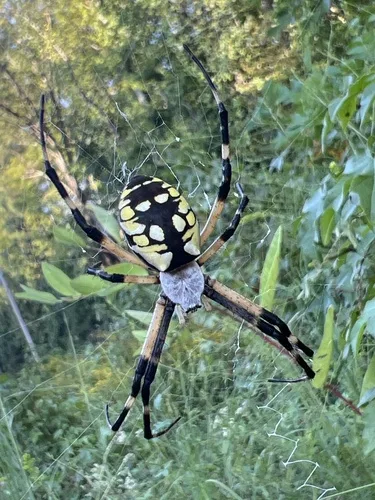
Orb weaver spiders build the large, circular webs you see strung between plants, fence posts, and porch railings across Virginia. Common orb weaver species found in Virginia include the black and yellow garden spider (Argiope aurantia), also called the yellow garden spider, and the marbled orb weaver (Araneus marmoreus). The yellow garden spider is one of the largest orb weaving spider species in the state, with females displaying bold yellow and black patterning on an abdomen that can reach an inch in length.
Orb weaver spiders are garden spiders and specialist predators of flying insects. They are commonly found outdoors and rarely enter homes. They rebuild their webs nightly and are most visible in late summer and fall. Their bites are not medically significant.
Nursery Web Spiders and Fishing Spiders in Virginia
The American nursery web spider (Pisaurina mira) and several fishing spider species are found in Virginia, particularly near water and wooded areas. Fishing spiders reach impressive leg spans over two inches, making them among the largest spiders found in Virginia. Both species carry their egg sac in their chelicerae until near hatching, when the nursery web spider constructs a silken nursery and stands guard. Neither species is aggressive, and their bites produce mild, transient symptoms.
Identifying Spiders in Virginia: Tips for Homeowners
How to Tell Dangerous Spiders in Virginia Apart
Virginia spider sightings usually trace back to the species below. Match what you’ve seen on body size, color, and where it turned up, then check the last column to decide whether the bite risk is real or perceived.
| Species | Size | Color | Where to look | Risk | Sting |
|---|---|---|---|---|---|
| Black widow | ~1/2″ | Shiny black with red or orange hourglass underneath | Woodpiles, garage corners, under deck boards, unused equipment | Medically significant bite; muscle cramps, nausea, severe pain | Yes |
| Brown recluse | ~3/8″ | Golden brown with violin-shaped mark behind the head, six eyes | Rare in Virginia; usually arrives via boxes or stored goods | Bite can cause tissue death if untreated; confirmed sightings rare | Yes |
| Wolf spider | 1/2–1″ | Dark brown with darker stripes and a midline back stripe | Basement floors, garage slabs, exterior walls at night | Bite causes mild redness and swelling; not medically dangerous | No |
| Yellow sac spider | ~1/4″ | Light yellow to pale tan with proportionally long legs | Silken tube retreats in corners, behind frames, along ceilings | Most common indoor bite source; localized pain and small blisters | No |
| Common house spider | ~1/4″ | Brown with banded legs and a rounded abdomen | Messy cobwebs in garage corners, basement windows, closets | Passive hunter; bite produces only minor symptoms if it occurs | No |
| Jumping spider | ~1/2″ | Compact, hairy, dark body with iridescent green or blue chelicerae | Exterior walls, fences, window frames, garden plants in warm months | Rare bite with mild localized reaction; non-aggressive temperament | No |
| Yellow garden orb weaver | Up to ~1″ | Bold yellow and black patterning on a large rounded abdomen | Large circular webs between plants, fence posts, porch railings | Rebuilds web nightly; bite is not medically significant | No |
| Fishing spider | ~3/4–1″ | Dark brown with mottled markings and impressive leg span | Near water and wooded areas; occasionally wanders into homes | Not aggressive; bites produce mild, transient symptoms | No |
If the spider doesn’t match any row cleanly, photograph it from a safe distance rather than handling it. A pro can confirm the species before you take any next step.
Two physical features separate the two medically significant spiders from all other common species in Virginia. The black widow has shiny black bodies, rounded abdomen, and a red or orange hourglass on the underside. No other common house spider shares this combination. The brown recluse has a violin-shaped mark on its back and six eyes in three pairs rather than the eight eyes most spiders have. When in doubt, photograph the spider without touching it and send the image to a licensed pest professional for identification.
Most Virginia spider species have eight eyes, banded legs, and patterning that varies between males and females. Immature coloration often differs from adults, which contributes to misidentification. If symptoms worsen after a bite, seek medical attention.
How to Reduce Spiders in Virginia Homes Year-Round
Prevention Steps That Cut Spider Activity in Virginia
Spiders follow insects, so reducing the insect population inside and around your home reduces spider pressure at the source. Seal cracks around window frames, door sweeps, utility penetrations, and foundation gaps where both spiders and their prey enter. Reduce exterior lighting or switch to yellow-spectrum bulbs that attract fewer flying insects at night. Store cardboard boxes in sealed plastic bins rather than stacking them in basements or garages, where several spider species build retreats.
Keep firewood at least 20 feet from the home and inspect it before bringing it inside. Clear leaf litter, ground cover, and dense mulch from the foundation perimeter. Inside, vacuum corners, behind furniture, and along ceiling edges regularly to remove webs, egg sacs, and spiders before populations build.
When to Call a Professional About Spiders in Virginia
Call a pest professional when you find a confirmed black widow, bites are recurring, or DIY control hasn’t reduced spider activity after two to three weeks. Proforce service professionals inspect for harborage areas, assess what attracts spiders and their prey, and apply targeted treatments under a general pest control plan. Where spiders are heavy, the insect population sustaining them is the real driver.
Proforce’s general pest plan covers spiders as part of 35-pest coverage across all service locations in Virginia, backed by the Proforce Guarantee.
Bottom Line on Virginia Spider Activity
Virginia’s spider problem is rarely as serious as it seems. Most household spiders are beneficial hunters chasing insects. Your first move is reducing pest populations through exclusion and sanitation. If you spot a black widow, photograph it and call a professional. Contact Proforce for a quote on inspections that address the root cause.
Frequently Asked Questions
What is the most dangerous spider in Virginia?
The black widow is the only confirmed venomous spider across Virginia. Its bite can cause muscle cramps, nausea, and pain radiating from the bite site. Children, elderly individuals, and immunocompromised people face greater risk. Seek medical attention for any suspected bite.
Are brown recluse spiders common in Virginia?
No. The brown recluse’s documented range sits west of the Appalachian Mountains, and Virginia falls outside it. Occasional specimens turn up after being transported from states where the species is established. Most spiders mistaken for brown recluses in Virginia are yellow sac spiders or wolf spiders, which lack the violin-shaped mark and six-eye arrangement of a true recluse.
When are spiders most active in Virginia?
Spider activity peaks in late summer and early fall, when orb weavers reach adult size and males of several species roam in search of mates. Black widows are most active from spring through fall.
What attracts spiders inside Virginia homes?
Spiders enter homes following insects, which are their primary food source. Gaps around doors, windows, and utility lines give both insects and spiders direct entry. Clutter, cardboard boxes, undisturbed corners, and high indoor humidity create harborage conditions that make spiders more likely to stay once they enter. Reducing interior insect populations and sealing entry points addresses the root cause, not the spiders alone.