
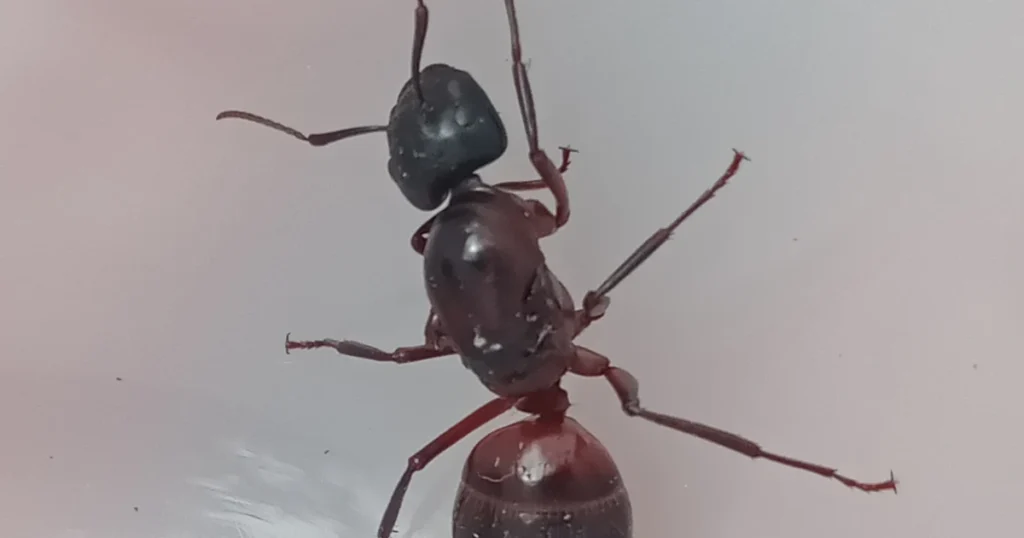
Carpenter Ants in Florida can create costly problems when early signs are missed. Learn what to look for, why it matters, and when to call Proforce.
Key Takeaways About Florida Carpenter Ants
- Carpenter ants in Florida nest in decaying wood found in trees, tree stumps, and logs, as well as indoors in crawl spaces, attics, and walls.
- Unlike termites, carpenter ants do not eat wood. They hollow it out to build nests, which can weaken wooden structures over time.
- These ants target both water-damaged wood and dry wood, along with insulation, making many Florida homes vulnerable.
- Carpenter ants and fire ants are distinct insects that require different control approaches.
- Outdoor nesting sites near your home, such as firewood piles, fence posts, and wooden retaining walls, can lead to indoor infestations.
- Professional inspection and ongoing treatment help protect your home before carpenter ants cause structural damage.
How to Identify Florida Carpenter Ants
Carpenter ants in Florida are among the largest ants you will encounter in your home. Workers range from about a quarter inch to over half an inch long, with a single-node waist and an evenly rounded thorax when viewed from the side. Color varies by species, but most Florida carpenter ants are black, reddish-brown, or a two-toned combination of both. If you spot large ants trailing along your walls or countertops, especially after dark, carpenter ants should be high on your list of suspects.
Telling Common Florida Species Apart
Florida is home to several ant species that homeowners commonly confuse with carpenter ants. Fire ants are smaller and reddish, and they build visible soil mounds rather than nesting in wood. Sugar ants and ghost ants are tiny by comparison, rarely exceeding an eighth of an inch. Carpenter ants stand out because of their larger body size and their habit of nesting in wood rather than soil. When you see a big, dark ant indoors, size alone is often your strongest clue.
How to Spot Carpenter Ant Activity Inside Your Florida Home
The most telling sign is small piles of coarse sawdust, called frass, pushed out of nest openings. You may also hear faint rustling inside walls if a nest is well established. According to Oregon State University Solve Pest Problems, carpenter ants can nest in crawl spaces, attics, walls, dry wood, water-damaged wood, and insulation. Look for frass near baseboards, door frames, window casings, and anywhere moisture damage has softened the wood.
Winged carpenter ants appearing indoors are another strong indicator. These swarmers emerge from a mature nest and are often mistaken for termite swarmers. A quick way to tell the difference: carpenter ant swarmers have a narrow, pinched waist and elbowed antennae, while termite swarmers have a broad waist and straight antennae.
Where Carpenter Ant Activity Usually Shows Up in Florida
Inside your home, carpenter ants favor areas with higher moisture. Bathrooms, kitchens, laundry rooms, and spaces beneath leaky roofing are common nest sites. They also gravitate toward foam insulation and hollow-core doors. Because Florida humidity stays elevated for much of the year, even interior wood that seems dry on the surface may hold enough moisture to attract a colony looking for a nest site.
Exterior Entry Points Carpenter Ants Use in Florida
Outdoors, carpenter ants build nests in tree stumps, firewood, fence posts, and wooden retaining walls. From these exterior nest sites, they follow branches, utility lines, and plumbing penetrations to reach your home. Mulch beds piled against the foundation and overgrown landscaping that touches siding create easy pathways inside.
Pay attention to areas where wood meets soil or where roof eaves collect moisture. Trimming vegetation back from your home and storing firewood away from exterior walls can reduce the access points carpenter ants rely on. If you notice consistent trailing activity along any of these pathways, a Proforce service professional can trace the trail back to active nest sites and recommend a targeted treatment plan.
Why Carpenter Ant Problems Develop in Florida
Florida homeowners deal with carpenter ants year-round, largely because the state’s climate and landscape create ideal conditions for these wood-damaging pests. Understanding what draws them closer to your home is the first step toward keeping them out.
Why Florida’s Climate Supports Carpenter Ant Activity
Florida’s warm temperatures and high humidity create a constant supply of damp, softened wood, which is exactly what carpenter ants need to excavate galleries and expand their colonies. Unlike states with hard freezes that slow ant activity for months, Florida’s mild winters allow colonies to stay active through every season. That year-round warmth means carpenter ants have more time to forage, nest, and grow their numbers near your property.
Food and Shelter That Attract Carpenter Ants in Florida
Carpenter ants have complicated food preferences. As Oregon State University Solve Pest Problems notes, they may not respond to common bait food sources, which makes them unpredictable foragers. They are drawn to sugary substances, proteins, and other food found in and around homes. Pet food left in bowls, crumbs on countertops, and open pantry items all serve as food sources that pull foraging workers indoors.
Removing potential food sources inside your home and storing them in tightly sealed containers is one of the simplest ways to reduce the draw. Moisture-damaged wood on porches, window frames, and fence posts also gives carpenter ants ready-made shelter close to your living space.
Why Florida Carpenter Ants Adapt Around Homes
Florida properties often combine the two things carpenter ants need most: accessible food and soft wood. Irrigation systems, rain gutters, and tropical landscaping keep soil and wood consistently moist near foundations. Tree limbs touching rooflines and mulch beds against exterior walls create direct pathways from outdoor colonies into your home’s structure. Carpenter ants can weaken wood in structures over time, making early awareness important.
Seasonal Shifts That Move Carpenter Ants in Florida
While carpenter ants remain active year-round in Florida, their behavior shifts with seasonal rain patterns. Heavy spring and summer rains saturate soil and wood, opening new nesting opportunities closer to your home. During drier stretches, foraging workers push indoors seeking food sources and moisture. These seasonal transitions are often when homeowners first notice carpenter ants trailing along baseboards, countertops, or bathroom walls.
Because carpenter ants are finicky and their food preferences vary, controlling an active colony on your own can be frustrating. A Proforce service professional can identify the conditions attracting carpenter ants to your property and address them at the source.
Risks From Florida Carpenter Ants
Carpenter ants in Florida can create problems that go beyond a simple nuisance. Understanding the specific risks they pose helps you recognize when a minor sighting signals a larger concern for your home.
Health Risks Linked to Florida Carpenter Ants
Carpenter ants are not known to transmit diseases to humans. Unlike some other ant species, they do not carry pathogens that threaten your family’s health. The primary concern with carpenter ants is structural, not medical. That said, large indoor populations can be a persistent annoyance, especially when foraging trails extend into living spaces during warmer months.
Property Damage From Carpenter Ants in Florida
This is where carpenter ants pose the greatest risk. They damage wood by excavating smooth galleries and tunnels to build their nests. According to the University of Minnesota Extension, these carved areas are clean and smooth with a well-sanded appearance. Over time, this tunneling weakens structural wood throughout your home.
Indoors, carpenter ants may occupy wall voids, attic framing, crawl spaces, dry wood, water-damaged wood, or insulation. A tell-tale sign of activity is small sawdust piles near wooden surfaces. Several species can damage wood in buildings and other structures, so any evidence of tunneling deserves prompt attention.
Food Contamination Risks From Florida Carpenter Ants
While carpenter ants are best known for wood damage, some ant species can infest food supplies in your home. Carpenter ant foragers are drawn to sugary substances and proteins in kitchens and pantry areas. Finding ants trailing across countertops or inside cabinets means the colony is actively searching your living space for resources, and the nest may be closer than you think.
When a Carpenter Ant Problem in Florida Needs Action
A few ants on your patio may not warrant concern. Carpenter ant nests away from structures can be tolerated. However, when you spot sawdust piles indoors, hear faint rustling inside walls, or notice consistent ant trails through your home, the colony has likely moved into the structure itself.
A thorough inspection of the interior, exterior, crawl space, and attic is the first step toward understanding the scope of the problem. If you find signs of carpenter ant damage in or near your home, contact Proforce Pest Control. Our service professionals know Florida carpenter ant behavior and can assess the situation before the damage spreads further.
Professional Pest Control for Carpenter Ants in Florida
Because carpenter ants in Florida nest in moist or decaying wood and can also tunnel into sound, dry wood, a proactive approach is the best way to protect your home. Prevention, thorough inspection, and professional treatment work together to address the root cause, not just the ants you see on the surface.
How to Reduce Attractants and Seal Entry Points
Carpenter ants are drawn to properties where trees, dead wood, and excess moisture give them easy nesting opportunities. They are common in wooded areas and landscapes where trees are present, so Florida yards with mature oaks or palms can be especially inviting. Reducing contact between vegetation and your home is a practical first step.
Trim branches that touch or overhang your roofline, and remove dead stumps, fallen limbs, and stacked firewood from near the foundation. Fix leaky hose bibs, A/C drip lines, and gutter downspouts that keep wood damp. Seal gaps around utility penetrations, door frames, and window casings with caulk or weatherstripping to close common entry points.
Replace any rotting fascia boards, soffits, or sill plates as soon as you notice decay. Carpenter ants excavate galleries for nesting rather than consuming the wood itself, so removing damaged wood takes away their preferred habitat before a colony can establish itself indoors.
Why the Process Starts With a Professional Inspection
Carpenter ant nests in buildings are usually located in moist or decaying wood, though they occasionally tunnel into sound, dry wood. That range of possible nest sites makes finding the colony on your own difficult, especially in crawl spaces, wall voids, and attic framing. According to Oregon State University Solve Pest Problems, regular inspections of your structures, including the crawl space and attic, are an important part of ongoing prevention.
A Proforce service professional will trace foraging trails, tap suspect wood to listen for hollow sounds, and check moisture-prone areas throughout your home. Identifying the nest location is the critical first step because treating the wrong area leaves the colony intact and the damage ongoing.
What to Expect During Professional Carpenter Ant Treatment
According to the University of Minnesota Extension, the best approach is to locate and destroy the nest, replace damaged or decayed wood, and address any moisture problems. Proforce service professionals follow this principle by targeting the colony at its source rather than relying on surface-level treatments alone.
When the nest cannot be accessed directly, bait stations that combine a food source with a slow-acting material may be used to reach the colony. Your service professional will determine the right combination of methods based on the inspection findings and the layout of your home.
Because carpenter ants hollow out wood rather than consuming it, treatment also involves recommending repairs to compromised wood and correcting moisture conditions that attracted the colony in the first place.
What to Expect From a Florida Carpenter Ant Control Plan
A single visit can address an active colony, but Florida’s warm, humid climate means carpenter ants can remain active year-round. Ongoing treatment is the most reliable way to catch new activity early. With 35-pest coverage under the Proforce general pest control plan, carpenter ants are included alongside other common Florida invaders like roaches, spiders, and wasps.
Every visit includes a property review so your service professional can flag new moisture issues, fresh frass piles, or foraging trails before they become a larger problem. Proforce backs this work with the Proforce Guarantee, so if carpenter ants return between scheduled visits, your service professional will too. Done Right. Every Time.
Request a quote from your local Proforce branch and let a service professional inspect your home for carpenter ant activity.
Bottom Line on Carpenter Ants in Florida
Carpenter ants in Florida thrive wherever moisture and wood meet, from wooded lots and standing dead trees to the structural framing of your home. They do not eat wood the way termites do, but they hollow it out to build nests, and that tunneling can weaken building structures over time. Controlling them starts with finding the nest, fixing moisture issues, and replacing damaged or decayed wood. When carpenter ant activity stays in trees well away from your house, it is generally fine to leave it alone.
The moment you spot signs near your structure, though, acting quickly helps limit further damage.
Frequently Asked Questions About Carpenter Ants in Florida
Do Carpenter Ants Eat Wood?
No. According to Purdue Extension, carpenter ants do not consume wood. Instead, they hollow it out to create nesting galleries. You will often find small piles of shavings, called frass, near active tunneling sites. The structural concern comes from the removal of interior wood, not from feeding.
Where Do They Usually Nest?
In buildings, carpenter ant colonies often start in damp or decayed wood, though they can also tunnel into sound, dry wood. Outdoors, they favor tree-heavy landscapes, especially large hollow trees or standing dead trees. Knots, cracks, holes, and old insect tunnels all serve as entry points.
How Can I Reduce Risk Around My Home?
Start by addressing moisture. Leaky pipes, poor drainage, and damp crawl spaces create the conditions carpenter ants prefer. Replace any decayed wood around your home’s exterior, and keep tree branches trimmed back from the roofline. Reducing direct wood-to-ground contact near the foundation also limits easy access for foraging ants.
When Should I Call a Professional?
If you spot carpenter ants inside your home or notice frass along walls, baseboards, or window frames, it is time to schedule an inspection. Proforce Pest Control service professionals know how to locate nests and address the conditions that attracted the colony. Reach out to your local Proforce team for a thorough assessment and a plan tailored to your property.