
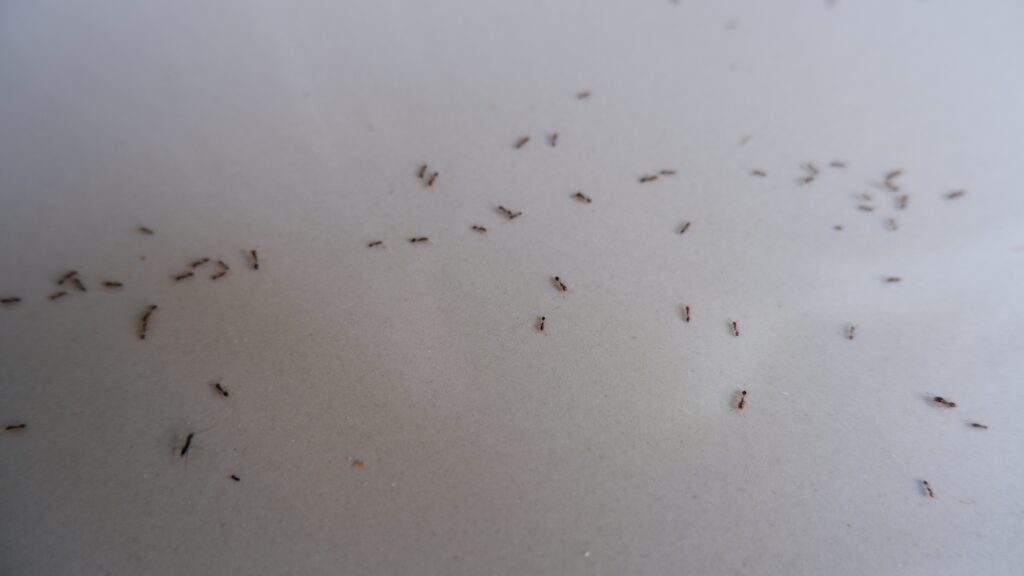
Ants in Virginia can create costly problems when early signs are missed. Learn what to look for, why it matters, and when to call Proforce.
Key Takeaways About Ant Types in Virginia
- Virginia homeowners may encounter several ant species, including carpenter ants and red imported fire ants, each with distinct sizes, colors, and nesting habits that help with identification.
- Knowing whether ants have a narrow waist, differently sized wings, or particular nesting preferences can help you tell ant species apart and distinguish them from termites.
- Some ants nest in wood or wall voids inside your home, while others build outdoor mounds, so accurate identification guides the right approach to control.
- Proforce Pest Control covers ants under its general pest control plan, with service professionals who understand the species mix in your area.
How to Identify Ant Types in Virginia
Knowing what to look for helps you narrow down which ant species may be active around your Virginia home. A few physical traits, nesting habits, and behavioral clues can point you toward the right ant type before you decide on next steps.
How to Tell Ant Types Apart in Virginia
Most ant problems in Virginia come down to five species. The table below is the fastest way to narrow down what you’re looking at. Match what you’ve seen on size, color, and where it showed up, then check the last column to decide how urgent the call is.
| Species | Size | Color | Where to look | Risk | Sting |
|---|---|---|---|---|---|
| Black carpenter ant | 1/4–1/2″ | Predominantly black, evenly convex thorax, single pedicel | Damp or decayed wood: structural timbers, hollow trees, stumps, wall voids | Structural wood damage from hollowed-out nesting galleries | No |
| Red imported fire ant | 1/16–1/4″ | Reddish brown body, darker abdomen | Sunny, disturbed yards and parks, building dome mounds | Painful, swarming sting when the mound is disturbed | Yes |
| Odorous house ant | ~1/8″ | Dark brown to black, uniform worker size | Foundation walls and under concrete slabs; outdoors under mulch and bark | Food contamination; rotten-coconut smell when crushed | No |
| Argentine ant | ~1/8″ | Light to dark brown | Interconnected outdoor nests; trails indoors along foundations | Nuisance foraging in huge multi-queen colonies | No |
| Little black ant | ~1/12″ | Shiny black, uniform worker size | Wall voids and cracks; thin trails near kitchens and food-prep areas | Food contamination; mild sting if handled | Yes |
If what you’re seeing doesn’t match any row cleanly, that’s usually a sign you’re dealing with more than one species at once. A pro can confirm before you start treating the wrong colony.
Carpenter ants are among the larger ant species you may encounter. According to Texas A&M AgriLife Extension, carpenter ant workers measure 1/4 to 1/2 inch long with an evenly convex thorax and a single flattened pedicel segment. Black carpenter ants are one of the species most likely to nest in Virginia homes. Adults found nesting in houses are predominantly black.
Carpenter ants have a narrow waist, unlike termites, and winged adults have front wings much larger than the hind ones. Termites, by contrast, have equal-sized wings. That difference is one of the quickest ways to tell the two apart.
Odorous house ants can resemble red imported fire ants, but they give off a pungent “rotten coconut” smell when crushed. All the workers are the same size, and the species is active during the day, which makes it easier to spot.
How to Spot Ant Activity Inside Your Virginia Home
Ants that invade buildings usually nest near foundation walls or under concrete slabs, according to Purdue Extension. Carpenter ants may also nest in the timbers of buildings. If you notice steady trails of uniform-sized ants during daylight hours, odorous house ants are a possibility worth investigating.
Some ant species form generally smaller colonies with fewer workers on foraging trails, so a light trail does not always mean a small problem. Paying attention to trail size, worker appearance, and timing can help you distinguish one species from another.
Where Ant Activity Shows Up Around Virginia Homes
Outdoors, certain ant species prefer to nest in soil and construct mounds in open areas. They also nest under rocks, landscape timbers, at the bases of tree trunks, in decaying wood, and in clogged rain gutters. Carpenter ants may nest in hollow trees and stumps on your property.
Some outdoor species nest in sites similar to those used by Argentine ants and odorous house ants, so overlapping nest locations can make identification trickier without a closer look at the ants themselves.
Exterior Entry Points Ants Use Around Virginia Homes
Foundation walls are a primary pathway. Ants nesting near these walls or under concrete slabs can move indoors through small gaps. Keeping an eye on where trails meet the exterior of your home narrows down the entry point and helps a service professional focus on the right area during an inspection.
Why Ant Problems Develop in Virginia
Ants are social insects that live in colonies with different castes performing different roles. When outdoor conditions push colonies closer to your home, or when food and shelter draw foraging workers inside, ant problems can develop quickly. Understanding what attracts ants and how they move helps you recognize early signs.
Outdoor Nesting Areas for Ants Around Virginia Homes
Carpenter ants nest in dead portions of standing trees, stumps, logs, or under fallen logs or stones, sometimes with galleries extending into the ground. They take advantage of preexisting soft, weak wood to establish colonies rather than damaging healthy trees. These outdoor nesting sites often sit close to homes, giving foraging workers a short path to your structure.
Red imported fire ants build mounds in sunny, disturbed habitats such as yards and parks. Because these ants are not native to the United States, their presence near a home can catch Virginia homeowners off guard.
Food and Shelter That Attract Ants Around Virginia Homes
Foraging worker ants leave the nest and seek food such as insects, decaying fruit, and honeydew. When those food sources are near your foundation or landscaping, workers may follow the supply closer to indoor spaces. According to Texas A&M AgriLife Extension, when foraging workers enter a home they can be a nuisance.
Carpenter ants do not consume wood like termites. Instead, they excavate it to make nests. Wood with existing water damage or decay is especially attractive, and in large colonies the galleries and tunnels can form an extensive network.
How Ants Move Around Virginia Homes
Carpenter ants burrow into wood to create nesting space, not for food. They may also nest in structural timbers if they find suitable conditions. Colonies both inside and near a house can contribute to ongoing activity, which is why locating all nesting sites matters for control.
Ant Trails and Entry Points Around Virginia Homes
Worker ants travel between food sources and the nest along consistent paths. These trails often lead through gaps where wood meets your foundation, especially where moisture has softened the material. Spotting a steady line of ants heading in one direction is a strong sign that a colony is nearby and workers are actively foraging indoors.
Risks From Virginia Ants
Not every ant that enters your home is just a nuisance. Some species can damage wood framing, while others can bite or sting. Knowing which pests pose which risks helps you decide how quickly to act.
Health Risks Linked to Virginia Ants
Carpenter ants do not sting, but they can bite and spray formic acid from their abdomens. That combination can cause discomfort, especially if you handle one or disturb a group inside a wall void.
Little black ants can sting. According to Mississippi State University Extension, the sting is relatively minor compared to fire ants, but it may still surprise homeowners who assume all small ants are harmless pests.
Property Damage From Ants in Virginia
Carpenter ants are the primary structural concern among ant pests in Virginia. These large black ants cause structural damage by tunneling through wood. They hollow out the wood to create nesting galleries, weakening the material over time.
Colonies can nest in trees, basements, attics, crawl spaces, and garages. Left unchecked, the tunneling may spread through multiple areas of a home, making early identification important for protecting your property.
Food Areas and Ant Activity in Virginia Homes
Kitchens and pantries are common entry points for foraging ants. Little black ants, at roughly 1/12 inch long, are small enough to slip through tiny gaps. Once a trail forms near food-prep areas, these pests can be persistent and difficult to track back to a nest.
Carpenter ant workers vary in size from 1/4 to 1/2 inch. Spotting even a few of these larger pests near counters or sinks may point to a colony nesting somewhere inside or close to the structure.
When to Look Closer at Ant Activity in Virginia
A handful of ants crossing a windowsill may seem minor. However, repeated sightings of large black ants indoors, especially near wood, can signal an active nest causing ongoing structural damage. Small piles of wood shavings are another reason to investigate further.
With little black ants, a steady trail of uniform-sized, shiny black pests suggests an established colony rather than random visitors. Paying attention to the size, color, and pattern of the ants you see helps you understand the level of risk these pests present to your home.
Professional Pest Control for Ants in Virginia
Identifying which ants are active in your Virginia home is the first step toward the right control approach. Distinguishing traits like size, color, and nesting location help narrow down the species. Carpenter ants, for example, nest inside wood, while other ants may nest under concrete slabs and enter through cracks, heating ducts, and utility openings. Knowing what you are dealing with shapes every decision that follows, from prevention to professional treatment.
How to Reduce Attractants for Ants in Virginia
Prevention starts with removing conditions that draw ants closer to your home. Wood piles are common carpenter ant nest locations, so keep firewood and lumber away from your buildings. If ants are nesting indoors, one of the first concerns is to determine whether moisture leaks exist and need to be repaired. Fixing these issues removes the damp conditions that can support nesting activity inside walls or voids.
Homes built on concrete slabs can face persistent ant problems because the insects nest under the slabs and enter through cracks and utility openings. Sealing those entry points and keeping stored wood well away from the structure are straightforward steps you can take on your own.
Why Ant Control in Virginia Starts With Inspection
The most difficult and most important part of carpenter ant control is locating the nest or nests. Once they have been found, control is relatively straightforward. According to Alabama Cooperative Extension System, inspection procedures should be aimed at finding nest sites both indoors and outdoors. A thorough inspection also checks for leaks or moisture sources that may be supporting an indoor colony.
Skipping this step often means treating surface trails while the actual nest stays hidden. Individual carpenter ants can live for six months or more without feeding, which makes nest treatment essential rather than optional.
What to Expect During Professional Ant Treatment in Virginia
Because controlling carpenter ants is complex, hiring a pest management professional is the recommended path. Treatment typically targets cracks, crevices, or voids where carpenter ants are nesting. Products currently labeled for ant control can deliver results when the nests are carefully treated, so precision matters more than volume.
Professional pest control may also be needed for homes on concrete slabs where ants nest beneath the foundation. These scenarios require specialized access and knowledge that go beyond surface-level sprays.
What to Expect From a Virginia Ant Control Plan
A Proforce ant control plan begins with a detailed inspection to locate indoor and outdoor nest sites. Service professionals look for moisture issues, wood contact points, and entry areas that give ants access to your home. The Proforce Guarantee backs every visit, and with 11 locations across 5 states, your local branch knows the ant pressures Virginia homeowners may encounter.
Ongoing treatment helps address the persistent nature of ant colonies. Proforce general pest control covers ants along with 35 other pests, giving you consistent protection visit after visit. Done Right. Every Time.
Bottom Line on Ant Types in Virginia
Identifying the ants around your Virginia home starts with looking closely at body shape, size, and where they nest. Carpenter ants hollow out wood for nesting rather than eating it, while other species may build mounds outdoors or settle beneath concrete slabs. Knowing which ant you are dealing with helps you take the right next step, whether that means adjusting conditions around your property or calling in a professional. If you need help identifying or addressing an ant issue, reach out to Proforce Pest Control for an inspection.
How Can I Tell Carpenter Ants Apart From Termites?
Carpenter ants have a narrow waist and two pairs of wings that differ in size, with the front pair noticeably larger. Termites, by contrast, have a broad waist and wings of equal size. Carpenter ants also do not consume wood. They remove it to create nesting galleries, They remove it to create nesting galleries..
Do Ants in Virginia Cause Structural Damage?
Carpenter ants can weaken building structures over time by hollowing out wood for their nests. While they are usually not as serious as termites, ongoing activity may compromise timbers if left unaddressed. A pest management professional can inspect for nesting sites and recommend next steps.
Why Are Ants Coming Through My Concrete Slab?
Homes built on concrete slabs can develop ant problems when colonies nest underneath and enter through cracks, heating ducts, or utility openings. These entry points are often difficult to seal completely, and professional pest control may be needed to locate and address the source.
Should I Hire a Professional for Ant Control?
In most cases, carpenter ant problems call for a pest management professional. Locating nests inside walls, doors, or other hidden voids takes experience, and proper baiting and treatment techniques help address the colony rather than just the ants you can see. Other ant species nesting under slabs or in hard-to-reach areas may also require professional attention.