
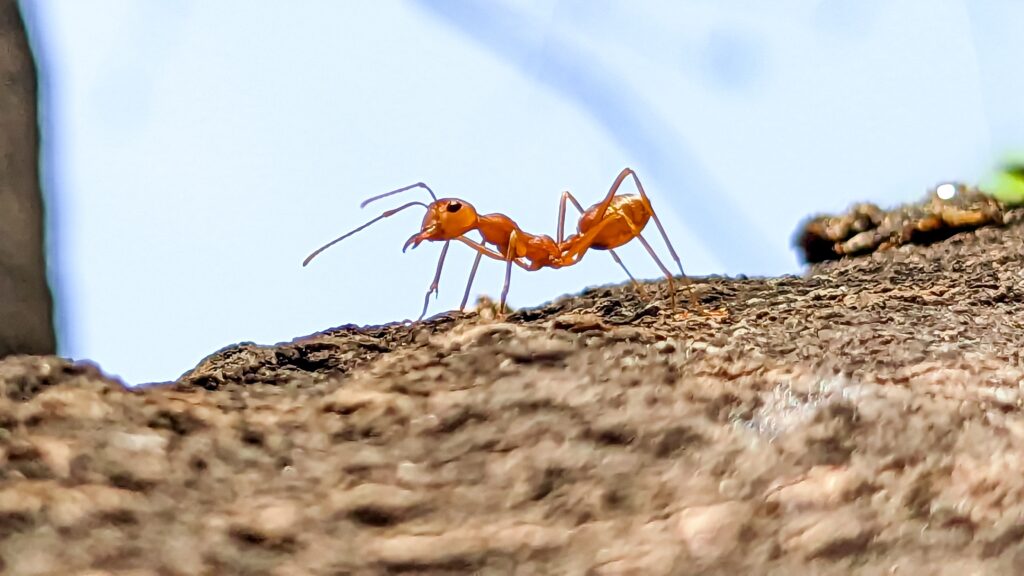
Ants in Georgia can create costly problems when early signs are missed. Learn what to look for, why it matters, and when to call Proforce.
Key Takeaways About Ant Types in Georgia
- Georgia homeowners may encounter several ant types, including Argentine ants, carpenter ants, fire ants, odorous house ants, and little black ants, each with distinct nesting habits and appearance.
- Accurate identification matters because some ants can damage wood, some can sting, and others are primarily a nuisance indoors or outdoors.
- Ant colonies can include multiple nest sites, so controlling them often requires locating and addressing every nest in and around your home.
- Knowing which ant you are dealing with helps determine the right approach, since different species respond to different treatment methods.
How to Identify Ant Types in Georgia
Georgia homeowners may encounter several ant species around their property. Telling them apart starts with knowing what to look for in body shape, color, nesting habits, and food preferences. Below are the traits and signs that can help you narrow down which ant species you are dealing with.
How to Tell Ant Types Apart in Georgia
Most ant problems in Georgia come down to seven species. The table below is the fastest way to narrow down what you’re looking at. Match what you’ve seen on size, color, and where it showed up, then check the last column to decide how urgent the call is.
| Species | Size | Color | Where to look | Risk | Sting |
|---|---|---|---|---|---|
| Carpenter ant | 1/4–5/8″ | Dull black | Damp or damaged wood: window frames, decks, roof edges | Structural wood damage from tunneling galleries | No |
| Red imported fire ant | 1/16–1/4″ | Reddish brown body, darker abdomen | Open sunny lawns, dome mounds 18–24″ tall | Painful, swarming sting when the mound is disturbed | Yes |
| Odorous house ant | ~1/8″ | Dark brown to black | Indoors near moisture; outside under stones and mulch | Food contamination; rotten-coconut smell when crushed | No |
| Argentine ant | ~1/8″ | Light to dark brown | Mulch and leaf litter outside; long trails along walls in winter | Nuisance foraging in huge interconnected colonies | No |
| Little black ant | ~1/16″ | Jet black, shiny | Wall voids and cracks; thin pencil-line trails on counters | Food contamination; mild sting if handled | Yes |
| Pharaoh ant | ~1/16″ | Yellow to light brown, darker abdomen | Hidden indoor spaces: wall voids, behind appliances, electrical | Spreads bacteria; budding colonies resist over-the-counter sprays | No |
| Thief ant | ~1/32″ | Pale yellow to light brown | Inside walls, often nesting next to other ant colonies | Contaminates greasy and protein foods in pantries | No |
If what you’re seeing doesn’t match any row cleanly, that’s usually a sign you’re dealing with more than one species at once. A pro can confirm before you start treating the wrong colony.
One of the more recognizable ant species has workers with dull red bodies and black abdomens. According to Texas A&M AgriLife Extension, these workers are 1/4 to 1/2 inch long and can be distinguished from most other large ant species because the top of the thorax is evenly convex and has no spines. The attachment between the thorax and abdomen has a single flattened segment.
Other ant species are harder to tell apart by appearance alone. Thief ants and Pharaoh ants, for example, can sometimes be separated by food preference: both species prefer protein or greasy food sources year-round. Meanwhile, some outdoor species nest in sites similar to those of Argentine ants and odorous house ants, which can add to the confusion.
How to Spot Ant Activity Inside Your Georgia Home
Indoor ant activity often shows up as trails of workers moving toward food sources. Some ant species are drawn to sweets, while others, such as thief ants and Pharaoh ants, seek out protein or greasy items. Noticing what ants are feeding on can help you distinguish between species and guide next steps.
Tracking ant trails back toward their origin point is useful. The goal is to locate the mound or nest site where the ants originated, which is key to addressing the problem at its source.
Where Ant Activity Shows Up Around Georgia Homes
Many ant species prefer to nest outdoors in soil. Some construct hills or mounds in open areas and also nest under rocks, landscape timbers, at the bases of tree trunks, in decaying wood, and in clogged rain gutters. When a mound or nest is disturbed, worker ants can respond quickly and run up vertical surfaces.
Native and exotic ant species may compete with one another for food and nesting sites, as University of Georgia Extension guide notes. This means you may find more than one species active on the same property, making correct identification even more important.
Exterior Entry Points Ants Use Around Georgia Homes
Ants that nest outdoors in soil or under landscape timbers can follow trails toward your home’s exterior. Look for nests near the bases of tree trunks, under rocks, or in decaying wood close to the foundation. These nesting sites can serve as launching points for foraging trails that lead inside.
Because some species nest in sites similar to those used by Argentine ants and odorous house ants, a single yard may have multiple active nesting areas. Checking mounds and sheltered spots around your home’s perimeter is a practical first step toward understanding which ant species are present.
Why Ant Problems Develop in Georgia
Understanding why ants show up around your home starts with knowing where they nest, what draws them in, and how they travel. Georgia’s landscape gives several ant species exactly what they need: accessible nesting habitat, reliable food and water, and short paths from yard to structure.
Outdoor Nesting Areas for Ants Around Georgia Homes
Different species favor different habitat. Red imported fire ants construct mounds in nearly all soil types but prefer open, sunny areas such as lawns, parks, and cultivated fields. According to University of Georgia Extension guide, mound height can range from 18 to 24 inches depending on soil composition. Argentine ants take a different approach, nesting mainly outdoors in mulch and leaf litter. Their colonies can contain tens of thousands of ants spread across dozens of smaller, interconnected nests.
Carpenter ants seek out wood that already has damage from water or decay. In large colonies, they excavate an extensive network of galleries and tunnels through that compromised wood. Because they are nocturnal, their nesting activity often goes unnoticed until the colony is well established.
Food and Shelter That Attract Ants Around Georgia Homes
Food, water, and shelter are the three drivers of colony growth. Removing or reducing these resources around your property can discourage ants from settling nearby. Fire ants foraging from nearby colonies sometimes enter homes seeking food and moisture, particularly during hot, dry summers. Entire colonies occasionally nest in wall voids, rafters, or behind appliances, sometimes moving indoors during floods or drought.
How Ants Move Around Georgia Homes
Fire ants form large colonies with more than one queen, which helps them maintain pressure on surrounding habitat. Argentine ant colonies in Georgia operate differently. Unlike fire ants, which form one large nest, Argentine ant colonies usually have dozens of smaller, interconnected nests. This network structure means Argentine ants can cover a wide area around a home.
Ant Trails and Entry Points Around Georgia Homes
Argentine ants are known for long, well-established trails visible during summer. These trails connect their many nesting sites to food and water sources, often running along foundations or landscaping edges. The sheer colony size, sometimes tens of thousands of ants, means trails can appear quickly and in high numbers. Identifying the species and following the trail pattern back toward nesting areas is a practical first step in figuring out what you are dealing with.
Risks From Georgia Ants
Not every ant you see on your property is no real threat. Several species that show up around Georgia homes can create problems that go beyond being a simple nuisance. Knowing which risks different ants pose helps you decide how quickly to act when you spot activity indoors or in your yard.
Health Risks Linked to Georgia Ants
Some ants can sting, and knowing which ones matters. According to Mississippi State University Extension, little black ants can sting, unlike Argentine ants and odorous house ants, though their sting is relatively minor compared to fire ants. Even a minor sting can be uncomfortable, so identifying the species involved helps you gauge the level of concern.
Property Damage From Ants in Georgia
Fire ants build large mounds that are unsightly and can damage equipment. As Mississippi State University Extension notes, fire ants also cause direct agricultural and ecological damage. If you spot raised mounds across your lawn or near outdoor equipment, the risk extends beyond appearance to real property and landscape concerns.
Food Areas and Ant Activity in Georgia Homes
Ants that forage indoors often concentrate around areas where food is accessible. When pests like these establish trails into your kitchen or pantry, they can quickly become a persistent problem. Identifying the species early helps you understand whether the risk is limited to nuisance foraging or includes other concerns like stinging.
When to Look Closer at Ant Activity in Georgia
A few ants near a doorway may not seem urgent, but certain signs deserve closer attention. Large mounds in your yard, trails leading into food preparation areas, or repeated indoor sightings can all point to a growing issue. Because different ant species carry different risks, from minor stings to property and ecological damage, accurate identification is a useful first step toward knowing what you are dealing with.
Professional Pest Control for Ants in Georgia
Identifying the ants around your home is the first step toward knowing what to do next. Different species call for different approaches, and the wrong method can allow a problem to persist. A professional inspection helps match the ant to the right plan, so your home gets the attention it actually needs.
How to Reduce Attractants for Ants in Georgia
Small changes around your property can make it less inviting to ants. Wood piles are common carpenter-ant nest locations, so keep firewood and lumber away from your buildings. Stacking wood against an exterior wall or near a foundation gives carpenter ants easy access to your home.
Argentine ants, which are not native to the United States, can move indoors in winter to escape cold temperatures, according to the University of Georgia pest guide. Sealing gaps around doors, windows, and utility entry points helps limit their paths inside during cooler months.
Keeping counters, floors, and dining areas free of crumbs and spills removes the food sources that draw foraging ants indoors. Even small amounts of moisture around sinks or leaky pipes can attract colonies looking for water.
Why Ant Control in Georgia Starts With Inspection
An inspection matters because it reveals which species you are dealing with and where they are nesting. Ant colonies can be tucked into walls, yard debris, or woodpiles, and each location calls for a different response. Proforce service professionals are trained to trace foraging trails back to the source.
When the nest cannot be located, bait may be an option. Bait combines a food source with a slow-acting material that ants collect and carry back to the colony. Without a thorough inspection, though, choosing the right approach is mostly guesswork.
What to Expect During Professional Ant Treatment in Georgia
Treatment methods depend on what the inspection uncovers. In some cases, bait treatments work well because ants collect the bait and carry it to the mound, reaching ants that never leave the nest. As Mississippi State University Extension notes, residual treatments differ from baits because they work by contact activity rather than colony transfer.
Proforce service professionals select the method that matches the species and nest location found during the inspection. This targeted approach avoids broad, one-size-fits-all treatments that may miss the actual colony.
What to Expect From a Georgia Ant Control Plan
Proforce builds ongoing plans around your home’s specific needs. Because Argentine ants can be difficult to manage in winter when they move indoors, a recurring service schedule helps address seasonal pressure before it builds. Proforce covers 35 common pests under its general plan, and ants are a primary call driver.
Your service professional documents findings at each visit and adjusts the approach as conditions change. With a 92.5 NPS score across more than 23,000 reviews, Proforce backs every visit with the Proforce Guarantee. Done Right. Every Time.
Bottom Line on Ant Types in Georgia
Knowing what you’re dealing with is the first step toward getting it handled. Georgia homeowners may encounter ants that range from large, nocturnal carpenter ants to small trailing species that nest in mulch and leaf litter, and even fire ants that build mounds in open, sunny ground. Size, color, nesting location, and behavior can all help you narrow down the type. Once you have a better idea of what’s active around your home, a Proforce service professional can help you figure out the right next step.
Request a free inspection at proforcepest.com to get started.
How Can I Tell Carpenter Ants Apart from Other Ants?
Carpenter ants are the largest common pest ants in Georgia. Workers can measure up to 5/8 of an inch and are typically dull black. Their size alone usually sets them apart from the smaller trailing ants you might see along counters or sidewalks.
Where Do Most Ant Colonies Nest Around a Home?
Nesting sites vary by species. Some ants nest outdoors under mulch and leaf litter, while carpenter ants may nest in wood. Fire ants build visible mounds in open, disturbed areas. Keeping firewood and lumber away from buildings can reduce the chance of carpenter ants nesting nearby.
Why Do Ants Show Up Indoors During Winter?
Some ant species that are not native to the United States may move indoors in winter to escape cold temperatures. Trails along walls, windows, or kitchen surfaces during cooler months can point to species seeking warmth and moisture inside.
Do All Ants in Georgia Sting?
Not all of them. Fire ants inflict a painful sting when their mound is disturbed, but many of the trailing ant species homeowners notice indoors are primarily nuisance pests rather than stinging pests. Correct identification helps determine the level of concern.