
Wasps in South Carolina can create costly problems when early signs are missed. Learn what to look for, why it matters, and when to call Proforce.
Key Takeaways About Wasp Types in South Carolina
- Telling wasps apart starts with body shape, color pattern, and nest style. Knowing what you’re looking at helps you decide how to respond.
- Some wasps can sting more than once and do not leave a stinger behind, so correct identification matters before you approach a nest.
- Nests may appear under eaves, inside outbuildings, or in the ground, depending on the species. Spotting the nest location is one of the fastest ways to narrow down which wasp you’re dealing with.
- Proforce service professionals identify the species and nest location during an exterior inspection, then apply a species-specific treatment approach.
How to Identify Wasp Types in South Carolina
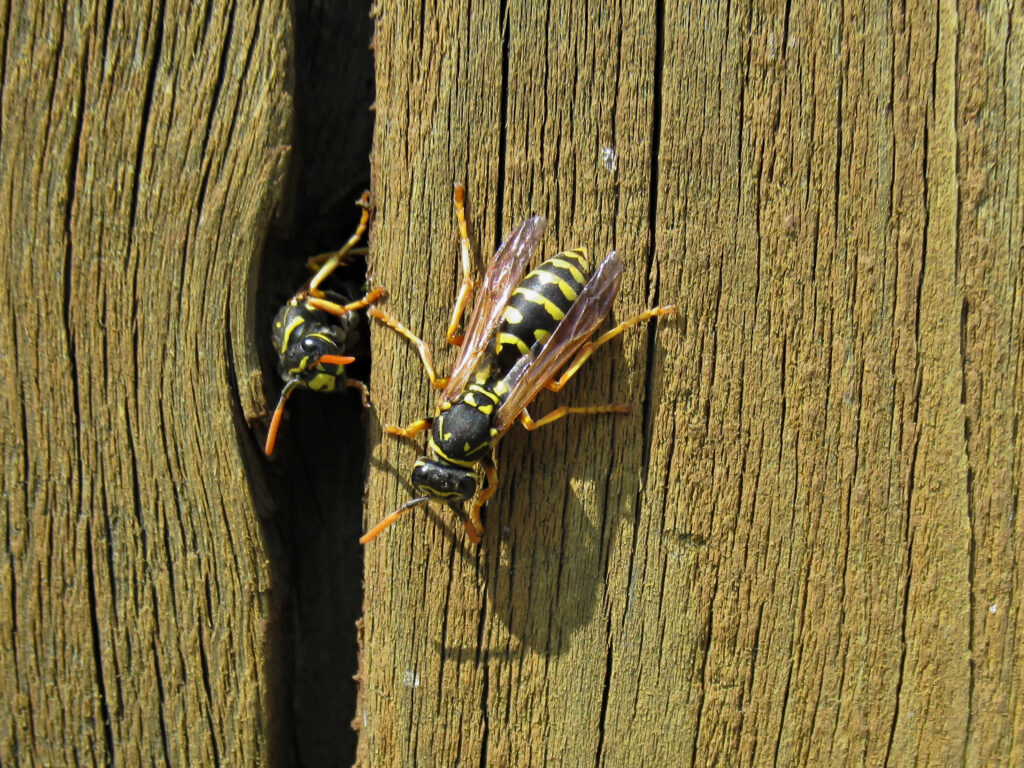
Telling wasps apart starts with a few physical details. European paper wasps (Polistes dominula) have a narrow waist and distinctive orange-tipped antennae, while native paper wasp species may display brown or reddish antennae. Yellowjackets, by contrast, have black antennae. According to Oregon State University Solve Pest Problems, paper wasps are less aggressive than yellowjackets, so the distinction matters when you find a nest near your home.
Both paper wasps and yellowjackets build nests around residential areas in South Carolina. Paper wasp nests may not require treatment unless they are near people, while a yellowjacket nest often calls for a more prompt response.
How to Tell Wasp Types Apart in South Carolina
Most wasp problems in South Carolina come down to the species below. Match what you’ve seen on size, color pattern, and nest style, then check the last column to gauge how urgent the call is.
| Species | Size | Color | Where to look | Risk | Sting |
|---|---|---|---|---|---|
| European hornet | 1–1 3/8″ | Reddish brown thorax, yellow abdomen with dark markings | Sheltered aerial cavities: attics, wall voids, hollow trees | Painful sting; large colonies defend the nest aggressively | Yes |
| Bald-faced hornet | ~3/4″ | Black with white face and white markings | Large gray paper nests in trees, shrubs, and on building exteriors | Highly defensive near the nest; repeated stings if disturbed | Yes |
| Yellowjacket | 3/8–5/8″ | Bright yellow and black, stocky body | Underground burrows, wall voids, and dense ground cover | Aggressive in late summer and fall; stings unprovoked near nest | Yes |
| European paper wasp | 5/8–3/4″ | Black and yellow with orange-tipped antennae, narrow waist | Open umbrella-shaped nests under eaves and in outbuildings | Stings when nest is disturbed; less aggressive than yellowjackets | Yes |
| Guinea paper wasp | ~5/8″ | Reddish brown with yellow bands, narrow waist | Small exposed combs under eaves, porch ceilings, and overhangs | Painful sting if the nest is bumped or sprayed incorrectly | Yes |
If what you’re seeing doesn’t match any row cleanly, the nest is likely closer to the structure than you think. A pro can confirm the species and nest location before anyone disturbs it.
Antennae color can help distinguish European paper wasps from yellowjackets. European paper wasps display orange-tipped antennae, whereas yellowjackets typically have solid black antennae. Native paper wasp species may show different antennae coloration. Paper wasps also have a noticeably narrow waist. If you can observe the insect from a comfortable distance, these two features will usually tell you which wasp you are dealing with.
Nest shape offers another clue. Paper wasps build open, exposed nests. Yellowjacket nests can look different and may be harder to spot. Species-level identification helps determine the right approach when treatment is needed.
How to Spot Wasp Activity Inside Your South Carolina Home
Wasps that appear indoors have usually entered through a gap in the structure. You may notice a single wasp near a window or light fixture. Repeated sightings in the same room can point to a nest nearby, just outside or within a wall void.
A paper wasp nest built where it is likely to cause stings should be addressed early, as Mississippi State University Extension recommends. Early awareness gives you more options before traffic around the nest increases.
Where Wasp Activity Shows Up Around South Carolina Homes
Paper wasps and yellowjackets both build nests in sheltered spots around a home’s exterior. Eaves, porch ceilings, and covered overhangs are common locations. According to UC IPM, paper wasp nests should not require treatment unless they are near people, so location is a key factor in deciding next steps.
If you notice wasps flying in a steady path to and from the same point, follow that flight line visually. It often leads to a nest tucked under a ledge or within a sheltered corner. Identifying the nest location early gives you a clearer picture of the situation.
Exterior Entry Points Wasps Use Around South Carolina Homes
Wasps take advantage of openings in a home’s exterior. Gaps around the roofline, vents, and areas where trim meets siding can all serve as entry points. These openings let wasps move between outdoor nesting spots and interior spaces.
If you spot consistent wasp traffic near a specific opening, there may be a nest just inside or right outside that point. Noting the exact spot helps a service professional assess the situation quickly.
Why Wasp Problems Develop in South Carolina
Wasps build colonies near homes because the structures offer sheltered attachment points, nearby activity that goes unnoticed until the colony grows, and protected voids that mimic natural cavities. Understanding where and why colonies appear helps you spot a nest early.
Outdoor Nesting Areas for Wasps Around South Carolina Homes
Paper wasps form small colonies around a single, exposed nest comb typically suspended from eaves or in outbuildings. Yellowjackets typically nest underground, while bald-faced hornets build large exposed nests in trees. European hornets select protected aerial locations for their paper nests. Each species picks a spot that suits its colony style, so nests can turn up in different parts of a yard.
Food and Shelter That Attract Wasps Around South Carolina Homes
Most wasp species are relatively unaggressive, but they can become a problem when they nest over doorways or in other areas of human activity such as fruit trees. Social wasps sting to defend their colony, and some yellowjacket species can become aggressive during late summer and fall and may even sting unprovoked, according to the University of Minnesota Extension.
How Wasps Move Around South Carolina Homes
Guinea wasps are a type of paper wasp sometimes confused with yellowjackets in parts of the Southeast. Yellowjackets are typically yellow and black with stockier bodies, and most species nest underground, though some build aerial nests. This confusion matters because some colonies are more defensive than others. Certain wasp species may fly several feet to sting someone near the nest site. Paper wasp nests last only one season, so new colonies can appear in a different location each year.
Trails and Entry Points Wasps Use in South Carolina
Eaves, outbuilding openings, and protected aerial voids all serve as entry points where colonies establish. European hornets favor sheltered overhead spaces rather than exposed branches or underground cavities. Doorways and overhangs are common attachment points that bring colonies within arm’s reach. Watching for early nest-building activity near these areas can help you identify a developing colony before it grows.
Risks From South Carolina Wasps
Health Risks Linked to South Carolina Wasps
Wasps belong to the order Hymenoptera, a group of stinging insects that also includes bees and ants. A sting from any of these pests can be painful, and the discomfort often catches homeowners off guard during routine yard work or outdoor gatherings.
According to Mississippi State University Extension, wasp stings hurt, and some people are highly sensitive to stings. That sensitivity means a single encounter can turn into a serious concern for certain household members.
Property Damage From Wasps in South Carolina
While the primary concern with wasps centers on the sting itself rather than structural harm, nests built in or near your home can still create unwanted problems. Wasps that find their way into wall voids, eaves, or attic spaces may become difficult to manage once a colony is established. Addressing nest placement early keeps these pests from becoming a recurring nuisance around high-traffic areas of your property.
Food Areas and Wasp Activity in South Carolina Homes
Outdoor dining spaces, porches, and patios can draw wasps closer to your living areas. Even when wasps are not actively nesting nearby, they may still make their way into living spaces, and stings can occur in those situations. This is worth keeping in mind any time you spend extended time eating or preparing food outdoors.
When to Look Closer at Wasp Activity in South Carolina
Not every wasp sighting calls for immediate action, but repeated activity near doorways, windows, or gathering spots deserves a closer look. Paying attention to flight patterns and possible nest locations helps you stay ahead of the risk.
Even wasps that are not nesting or aggressive at a given time may still wander into living areas, creating opportunities for an unexpected sting. Monitoring these patterns gives you a clearer picture of whether the activity around your home warrants a professional assessment.
Professional Pest Control for Wasps in South Carolina
Knowing which wasps are near your home is the first step toward deciding whether treatment is needed. Not every nest calls for action, and the right approach depends on where the nest is located and how close it sits to areas where your family spends time.
How to Reduce Attractants for Wasps in South Carolina
Proactive exclusion is the only way to prevent large numbers of overwintering wasps from settling in attics or other parts of a building, according to Mississippi State University Extension. Sealing gaps around rooflines, vents, and eaves before wasps move in reduces the chance they will establish themselves in protected voids.
As UC IPM notes, nests in high, rarely visited spots may pose little concern. However, nests near doorways, porches, or outdoor seating areas deserve closer attention because wasps are quick to defend a disturbed nest by stinging.
Why Wasp Control in South Carolina Starts With Inspection
During warmer months, wasps build their gray, inverted-umbrella-shaped nests under the eaves of buildings and in other protected locations. Spotting these nests early helps you gauge the level of activity before it becomes a stinging risk.
Proforce service professionals perform an exterior inspection, observing surroundings and noting hazardous landscaping features. They take photographs and detailed notes so the treatment plan matches the species and nest placement on your property.
What to Expect During Professional Wasp Treatment in South Carolina
After identifying the species and nest location, Proforce professionals select the right method. Treatment options include dusting, drenching, void treatments, and aerosol applications. Service visits are often performed during early morning, evening, or dusk, when wasp activity tends to be lower.
Because wasps defend their nests when disturbed, Proforce service professionals wear bee suits for protection during treatment. Once the nest is no longer active, it is removed when possible, sealed in a plastic bag, and disposed of at the branch office.
What to Expect From a South Carolina Wasp Control Plan
Interior service is not included in standard wasp treatment; manager approval is required if interior work is requested. The service addresses the current nest, but it does not prevent future nests from being built.
Proforce backs its work with the Proforce Guarantee and covers wasps, yellow jackets, and carpenter bees under its general pest control plan. With 11 locations across 5 states and a 92.5 NPS built on more than 23,000 reviews, the team brings local knowledge and consistent service to every visit. Done Right. Every Time.
Bottom Line on Wasp Types in South Carolina
Knowing what you are looking at around your home is the first step toward staying ahead of wasp activity. Body shape, color pattern, antennae color, and nest style all help separate one species from another and guide the right response. When a nest appears in a high-traffic spot, early action matters more than waiting to see what happens. If you are unsure about a nest on your property, contact Proforce Pest Control for a professional assessment.
When Is the Best Time to Address a Wasp Nest?
Wasps tend to be less active during the evening hours. Addressing a nest during that window can reduce the chance of stings. Proforce service professionals follow species-specific treatment methods and time their visits accordingly for a more controlled approach.
Can Wasps Sting More Than Once?
Wasps can be aggressive when their nest is disturbed, and some species may sting more than once. If you experience a severe reaction to a sting, seek medical attention.
Why Do Wasps Show Up Inside My Home in Winter?
Wasps may enter poorly sealed attics and wall voids looking for a warm overwintering spot. Sealing gaps around the roofline and vents is the most effective step for keeping large numbers of wasps from settling indoors during cooler months, according to Mississippi State University Extension.
What Should I Do If I Am Not Sure Which Wasp I Am Looking At?
Several species can look similar at a glance. Color pattern, antenna shade, and nest shape are reliable starting points. If you cannot identify the species or the nest is in a hard-to-reach area, a Proforce service professional can inspect, identify the species, and recommend the appropriate next step.