
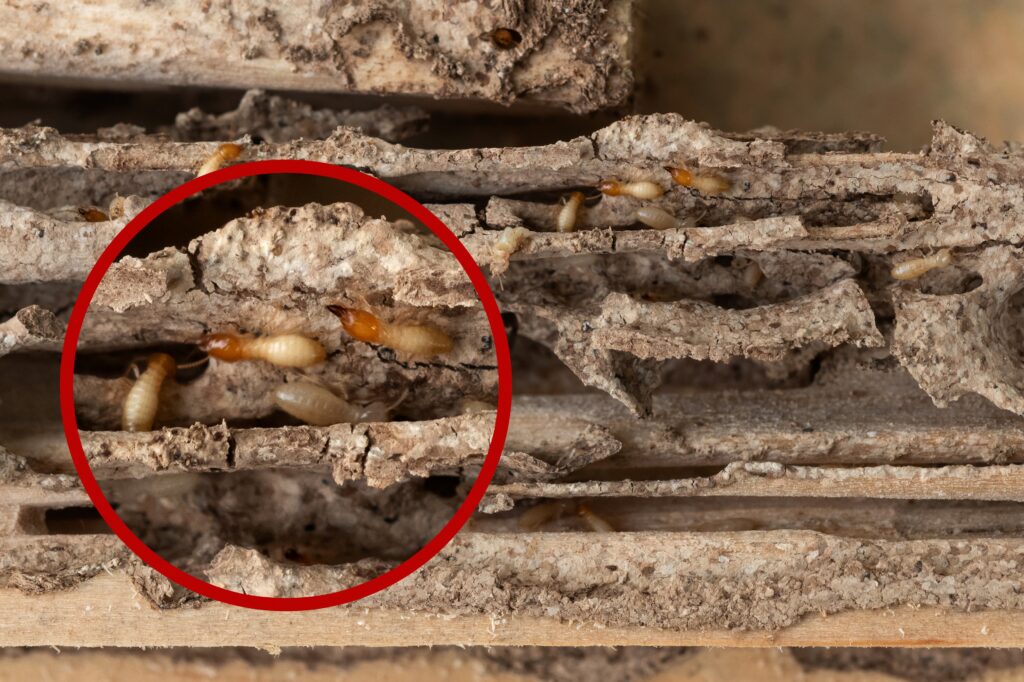
Florida dampwood termites rarely threaten a well-maintained home on their own. Their presence almost always indicates a moisture problem. If you find them in structural wood, the wood is likely already damaged by water, and leaky pipes or a clogged gutter may be the root cause. Fixing the moisture source is as important as treating the termites themselves. Removing dead trees and tree stumps from your property also reduces the damp wood food source that draws these termites close to your home.
Conehead Termites: The Invasive Tree Termite in Florida
Conehead termites are one of the most unusual invasive species Florida pest managers encounter. Unlike every other termite type, conehead termites do not rely on underground tunneling. They build dark brown, irregular nests in trees, on the soil surface, or directly on structures, and forage above ground like ants. Originally introduced to Florida through Caribbean trade, conehead termites were once considered eradicated but were later rediscovered in Broward County. Tree termites represent an emerging risk in coastal and southern Florida.
Conehead termite nests look like dark, papery masses attached to trees or structures. If you find something resembling a dirt-covered bird nest on a tree trunk near your home, contact a pest control company for an inspection. DIY solutions are not appropriate for this species.
Florida Termite Identification: Signs to Look For in Your Home
Florida homeowners face more termite species than almost any other state. The table below is the fastest way to narrow down what you’re dealing with. Match what you’ve seen on size, color, and where the activity showed up, then check the last column to decide how urgent the call is.
| Species | Size | Color | Where to look | Risk | Sting |
|---|---|---|---|---|---|
| Formosan subterranean termite | ~1/2″ winged reproductive | Yellowish brown body, translucent wings with fine hairs | Underground colonies plus carton nests in walls; can build above-ground | Most destructive termite in Florida; mature colony can damage a home in months | No |
| Asian subterranean termite | ~1/2″ winged reproductive | Light brown body, dark translucent wings | Underground colonies in coastal and southern Florida; carton nests possible | Aggressive structural feeder; swarms late winter through May | No |
| Eastern subterranean termite | ~3/8″ winged reproductive | Dark brown to black body, pale translucent wings | Underground colonies; mud tubes on foundations and crawl-space wood | Most common subterranean species; steady structural damage over time | No |
| Drywood termite | ~3/8–1/2″ winged reproductive | Reddish brown body, smoky wings | Inside dry structural wood and furniture; no soil contact required | Frass pellets near kickout holes; not covered by standard subterranean treatments | No |
| Dampwood termite | ~1/2–5/8″ winged reproductive | Large pale brown body, tan wings | Wood with active moisture damage: leaks, gutter overflow, rotting stumps | Presence signals a moisture problem; fix the leak alongside treatment | No |
| Conehead termite | ~3/8″ winged reproductive | Dark brown with prominent cone-shaped soldier heads | Above-ground nests on trees, soil surface, or structures in south Florida | Invasive species that forages above ground like ants; DIY is not appropriate | No |
If the signs don’t line up with a single row, treat the wood as compromised until a pro can confirm the species. Drywood and dampwood termites call for a different treatment approach than subterranean species.
The signs vary by termite type, which is why accurate florida termite identification matters before any treatment begins. Mud tubes along your foundation mean subterranean termites. Frass pellets near window sills or door frames mean drywood termites. Soft, water-damaged wood attracting large pale termites points to dampwood termites. Winged reproductive termites swarming indoors and leaving discarded wings on baseboards can indicate any species.
When Termites Swarm in Florida Homes and Yards
Termites swarm to establish new colonies. Florida termite swarming happens across a long window because multiple species are active here. Eastern subterranean termites swarm in early spring. Formosan termites swarm from May through June. Asian subterranean termites swarm in late winter through May. Drywood species can swarm in late summer and fall. If you see winged insects in your home that do not have the pinched waist of a flying ant, you are likely looking at winged reproductive termites from an active nearby colony.
Protecting Your Florida Home from Termite Damage Year-Round
Florida law requires new-construction termite pre-treatments before the foundation is poured, but that protection does not last forever. Proforce’s termite pre-treatments include a blue dye so building inspectors can verify correct application, and the same service is available for home additions, remodels, and commercial properties.
For existing homes, two primary protection methods apply. Bait station systems like the Trelona Advanced Termite Bait System, manufactured by BASF, use the active ingredient Novaluron to prevent worker termites from molting. Workers carry the bait back to the colony through a process called trophallaxis, spreading it to other colony members. The Proforce Trelona system stations are installed at regular intervals in the soil around your foundation, with bait remaining active for an extended period under typical conditions.
Foundation trenching applies a liquid barrier around the base of the structure. The treatment has a horizontal transfer effect, meaning termites that contact it spread it to other colony members. Each application lasts for several years. For homes with active subterranean termite pressure, foundation trenching combined with bait monitoring provides layered protection. Note that Proforce’s termite services cover subterranean termites. Drywood and dampwood species require different treatment approaches because they live without soil contact.
Bottom Line on Types of Termites in Florida
Florida homeowners face more termite species than most of the country. Subterranean species, including the invasive Formosan and Asian subterranean termite, pose the greatest structural risk. Drywood species work silently inside wooden structures and furniture. Dampwood termites signal moisture problems. Conehead termites represent a growing threat in southern and coastal areas. Each type leaves distinct signs, and correct termite identification determines the right protection strategy.
The EPA’s integrated pest management framework recommends proactive monitoring and targeted treatment over reactive response. For Florida homeowners, that means getting a professional inspection before you see damage, not after. Request a quote from Proforce to find out which termite types are active on your property and what protection plan fits your home.
What is the most destructive type of termite in Florida?
The Formosan subterranean termite causes the most damage of any termite species in Florida. A mature colony can be far larger than native subterranean species. Their ability to build carton nests above ground and forage aggressively makes them particularly difficult to control without professional intervention.
How do I tell drywood termites apart from subterranean termites in Florida?
The clearest difference is evidence type. Subterranean termites build mud tubes on foundation walls, concrete, and other hard surfaces to travel between soil and wood. Drywood termites leave termite frass, small hard pellets, near kickout holes in infested wood. Drywood termites do not need soil contact and leave no mud tubes.
When do termites swarm in Florida?
Florida termite swarming spans most of the year. Eastern subterranean termites swarm in early spring. Formosan termites swarm from May through June. Asian subterranean termites swarm from mid-February through May. Drywood species can swarm in late summer and fall. Finding discarded wings on window sills or baseboards after a warm evening is one of the first signs of swarming activity nearby.
Does Florida law require termite treatment for new homes?
Yes. Florida law requires home builders to provide a termite pre-treatment before the foundation is poured on new construction. The pre-treatment creates a horizontal barrier against subterranean termites and must include a blue dye so building inspectors can verify it was applied correctly. This protection does not cover drywood or dampwood termites, and its effectiveness diminishes over time without follow-up treatment.
Can I treat Florida termites myself with store-bought products?
Store-bought products may contact individual termites but will not reach the colony hidden inside wooden structures or deep in the soil. Termite colonies spread bait and treatments through trophallaxis, a direct transfer process between workers, which requires professionally formulated active ingredients applied at correct rates and locations. DIY solutions rarely resolve an established infestation and can delay effective treatment.