
Spiders in North Carolina include dozens of species, but only the black widow and brown recluse pose serious medical risk to residents statewide.
Key Takeaways
- North Carolina has two medically significant spiders: the black widow and, rarely, the brown recluse.
- Most common NC spiders, including wolf spiders, orb weavers, and jumping spiders, pose no medical risk to humans.
- Spider bites from a black widow or suspected brown recluse require immediate medical attention.
- Reducing insects inside your home removes the food source that attracts spiders.
- Persistent infestations, especially involving webs in multiple rooms or repeated sightings of large spiders, warrant a professional inspection.
Common Spiders Found in North Carolina Homes
Most spider sightings around North Carolina homes come down to the species below. Match what you’ve seen on body size, web style, and where it turned up, then check the last column to decide if the bite risk is real.
| Species | Size | Color | Where to look | Risk | Sting |
|---|---|---|---|---|---|
| Black widow | ~1/2″ | Shiny black with red hourglass on the underside | Garages, crawl spaces, firewood piles, outdoor furniture | Medically significant bite; muscle cramps, nausea, hypertension | Yes |
| Brown recluse | ~3/8″ | Golden brown with violin-shaped mark, six eyes in three pairs | Rare in NC; documented mostly on the western fringe | Bite can cause necrotic tissue damage if untreated | Yes |
| Wolf spider | 1/2–1″ | Brown and gray patterning with darker stripes | Garages, basements, exterior walls; ground hunter, no web | Painful bite when trapped against skin; not medically dangerous | No |
| Fishing spider | ~3/4–1″ | Dark brown with mottled markings and large leg span | Near water and wooded areas; sometimes wanders inside | Not aggressive toward humans; bites rare and mild | No |
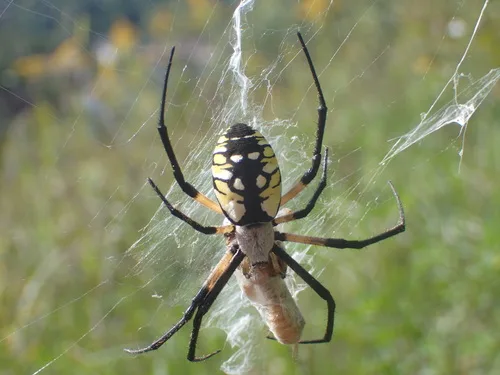
| Yellow garden orb weaver | Up to ~1″ | Bold yellow and black abdomen with zigzag silk in web center | Large circular webs across shrubs, tree lines, garden borders | Beneficial predator; bite is not medically significant | No |
| Trapdoor spider | ~1″ | Stocky brown body, smooth and shiny | Silk-lined burrows in wooded areas and undisturbed soil | Stays underground; presents no threat to homeowners | No |
| Green lynx spider | ~1/2–3/4″ | Bright green body, spiny legs | Shrubs, flowering plants, and tall grasses | Defensive when guarding egg sac; bite painful but not serious | No |
| Bold jumping spider | ~1/2″ | Black body with iridescent green or blue chelicerae | Sunlit window frames, exterior walls, garden areas | Rare bite produces mild discomfort; non-aggressive | No |
| Yellow sac spider | ~1/4″ | Pale yellow to light tan with darker chelicerae | Silk tubes in upper room corners; enters in fall | Frequent indoor bite source; localized swelling and pain | No |
| Goldenrod crab spider | ~1/4–3/8″ | White or yellow, shifts to match the flower it sits on | Inside flowers across gardens spring through early fall | Ambush predator on insects; no meaningful risk to humans | No |
If the spider doesn’t match any row cleanly, photograph it rather than handling it. A pro can confirm the species before you decide on next steps.
Most spiders you find indoors in North Carolina are hunting insects, not looking for a fight. The species below represent the most frequent sightings from homeowners across the state. Knowing what you’re looking at helps you make a better decision about whether to act. NC State Extension Entomology maintains current identification guidance and regional pest activity reports for North Carolina residents.
Wolf Spiders in NC: Large, Fast, and Misidentified
Wolf spiders are among the most misidentified spiders in North Carolina. They are large, fast-moving, and ground-dwelling arachnids that hunt prey rather than spin webs to catch it. Their brown and gray patterning, combined with their size, leads many homeowners to mistake them for brown recluses. Wolf spiders are not aggressive toward humans and bite only when trapped against skin. A bite may be painful but is not medically dangerous. You’ll find them in garages, basements, and along exterior walls.
Orb Weaver Spiders in NC Gardens and Tree Lines
Orb weavers are responsible for the large, circular webs you see across shrubs, tree lines, and garden borders each fall. The yellow garden spider (Argiope aurantia) is the most recognizable, with a bold yellow and black abdomen and a distinctive zigzag silk pattern in the center of its web. These spiders are beneficial predators, capturing insects including flies, beetles, and aphids before they reach your plants. They are not aggressive and rarely enter homes. Leave them where they are if possible.
Jumping Spiders in North Carolina: Small but Visible
Jumping spiders are small, compact arachnids with large forward-facing eyes that make them look almost cartoonish. They do not spin webs to hunt prey but instead stalk and pounce on small insects. In North Carolina, the bold jumping spider (Phidippus audax) is one of the most commonly spotted species, with its black body and iridescent green or blue chelicerae. They prefer sunlit areas, window frames, and exterior walls. A jumping spider bite is rare and produces only mild discomfort.
Yellow Sac Spider in NC Homes: Frequent and Often Blamed
The yellow sac spider is one of the most common indoor spiders in North Carolina homes and is frequently blamed for bites that occur at night. These small, pale spiders build silk tubes in the upper corners of rooms and are active after dark. Their venom can cause localized swelling, redness, and a painful reaction, though symptoms are mild in most documented cases. Yellow sac spiders enter through gaps around windows, doors, and utility penetrations as temperatures drop in fall.
Fishing Spiders in NC Near Water and Wooded Areas
Fishing spiders are among the largest spiders in North Carolina and are built for aquatic environments. They hunt prey at the water’s edge, using surface vibrations to detect fish and aquatic insects. The dark fishing spider (Dolomedes tenebrosus) is the species most likely to wander into homes, particularly those near wooded areas or streams. Despite their size, fishing spiders in NC are not aggressive toward humans, and bites are rare. Their leg span can exceed three inches, which alarms homeowners who encounter them indoors.
Goldenrod Crab Spider in NC Flowers and Gardens
The goldenrod crab spider (Misumena vatia) is an ambush predator that hides inside flowers and captures visiting insects. Females can shift their body color between white and yellow to match the flowers they inhabit, making them nearly invisible to prey. They are common across North Carolina gardens from spring through early fall. This spider species does not spin webs to catch prey and poses no meaningful risk to humans.
Green Lynx Spider in NC Shrubs and Plants
The green lynx spider is a bright green, active hunter found on shrubs, flowering plants, and tall grasses across North Carolina. Like the goldenrod crab spider, it does not use webs to capture prey. It pounces directly on insects, including caterpillars, beetles, and other bugs. Female green lynx spiders guard their egg sacs aggressively, which can result in a defensive bite if a person handles the plant they’re guarding. The bite is painful but not medically serious.
Trapdoor Spiders in NC Soil and Wooded Areas
Trapdoor spiders build silk-lined burrows capped with a hinged door made from silk and soil. They hide below ground and burst upward to capture prey that crosses their burrow. In North Carolina, trapdoor spiders are found in wooded areas and undisturbed soil along forest edges. They are rarely seen because they spend most of their lives underground. These spiders do not enter homes and present no threat to homeowners under normal circumstances.
Venomous Spiders in North Carolina You Should Know
Two spider species in North Carolina carry venom that can cause serious medical complications: the black widow and the brown recluse. Understanding where each lives and what it looks like is the most practical thing a homeowner can do to reduce risk.
Black Widow Bites in North Carolina: Symptoms and Risk
The southern black widow (Latrodectus mactans) is the most medically significant spider species in North Carolina. The female’s shiny black body and the distinctive red hourglass marking on the underside of her abdomen make identification straightforward. Black widows prefer dark, undisturbed spaces including garages, crawl spaces, firewood piles, and outdoor furniture. Males and juveniles are smaller and brown, and they lack the classic hourglass.
A retrospective review of U.S. poison center data published in Wilderness & Environmental Medicine found that black widow exposures cluster in warm-weather states and peak in summer months, a pattern that fits North Carolina’s climate. Symptoms of a bite include immediate pain, muscle cramps, sweating, nausea, and in severe cases, hypertension. Seek medical attention promptly if you suspect a black widow bite. A comprehensive review of Latrodectus envenomation published in the Journal of Venomous Animals and Toxins confirms that antivenom is available and most patients recover fully with appropriate treatment.
Brown Recluse Range in North Carolina: Less Common Than You Think
The brown recluse is far less common in North Carolina than most homeowners believe. Research on brown recluse distribution published in PLoS ONE established that the species’ primary range is south-central United States, with North Carolina sitting on the far eastern fringe of documented territory. Most suspected brown recluse sightings in NC turn out to be wolf spiders, yellow sac spiders, or other brown-colored species.
The brown recluse has a violin-shaped marking behind the head and six eyes arranged in three pairs rather than the eight eyes most spiders have. Bites are genuinely dangerous and can cause necrotic tissue damage if left untreated. If you believe you were bitten and develop a growing wound, see a physician immediately.
Why Spiders Enter Homes in North Carolina Seasons
Most spiders move indoors in late summer and fall as outdoor temperatures drop and prey becomes scarcer. Male spiders are also actively searching for mates during this period, which increases the number of spiders you see moving through living spaces. Homes with gaps around doors, windows, utility penetrations, and foundations give spiders multiple entry points. Woodpiles stacked against the house, dense shrubs touching the siding, and clutter in garages and crawl spaces all create harborage that attracts spiders looking for prey and shelter.
How to Control Spider Activity in North Carolina Homes
Reducing insects inside your home cuts off the food source that keeps spiders coming back. Spiders follow their food source. If your home has a steady supply of flies, moths, beetles, and other insects, spiders will stay. Addressing the root cause matters more than targeting spiders directly.
Practical Steps to Reduce Spiders in NC Indoors
- Seal gaps around doors, windows, pipes, and utility lines entering the home.
- Install door sweeps on exterior doors, particularly garage doors.
- Move firewood and debris piles at least ten feet from the foundation.
- Trim shrubs and vegetation away from the exterior walls.
- Reduce outdoor lighting or switch to yellow-spectrum bulbs that attract fewer insects.
- Remove messy webs as you find them to discourage reoccupation.
- Vacuum corners, baseboards, and under furniture regularly to remove egg sacs and spiders.
- Reduce clutter in garages, attics, and storage areas where spiders hide and hunt.
When to Call Proforce for Spider Control in NC
If you are finding multiple spiders regularly or have identified a black widow on your property, a professional inspection is the right next step. Proforce service professionals treat spiders as part of a 35-pest general pest control plan, targeting harborage areas, exterior foundations, and the gaps spiders use to enter your home. The Proforce Guarantee means that if spider activity persists between scheduled visits, you can request a re-service at no additional charge. Service is available at Proforce’s North Carolina locations. Request a quote to get a treatment plan specific to your home and property.
Bottom Line on Spiders In North Carolina
The overwhelming majority of spiders you encounter in North Carolina present no threat to your family. Wolf spiders, orb weavers, jumping spiders, fishing spiders, and garden spiders all control insect populations around your home. The two species worth taking seriously are the black widow, present across NC, and the brown recluse, rare but documented in the western part of the state.
Know the identifying features of both, inspect woodpiles and cluttered storage areas carefully before reaching inside, and seek medical attention promptly for any bite that produces worsening symptoms. Contact Proforce to schedule a professional inspection if spiders are consistently appearing inside your home or you have confirmed a widow on your property.
Frequently Asked Questions
What is the most dangerous spider in North Carolina?
The black widow is the most medically significant spider species in North Carolina. The female’s venom affects the nervous system and can cause muscle cramps, nausea, and hypertension. Most patients recover fully with medical treatment, but a bite should always be evaluated by a physician. The brown recluse is rarely encountered in NC but can cause serious tissue damage if a bite goes untreated.
How do I tell a wolf spider apart from a brown recluse in NC?
Wolf spiders are larger, have eight eyes arranged in rows, and carry their egg sacs attached to their body. Brown recluses are smaller with a distinct violin-shaped marking behind the head and six eyes in three pairs. Wolf spiders are far more common in North Carolina homes than brown recluses, which are rarely documented east of the Appalachians. When in doubt, photograph the spider rather than handling it and consult a pest professional.
Why am I suddenly seeing so many spiders in my NC home?
Late summer and fall trigger a surge in spider activity across North Carolina as temperatures drop and male spiders search for mates. Spiders follow insects indoors, so if you have flies, moths, or beetles entering your home, spiders will follow. Sealing entry points and addressing insect activity in and around the home reduces spider populations over time.
Does Proforce treat spiders in North Carolina?
Yes. Proforce’s general pest control plan covers spiders as part of a 35-pest service. Service professionals target harborage areas, exterior foundations, and entry points specific to your home. If spider activity returns between visits, the Proforce Guarantee covers a re-service at no additional charge. Contact your local North Carolina Proforce location to request a quote.