
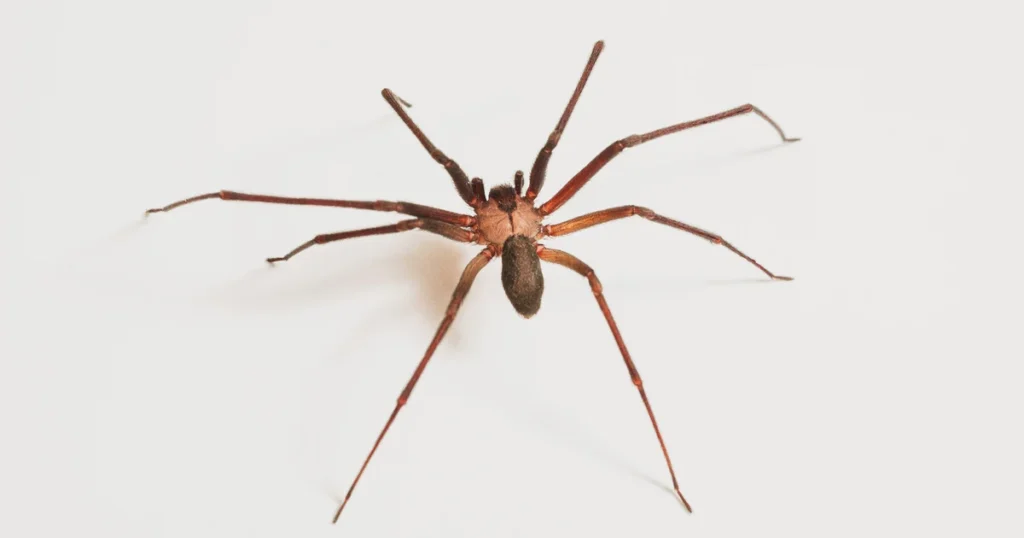
Brown Recluse in Georgia can create costly problems when early signs are missed. Learn what to look for, why it matters, and when to call Proforce.
Key Takeaways About Georgia Brown Recluse
- The brown recluse spider can be difficult to identify, and many spiders in Georgia are mistaken for this species.
- Brown recluse bites can be serious, and many skin wounds attributed to spider bites may actually have other causes entirely.
- Because brown recluse infestations can be difficult to manage, a professional pest control approach using a combination strategy is often the recommended course of action.
- Bites typically occur under clothing in areas pressed against the body, so awareness of where and how these spiders interact with people can help you stay prepared.
How to Identify Georgia Brown Recluse
Many Georgia homeowners assume they can identify a brown recluse by the violin-shaped marking on its back. That marking, however, is not a reliable way to identify this spider. Several other species share a similar pattern, which leads to frequent misidentification. Knowing what actually separates the brown recluse from look-alikes can save you unnecessary worry.
How to Tell Brown Recluse Types Apart in Georgia
The brown recluse is the proper common name for only one species, Loxosceles reclusa. Other Loxosceles species exist, including the Mediterranean recluse, sometimes called the Mediterranean brown spider. According to UF/IFAS Extension, that species is probably native to the Mediterranean region and has been recorded from a number of localities across the U.S., particularly in larger cities, where it is transported by commerce.
Telling these species apart on your own is not straightforward. Identifying Loxosceles spiders to species level requires a high-magnification microscope and the skills of an arachnologist. Without that equipment and training, a homeowner or general pest professional may confuse one species for another.
How to Spot Brown Recluse Activity Inside Your Georgia Home
A nationwide study from 2000 to 2005 offered to identify any spider that was considered to be a brown recluse. The study highlighted how often spiders are assumed to be brown recluses without expert confirmation. If you find a brown spider and suspect it may be a recluse, resist the urge to rely on the violin pattern alone.
Look instead at overall body shape and leg length. Because the presence or absence of the violin marking is not a reliable identifier, capturing the specimen for expert review is the safer approach.
Where Brown Recluse Activity Shows Up Around Georgia Homes
Because visual identification is unreliable without specialized tools, where you find a suspect spider matters as much as what it looks like. Paying attention to the location can help your Proforce service professional narrow down the species during an inspection.
Keep any captured specimen in a sealed container so it can be examined under magnification. A clear photo or a preserved sample gives a trained professional much better information than a verbal description of markings.
Exterior Entry Points Brown Recluse Use Around Georgia Homes
Spiders that belong to the Loxosceles group can move indoors through small gaps in your home’s exterior. Sealing cracks and maintaining weatherstripping are practical first steps to reduce the chance of encountering any recluse species inside.
If you continue finding brown spiders you cannot identify, a Proforce service professional can assess the situation. Proper identification at the species level is the foundation of any targeted approach, and that step requires expert-level evaluation rather than guesswork based on color or markings.
Why Brown Recluse Problems Develop in Georgia
According to the University of Georgia pest guide, the brown recluse spider is rare in Georgia and is known only in the northwest part of the state, where it remains uncommon. Still, the spiders that do occur can settle into structures when outdoor and indoor conditions favor them. Understanding where they shelter and how they move helps you stay aware.
Outdoor Nesting Areas for Brown Recluse Around Georgia Homes
In nature, recluses are found in cracks and crevices in and under rocks or the loose bark of dead trees. Yard features that mimic these conditions, such as rock piles and stacked deadwood, can give them harborage close to a home’s exterior. Reducing these harborage points around your property limits the spots where recluses can settle.
Food and Shelter That Attract Brown Recluse Around Georgia Homes
Brown recluses and southern house spiders like to nest in dark, undisturbed storage areas. Closets, boxes that sit untouched, and cluttered corners provide the still, sheltered spaces these spiders prefer. The more undisturbed clutter a home has, the more opportunity recluses have to go unnoticed.
Many spiders mistaken for brown recluses are actually Southern house spiders. These look-alikes are light brown, long-legged, and slender-bodied. Telling the two apart matters: the brown recluse has six eyes in three distinct pairs, while the male Southern house spider has eight eyes in a single aggregation.
How Brown Recluse Move Around Georgia Homes
Recluses tend to stay hidden in voids, cracks, and crevices throughout a structure. They may live in closets and other storage areas where foot traffic and light are minimal. Because they avoid open spaces, an infestation can go undetected for a long time.
Trails and Entry Points Brown Recluse Use in Georgia
Gaps along baseboards, wall voids, and crevices around the exterior of a home create pathways for recluses moving between outdoor harborage and indoor shelter. The same cracks they favor in nature mirror the gaps found in a home’s foundation, siding, or door frames. Sealing these openings is one of the most straightforward steps you can take to reduce the chance of a spider finding its way inside.
Risks From Georgia Brown Recluse
Health Risks Linked to Georgia Brown Recluse
Brown recluse bites can produce necrotic or apparent pre-necrotic wounds. However, many skin lesions blamed on brown recluse spiders actually have other causes. According to UF/IFAS Extension, a number of other arthropods and an assortment of diseases are known to produce similar wounds.
Within the recluse family, venom potency varies. Some sources report the Chilean recluse has more potent venom than the brown recluse, while the Mediterranean recluse’s venom has been said to be less potent.
Property Damage From Brown Recluse in Georgia
Brown recluse spiders are not associated with structural or property damage. The concern they raise is strictly a health concern tied to their bite. Focusing your attention on accurate identification matters more than worrying about damage to your home’s materials or furnishings.
Because many other pests can cause similar-looking skin reactions, a misidentified brown recluse sighting may lead you to overlook the actual pest responsible. Correct identification helps you and your Proforce service professional address the right issue.
Food Areas and Brown Recluse Activity in Georgia Homes
If you notice a suspicious bite near a kitchen or pantry, keep in mind that several other arthropods found in those areas can produce similar wounds. Subcutaneous blisters and hives may result from stings of ants, bees, yellowjackets, or wasps. Bites from assassin bugs, bed bugs, black flies, mosquitoes, and horse or deer flies can also mimic what homeowners assume is a brown recluse bite.
Even tick bites deserve consideration. Tick-borne diseases such as Lyme disease and Rocky Mountain Spotted Fever can produce skin lesions that look like spider bites.
When to Look Closer at Brown Recluse Activity in Georgia
Any unexplained skin wound that appears necrotic warrants a closer look at your home’s pest situation. Jumping to a brown recluse diagnosis without evidence can mean missing the true cause, from other arthropods to certain microbial infections.
An inspection from a Proforce service professional can help determine whether brown recluse spiders or another pest is present in your home. Accurate identification is the first step toward the right approach for your situation.
Professional Pest Control for Brown Recluse in Georgia
Managing a brown recluse problem in your Georgia home goes beyond swatting individual spiders. A focused approach that combines prevention, inspection, and professional treatment gives you a stronger chance of reducing brown recluse activity where your family lives.
How to Reduce Attractants for Brown Recluse in Georgia
Brown recluse spiders feed on insects that find their way indoors. According to Mississippi State University Extension, anything you do to exclude insects from your home will also help reduce spider populations. Sealing gaps around doors, windows, and utility openings limits the prey that draws brown recluses inside.
Keep storage areas organized and reduce clutter so spiders have fewer places to settle. Replacing cardboard boxes with sealed plastic bins removes the kind of undisturbed spaces these spiders prefer. The fewer insects your home attracts, the less appealing it becomes to brown recluses.
Why Brown Recluse Control in Georgia Starts With Inspection
Brown recluse spiders are light brown to greyish in color with slender legs spanning approximately a quarter to half-dollar in size. They carry a distinct, dark, fiddle-like shape on the front portion of their backs, which is why they are sometimes called “fiddle-back” or “violin” spiders.
A hands-on inspection gives your Proforce service professional a chance to review body shape, leg length, and other identification details instead of relying on a single marking.
A professional inspection covers the areas of your home where brown recluses are most likely to be present. Identifying the scope of activity early helps shape the right treatment approach for your situation.
What to Expect During Professional Brown Recluse Treatment in Georgia
Proforce service professionals assess your home’s layout, entry points, and current spider activity before recommending a treatment approach. Because brown recluses prey on other indoor insects, treatment often addresses the broader insect population inside your home as well.
Targeted treatment focuses on the specific spaces where brown recluses have been confirmed. Your service professional walks you through what was found during the inspection and explains the steps being taken so you know what is happening in your home.
What to Expect From a Georgia Brown Recluse Control Plan
A one-time visit seldom covers the full picture. Proforce builds ongoing treatment plans that include regular visits so your home stays monitored over time. With 11 locations across five states, local service professionals understand the conditions Georgia homeowners deal with throughout the year.
Each visit reinforces the work done before, keeping insect prey levels low and checking for new brown recluse activity. Proforce backs every service with the Proforce Guarantee, so if activity returns between scheduled visits, your service professional comes back.
If you suspect a brown recluse bite, most bites that do not develop severe symptoms can be managed with simple first aid: RICE therapy, which stands for Rest, Ice, Compression, and Elevation. Some medical experts suggest cold rather than ice to avoid freezing tissue, and a neutral flat position rather than elevation, as UC IPM notes. Contact a healthcare provider if symptoms worsen.
Bottom Line on Brown Recluse in Georgia
Brown recluse spiders are rare in Georgia, limited to the northwest corner of the state. Many spiders mistaken for brown recluses turn out to be lookalikes such as the Southern house spider. Relying on back markings alone is not dependable, so expert review matters when a spider may be a recluse. Reducing clutter in dark, undisturbed storage areas can help make your home less inviting to recluse spiders. If you suspect an infestation, contact Proforce Pest Control to have a service professional assess the situation.
Frequently Asked Questions About Brown Recluse in Georgia
Are Brown Recluse Spiders Common in Georgia?
They are not. Brown recluses are uncommon statewide and are found only in the northwest corner of the state. Most spider sightings in Georgia involve other species that share a similar appearance.
How Can I Tell a Brown Recluse Apart from a Lookalike?
Do not rely on the fiddle-shaped marking alone. Capture the specimen if you can do so safely, or take a clear photo, then have a trained professional review the spider before assuming it is a brown recluse.
Where Do Brown Recluses Prefer to Hide?
They tend to nest in dark, undisturbed storage areas. Keeping these spaces organized and free of excess clutter reduces the sheltered spots they prefer.
Should I Call a Professional if I Find One?
A professional pest control company is the recommended approach for a household infestation of these spiders. Infestations can be difficult to manage and may require a combination approach that a trained service professional can coordinate.