
Ants in Georgia can create costly problems when early signs are missed. Learn what to look for, why it matters, and when to call Proforce.
Key Takeaways About Georgia Ants
- If you are dealing with ants in Georgia, start with identification. Different ant pests can look similar, but the right next step depends on which kind of ant is active around your home.
- Ant concerns are not all the same. Some ants are mainly a nuisance indoors, some are more of an outdoor concern, some can sting, and carpenter ants can be tied to damage in wood.
- A Georgia ant problem can involve more than one type of ant. Names you may hear in this article include carpenter ants, Argentine ants, odorous house ants, Pharaoh ants, thief ants, southern fire ants, pavement ants, and little black ants.
- Ant control can vary by species, so identification should come first. For some common ant problems, keeping ants out of the home is an important goal. If ants keep showing up, contact Proforce to request a quote for professional help.
How to Identify Georgia Ants
If you are trying to identify ants in Georgia, start with what you can see and where the activity appears. Different ant species use different nest sites, and those nest locations can help narrow down what you are dealing with. Odorous house ants and carpenter ants are two ant species homeowners may need to tell apart because their appearance, nest habits, and signs of activity are not the same.
How to Tell Ant Types Apart in Georgia
One useful starting point is the odorous house ant. This species is about 1/10 inch long, with workers that are uniform in size and light to dark brown. This ant species does not sting. Odorous house ants are also a native species with many habits in common with Argentine ants, so nest placement and movement around the home can matter when you are trying to sort one ant species from another.
Carpenter ants are often identified less by a single size note here and more by the kind of nest evidence they leave behind. Unlike ant species that mainly become a concern because they enter the home, carpenter ants are tied to wood damage as they build their nests. That makes nest signs especially important when comparing ant species.
How to Spot Ant Activity Inside Your Georgia Home
Indoor ant activity can point back to the nest location. Odorous house ants sometimes nest indoors in wall gaps or in warm places around heaters or water pipes. If you keep seeing a small ant species indoors, the nest may be inside the structure rather than only outside. For some other ant species, including Argentine ants, the main concern is keeping them out of homes rather than finding an indoor nest.
With carpenter ants, one of the clearest signs is sawdust piles. Those piles can be a tell-tale sign of carpenter ant activity because carpenter ants damage wood as they build their nests. When that kind of debris appears indoors, it is worth taking a closer look at possible nest activity in or near wood.
Where Ant Activity Shows Up Around Georgia Homes
Odorous house ant nests can show up in shallow mounds in soil and under rocks and wood. Around a home, those sites can help explain where foraging activity begins. Carpenter ant nests are also often connected to wood piles. Firewood and lumber are common carpenter-ant nest locations, so those materials are worth checking if you are trying to trace activity back to a nest.
Carpenter ant nests away from structures may be tolerated, but carpenter ants that are nesting in relation to homes and structures can damage wooden structures. That is why location matters when you are identifying this ant species.
Exterior Entry Points Ants Use Around Georgia Homes
For ants in Georgia, exterior activity often starts near nest sites close to the house. Odorous house ants may nest under rocks, under wood, or in shallow soil mounds, while carpenter ants may use wood piles as nest locations. If ant activity is showing up near the home and you are not sure which ant species is involved, Proforce can help you assess the problem and request a quote.
Why Ant Problems Develop in Georgia
If you are wondering why ants keep showing up around your Georgia home, the short answer is that many problem ants nest outdoors, follow food sources, and move along established trails. In Georgia, Argentine ants are a primary nuisance ant pest, and they nest mainly outdoors in mulch and leaf litter, with colonies that can contain tens of thousands of ants.
Outdoor Nesting Areas for Ants Around Georgia Homes
Outdoor nesting helps explain why ant activity can seem persistent even when you do not see a nest indoors. Argentine ants nest mainly outdoors in mulch and leaf litter. Another common outdoor ant species nests in places similar to Argentine ants and odorous house ants. That means the area around the home can support ongoing movement between nesting sites and nearby food sources.
Food and Shelter That Attract Ants Around Georgia Homes
Food pressure around the house is one reason ants stay active. Sweet food sources next to your home can draw them in, including aphid-infested bushes and ripened fruit on trees. Cleaning up food sources is one part of addressing ant activity. Outdoor nesting sites, nearby food, and sheltered areas around the structure can all work together to keep ants moving close to the home.
How Ants Move Around Georgia Homes
Ant movement is often easiest to notice when long trails form between nests and food sources. These trails can involve thousands of ants, which is why ant activity may look sudden or overwhelming once it becomes visible. Ants also rely on a scent trail to stay on route to a food source. As Mississippi State University Extension explains, when that scent trail is disrupted, ants can lose their way and must reestablish the trail or forage elsewhere.
Ant Trails and Entry Points Around Georgia Homes
When ants are trailing to food, checking and sealing potential entry points can help reduce access to the home. That is why prevention usually involves more than one step. A combined approach can include caulking entry points and entryways, cleaning up food sources, and baiting when necessary. Food preferences can vary, though. Carpenter ants may not be attracted to ant-bait food sources, so baiting success may vary.
Risks From Georgia Ants
If you are trying to understand the risk from ants in Georgia, the main issues supported here are painful stings, biting behavior from certain ants, and nest placement in or around parts of your property. The concern is not the same for every ant. Some Georgia ants are linked more to stings, while others are worth a closer look because they nest in walls, attics, crawl spaces, or around outdoor features.
Health Risks Linked to Georgia Ants
For direct contact risk, red imported fire ants are a clear concern. As the University of Georgia pest guide notes, they build mounds in sunny, disturbed habitats and can inflict a painful sting. That means painful stings are part of the risk picture when these ants are active in a yard or another open area around the home.
Mound ants in Georgia present a different kind of contact risk. In the northwest part of the state, these ants do not sting, but they do bite while releasing formic acid. That still makes close contact unpleasant, even though the risk is not described the same way as painful stings from red imported fire ants.
Property Damage From Ants in Georgia
Some ant problems matter because of where nests are built. Red imported fire ants cause problems by building nests around trees, yard plants, pipes, and in the walls of structures. When ant activity is tied to those areas, the issue can go beyond a simple nuisance and become a property concern.
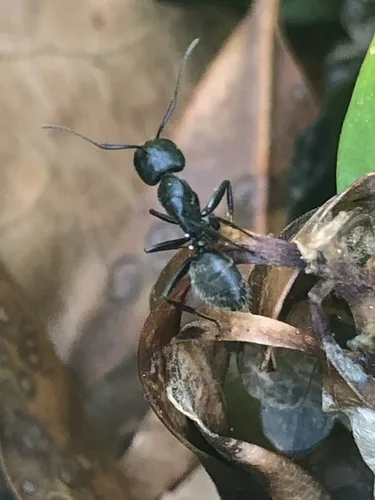
Carpenter ant activity also deserves attention when nesting conditions are present indoors. These ants build nests in crawl spaces, attics, and walls, and they use dry wood, water-damaged wood, and insulation to build their nests. If you have damaged wood or insulation in those spaces, ant nesting is a reason to look more closely. Black carpenter ants are also the largest of Georgia’s pest ants, and they are nocturnal.
Food Areas and Ant Activity in Georgia Homes
Not every risk from ants in Georgia starts in a food area. The supported concerns in this section point more to where ants nest and how people may encounter them. If ants are active elsewhere in the home, especially in walls, attics, or crawl spaces, the problem may still deserve attention even when food areas are not the main issue.
When to Look Closer at Ant Activity in Georgia
Look closer when you notice ant mounds in sunny, disturbed parts of the property, because red imported fire ants are associated with painful stings. It is also worth paying attention to ant activity in walls, crawl spaces, and attics, especially where dry wood, water-damaged wood, or insulation are present. In northwest Georgia, biting mound ants are another reason not to ignore activity. If you are seeing these signs around your home, contact Proforce to request a quote.
Professional Pest Control for Ants in Georgia
If you are dealing with ants in Georgia, the main thing to know is that prevention and professional pest control both have a place. Small or early carpenter ant infestation issues may sometimes be handled with retail products, but carpenter ants inside a home or structure call for action. In some homes, especially slab-built homes, hidden nesting and repeated indoor activity can make the problem harder to manage. When that happens, professional pest control is often the more practical next step.
How to Reduce Attractants for Ants in Georgia
Prevention matters, but it has limits during an active ant infestation. For indoor infestations, baits can be useful because one ant covered by this section is readily attracted to liquid sweet baits. That can make baiting part of a control approach when ants are already inside.
Prevention is also more realistic when an ant infestation is still small or early. For carpenter ants, retail-store products may help with prevention and with control of a small or early infestation. Once the infestation is established in a home or structure, though, professional pest control is the better fit.
Why Ant Control in Georgia Starts With Inspection
Inspection helps separate a limited ant problem from one that may involve hidden activity. If your home has carpenter ants, a pest control professional should inspect for carpenter-ant damage and signs of activity. That step helps confirm whether the infestation is tied to the structure and whether more involved pest control is needed.
Inspection also matters in slab-built homes. According to Purdue Extension, houses built on concrete slabs often have serious ant problems because ants may nest under the slab and enter through cracks, heating ducts, and utility openings. In that setting, an ant infestation can keep showing up indoors even when the source is not obvious.
What to Expect During Professional Ant Treatment in Georgia
Professional ant treatment in Georgia depends on the type of ant infestation and where activity is happening. For carpenter ants, the guidance is straightforward: take action when they are in your home or structures, and use a professional pest control service to remove the colony from the home. Waiting is not a good strategy, because carpenter ant infestations in homes and structures lead to more damage over time.
Some ant problems also shift with the season. As the University of Georgia pest guide notes, Argentine ants move indoors in winter to escape cold temperatures. When winter activity pushes an infestation inside, professional pest control can help you address the problem in the home rather than treating it like a short-term nuisance.
What to Expect From a Georgia Ant Control Plan
A Georgia ant control plan should match the level of the infestation. For a small or early carpenter ant infestation, prevention and limited control products may be part of the conversation. For carpenter ants in the home, or for recurring indoor activity in slab-built homes, professional pest control is often the recommended approach.
With Proforce, ants are part of the company’s general pest control coverage. If you are seeing repeated indoor activity, signs of carpenter ants, or an ant infestation that keeps returning, contact Proforce to request a quote for your home. Done Right. Every Time.
Bottom Line on Ants in Georgia
If you are trying to understand ants in Georgia, the main takeaway is simple: ants can show up indoors or outdoors, and the right response depends on what you are seeing around your home. Some ant activity is mostly a nuisance, while other situations call for closer attention. Trails often follow structural edges such as walls or walkways, which can help you notice activity sooner. If ant activity keeps returning or you are concerned about carpenter-ant damage and signs of activity, Proforce can help you request a quote for professional service.
Frequently Asked Questions About Ants in Georgia
What should homeowners know first about ants in Georgia?
Start by paying attention to where ants appear and how often you see them. Ants may be active indoors or outdoors, and repeat activity around structural edges can be a useful sign that it is time to take a closer look.
Are all ants in Georgia the same kind of problem?
No. Different ants create different concerns. Some are mainly nuisance pests, while others are more concerning because of stings or the possibility of carpenter-ant damage. That is why clear identification matters before choosing next steps.
What is one practical thing I can watch for around my home?
Look for ant trails along the edge of a wall, walkway, or other structural line. Ant trails often follow those edges, which can make activity easier to spot during routine checks around your home.
When should I call Proforce about ants in Georgia?
It makes sense to contact Proforce when ant activity keeps showing up, when you are not sure which ants you are seeing, or when you want a professional to inspect your home for carpenter-ant damage and signs of activity. If you want pricing, the best next step is to request a quote.