
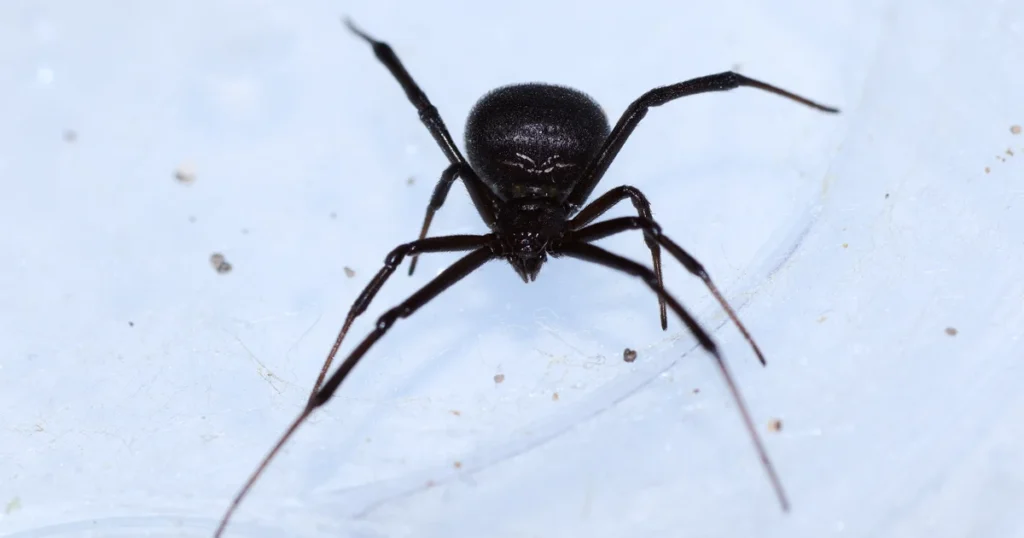
Black Widow Spiders in Florida can create costly problems when early signs are missed. Learn what to look for, why it matters, and when to call Proforce.
Key Takeaways About Florida Black Widow Spiders
- Identification matters first. Black widow spiders carry a distinctive pattern of red coloration on the underside of their abdomen. Females are the ones most commonly recognized, with dark bodies and that well-known marking.
- Florida is prime habitat. Black widow spiders are most common in the southern and western United States, making Florida a frequent home for these venomous spiders.
- Bites are rare. Despite their reputation, black widow spider bites are uncommon, even in areas where the spiders are very common. Most bites happen through accidental contact with their webs.
- They hide in undisturbed spaces. Woodpiles, eaves, fences, and areas where debris collects around your home are favorite spots for black widow spiders in Florida.
- Know the difference. Florida is also home to the brown widow, a related species. Accurate identification is the first step before any control approach.
- Professional control helps. Ongoing treatment from a trained service professional reduces the chances of repeated encounters around your property.
The sections below cover how to identify black widow spiders, understand the risks their venom poses, and protect your Florida home with targeted control strategies.
How to Identify Florida Black Widow Spiders
Knowing which widow species you are dealing with helps you respond correctly and describe the spider to your Proforce service professional. Florida hosts more widow species than most states, and their markings differ enough to tell them apart once you know what to look for. Body shape, web placement, and egg sac style are the fastest identification clues.
Telling Common Florida Species Apart
According to UF/IFAS EDIS, Florida is home to four widow spider species: the southern black widow, the northern black widow, the brown widow, and the red widow. The southern black widow is the most recognized, with a jet-black body and a bright red hourglass on the underside of the abdomen. Northern black widows share the dark coloring but often display a broken or split hourglass pattern.
Brown widows are tan to dark brown with an orange or yellowish hourglass. Their egg sacs resemble sandspurs, which is the easiest way to identify this species. The red widow features a reddish-orange head and legs with a black abdomen marked by red spots. Females across all four species grow much larger than males, with females reaching up to 20 times the body size of their male counterparts.
How to Spot Black Widow Spider Activity Inside Your Florida Home
Look for irregular, tangled webs close to ground level. Black widow webs lack the neat circular pattern of orb weavers. You may notice the web feels unusually strong and sticky when accidentally touched. Signs of activity include small silk egg sacs tucked into corners and dead insects caught in low webs near dark, undisturbed areas like closet floors or beneath furniture.
Brown widow egg sacs with their spiky, sandspur-like texture are especially distinct and often appear in clusters along window frames, door casings, or storage shelves.
Where Black Widow Spider Activity Usually Shows Up in Florida
Inside your home, black widows favor cluttered spaces that stay dark and quiet. Garages, storage rooms, crawl spaces, and the undersides of stairwells are common spots. They build webs between objects at low heights, so stacked boxes, garden pots, and rarely worn shoes deserve a careful look before you reach in.
Exterior Entry Points Black Widow Spiders Use in Florida
Outdoors, black widows nest under eaves, behind shutters, inside meter boxes, and around outdoor furniture legs. They build webs between objects where insects travel, so any gap near outdoor lighting is a likely entry zone. Cracks around door thresholds, torn weather stripping, openings where utility lines enter the wall, and unscreened vents all give these spiders a path indoors. Keeping these access points sealed reduces the chances of an encounter inside your home.
Why Black Widow Spider Problems Develop in Florida
Why Florida’s Climate Supports Black Widow Spider Activity
Florida’s warm, humid environment creates year-round conditions that favor black widow spider populations. According to CDC, black widow spiders are most common in the southern and western United States, and Florida’s subtropical climate fits squarely within that range. Long growing seasons keep prey insects active for extended periods, which in turn supports spider populations that might otherwise decline during colder months.
Florida also hosts multiple widow species. The Southern black widow is well established statewide, while the Red Widow is found only in southern and central Florida within sand pine habitat. The brown widow has been present in the state for decades and spread throughout Florida in the mid-to-late 1990s. This overlap of species means Florida homeowners may encounter more than one type of widow spider on a single property.
Food and Shelter That Attract Black Widow Spiders in Florida
Black widow spiders are opportunistic predators that follow their prey. Anywhere insects gather, including around exterior lights, garden beds, and dense plants, becomes a potential hunting ground. A steady food supply encourages spiders to build webs and stay put rather than relocate.
Shelter matters just as much as food. As UF/IFAS EDIS notes, typical outdoor habitat for Southern black widows includes wood and rock piles, rodent burrows, and hollow tree stumps, while indoor habitat includes garages, sheds, and basements. Cluttered storage areas, stacked firewood, and seldom-moved outdoor furniture all provide the dark, undisturbed spaces these spiders prefer.
Why Florida Black Widow Spiders Adapt Around Homes
Residential properties offer an ideal combination of shelter and prey. Trash bins, gardening equipment, and stored outdoor gear create protected pockets where webs go undisturbed. Florida homes with screened lanais, pool equipment sheds, or attached garages provide transitional zones between outdoor habitat and interior living space.
Brown widows are especially prolific near homes. A single female can produce up to 5,000 young per season, and their distinctive sandspur-shaped eggs sacs often appear under patio furniture, along fence lines, and inside mailboxes. That reproductive output means populations can grow quickly once a few spiders establish themselves around a structure.
Seasonal Shifts That Move Black Widow Spiders in Florida
While Florida does not experience harsh winters, cooler stretches during late fall and early winter can push black widows closer to buildings. Spiders seek stable temperatures and continued access to prey, both of which your garage or shed can provide during a brief cold snap.
Summer storms and heavy rain season can also drive activity. Rising moisture pushes ground-dwelling insects upward, and widow spiders follow the food. Yard cleanups after storms frequently uncover webs in debris piles, overturned equipment, and displaced firewood, so staying aware during these seasonal shifts helps you catch problems early.
Risks From Florida Black Widow Spiders
Black widow spiders in Florida create real concern for homeowners who spend time outdoors or maintain garages, sheds, and porches. While actual bites are uncommon, the risks deserve your attention, especially when your family uses the same spaces these spiders favor. Understanding what is and is not at stake helps you make smart decisions about when to act.
Health Risks Linked to Florida Black Widow Spiders
According to NCBI Bookshelf, black widow spiders account for most clinically notable spider envenomations in the United States. That makes them the most medically relevant spider you are likely to encounter around your Florida home. Their venom targets the nervous system, which is why bites can produce painful muscle cramping and other systemic symptoms.
Small children, elderly family members, and anyone with existing health conditions face a greater threat from a bite, as UC IPM notes. That said, bites from black widows remain rare, even in areas where they are common. The risk is real but measured, and awareness is your first line of defense.
Property Damage From Black Widow Spiders in Florida
Black widow spiders do not cause structural damage to your home. They do not chew wood, gnaw wiring, or burrow into building materials. Their webs, however, accumulate in corners, along eaves, and between stored items, creating unsightly clutter in garages and storage areas. These dense, irregular webs collect dust and debris over time.
The bigger property concern is indirect. When black widows build webs between objects in sheds, woodpiles, and around fences, those spaces become areas you and your family may avoid. Losing comfortable use of your own property is a nuisance no homeowner should accept.
Food Contamination Risks From Florida Black Widow Spiders
Black widows are not pests associated with food contamination. They do not invade pantries, chew through packaging, or leave droppings on food prep surfaces the way cockroaches or rodents do. Their webs are typically found near ground level in undisturbed outdoor structures, not in kitchens or dining areas.
Still, if black widows move into a garage where you keep a secondary refrigerator or shelving, their presence can make those areas uncomfortable to use. Keeping storage spaces tidy and clutter-free reduces the chance they settle in near anything your family touches regularly.
When a Black Widow Spider Problem in Florida Needs Action
A single black widow spotted in your yard does not always require professional intervention. But when you notice multiple webs in areas your family frequents, or when spiders appear inside your home, it is time to call in a professional. Young children and pets who move through low-to-the-ground spaces face the highest risk of accidental contact with webs.
Your tolerance for these pests should match the level of risk they pose to your household. If you are seeing black widow spiders in Florida around your property, reach out to Proforce Pest Control for an inspection. Our service professionals know exactly where to look and how to address the issue. Done Right. Every Time.
Professional Pest Control for Black Widow Spiders in Florida
Black widow spiders in Florida tend to settle in undisturbed outdoor spaces around your home, from firewood stacks and garages to gardening equipment and outdoor furniture. A professional pest control plan addresses these harborage areas directly, combining prevention with targeted treatment to reduce spider activity over time. Here is how the process works with Proforce Pest Control.
How to Reduce Attractants and Seal Entry Points
Prevention is the foundation of any lasting pest control approach. According to the EPA, the core strategy is removing conditions that attract pests, including access to shelter, food sources, and water. For black widow spiders in Florida, that means keeping firewood stored away from exterior walls, clearing debris from garages and sheds, and reducing clutter around outdoor equipment.
Sealing entry points is equally important. Gaps around door sweeps, window frames, utility conduits, and foundation cracks all give spiders a path indoors. Replacing torn screens, caulking visible gaps, and installing weather stripping are simple steps that make your home far less inviting. Your Proforce service professional can point out specific vulnerabilities during an on-site visit.
Why the Process Starts With a Professional Inspection
Black widows are most common in the southern and western United States, and Florida’s warm climate provides year-round habitat. A professional inspection maps where these spiders are building webs, which entry points they are using, and how severe the activity is around your property.
Proforce service professionals inspect garages, eaves, storage areas, crawl spaces, and landscaping features where black widows tend to hide. This inspection drives every recommendation that follows, so treatment is focused on confirmed activity rather than guesswork.
What to Expect During Professional Black Widow Spider Treatment
Treatment for black widow spiders in Florida draws on integrated pest management principles. As EPA outlines, accepted control methods include physical removal, trapping, and targeted product application. Your service professional selects the lowest-risk options appropriate for your home, considering the location of activity and any nearby living spaces.
Outdoor-only spraying has limits when it comes to spiders. That is why Proforce pairs direct web removal and harborage reduction with carefully placed treatments in confirmed hot spots. This layered approach addresses the spiders you can see and the ones tucked into hard-to-reach voids.
What to Expect From a Florida Black Widow Spider Control Plan
Ongoing treatment is what separates a one-time clean-out from sustained pest control. Proforce builds a recurring service plan around your property’s specific needs. Each visit includes re-inspection of previous activity zones, fresh treatment where warranted, and updated prevention recommendations as conditions change.
Your plan covers spiders as part of Proforce’s 35-pest general pest control coverage, so you are also protected against ants, cockroaches, wasps, and other common Florida pests on every scheduled visit. The Proforce Guarantee backs every service. Done Right. Every Time.
If you are noticing webs in your garage, around outdoor furniture, or along your foundation, request a quote from your local Proforce branch. Our service professionals know the specific spider pressures in your area and will build a plan tailored to your home.
Bottom Line on Florida Black Widow Spiders
Florida Black Widow Spiders are a real concern, but they are manageable when you combine accurate identification, habitat awareness, and professional pest control. According to CDC, black widows are most common in the southern and western United States, and Florida’s warm climate provides year-round habitat. Reducing clutter, sealing entry points, and scheduling ongoing treatments are the most practical ways to keep these spiders away from your living spaces.
When you spot the red hourglass or find messy webs in sheltered corners, it is time to call in a professional rather than handle the situation yourself.
Proforce Pest Control covers spiders as part of our general pest control plan, which addresses 35 common pests. Our service professionals know the specific conditions in each Florida service area and tailor their approach accordingly. If you are ready for consistent, ongoing protection, request a quote from Proforce to get started.
Frequently Asked Questions About Florida Black Widow Spiders
How Do I Know If a Spider in My Home Is a Black Widow?
Look for a shiny black body with a red pattern on the underside of the abdomen. Black widows build irregular, tangled webs close to the ground in undisturbed spots like garages, sheds, and woodpiles. As NPIC notes, precise identification is the recommended first step before attempting any form of pest control. If you are unsure, snap a photo and contact a Proforce service professional for confirmation.
Are Black Widow Spider Bites Common in Florida?
Despite their reputation, bites from black widows are rare even in areas where these spiders are common. Most bites happen when a person accidentally presses against a web or reaches into a hidden space without gloves. Wearing work gloves when moving firewood, boxes, or yard debris is one of the simplest ways to reduce your risk.
What Attracts Black Widow Spiders to My Property?
Black widows favor undisturbed areas where they can anchor their webs between objects. Woodpiles, eaves, fences, and accumulated debris all create ideal hiding spots. Outdoor lighting that draws insects also provides a steady food source. Keeping storage areas tidy, trimming vegetation away from your home’s exterior, and reducing outdoor lighting near entry points can make your property less inviting.
How Does Proforce Handle Black Widow Spider Control?
Proforce service professionals inspect your property to locate webs and egg sacs, then apply targeted treatments in the areas where black widows are most likely to harbor. Our general pest control plan includes spiders alongside dozens of other covered pests, so you get broad, ongoing protection. We back every visit with the Proforce Guarantee, and our local teams are familiar with the conditions that drive spider activity in your area. Contact us to request a quote and schedule your first inspection.